License Plate Reader Surveillance and the Fourth Amendment: How New Technology Is Changing Privacy Rights
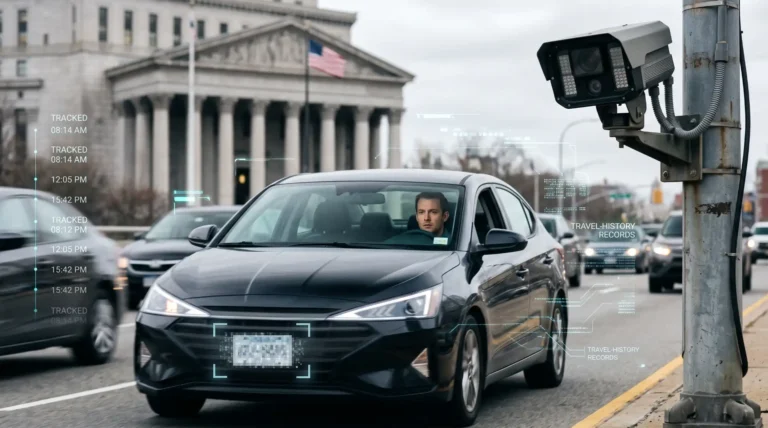
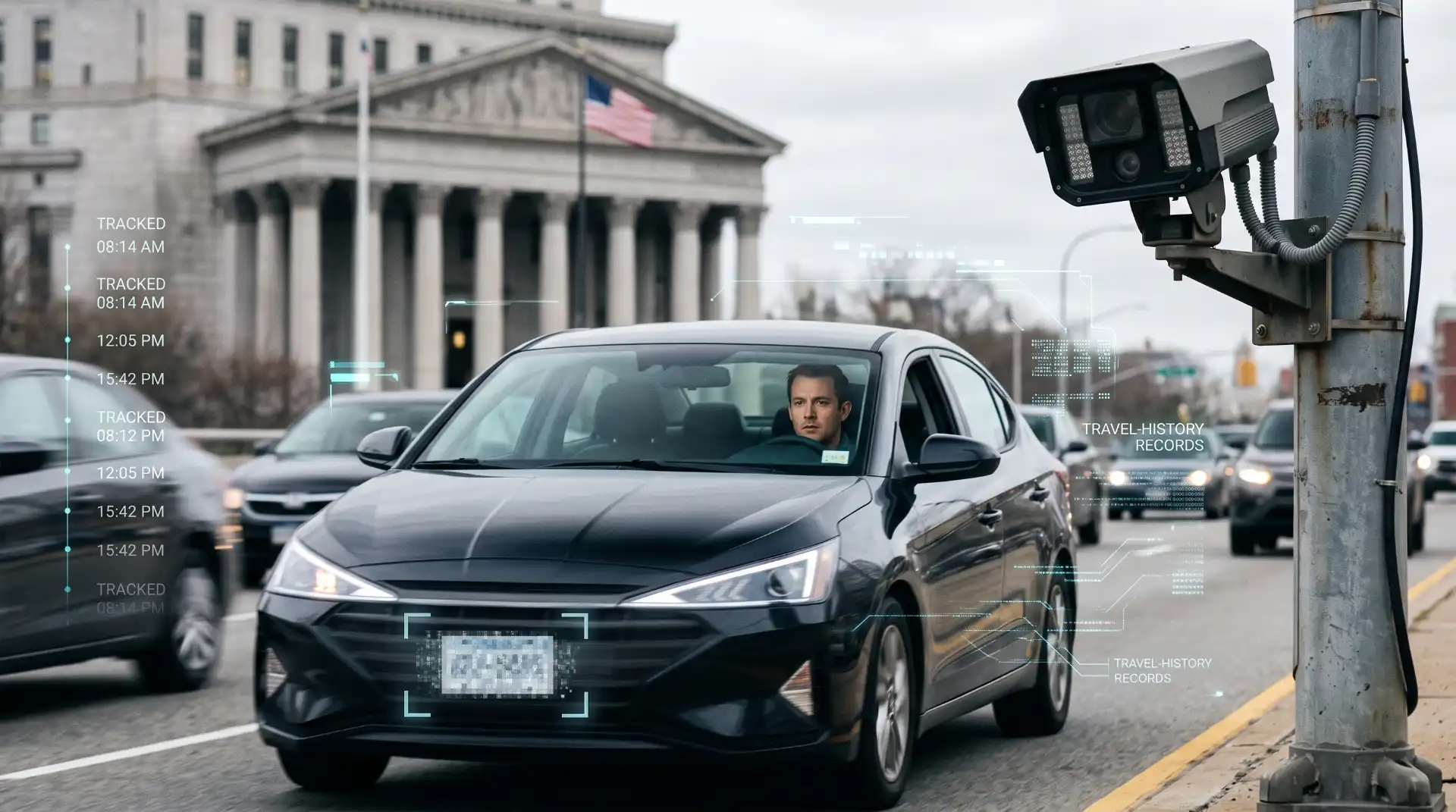
Automated license plate readers have become an increasingly important part of modern law enforcement in the United States. These cameras can capture images of passing vehicles, identify license plates, record the time and location of a sighting, and store that information in databases that investigators can search later. What once might have required an officer to physically follow a vehicle can now be accomplished through a network of cameras and searchable digital records.
The technology has obvious public-safety benefits. License plate reader systems can help police locate stolen vehicles, identify vehicles associated with investigations, find missing persons, and reconstruct movements after serious crimes. At the same time, the expansion of these systems has created a difficult constitutional question: When does collecting and searching a person’s vehicle-location history become a search under the Fourth Amendment?
That question has become particularly important in 2026 following a federal court ruling in Oklahoma involving Flock automated license plate reader technology. The court concluded that an officer’s warrantless use of the system to reconstruct a driver’s movements amounted to an unconstitutional search. The decision is significant because it treats modern ALPR networks as something more than isolated roadside cameras. However, the ruling is a district court decision and does not establish a nationwide rule binding every law enforcement agency or court. Other courts have reached different conclusions concerning ALPR surveillance.
The growing legal debate demonstrates how quickly technology can challenge assumptions built around older forms of surveillance. The Fourth Amendment was written long before digital databases, networked cameras, artificial intelligence, and searchable location histories existed. Courts therefore increasingly have to determine whether constitutional protections developed in an earlier technological era can adequately address modern surveillance systems.
What Are Automated License Plate Readers?
Automated license plate readers, commonly called ALPRs, are camera systems designed to capture information about vehicles traveling through a particular location. Depending on the system, a camera can record an image of a vehicle, identify its license plate, document the date and time of the observation, and associate the observation with a geographic location.
Some modern systems can also capture information about a vehicle’s make, model, color, or other characteristics. The information may then be stored in a searchable database.
Unlike a traditional traffic camera that might simply record a roadway, an ALPR system is designed to turn vehicle observations into searchable information. That difference is important from a privacy perspective.
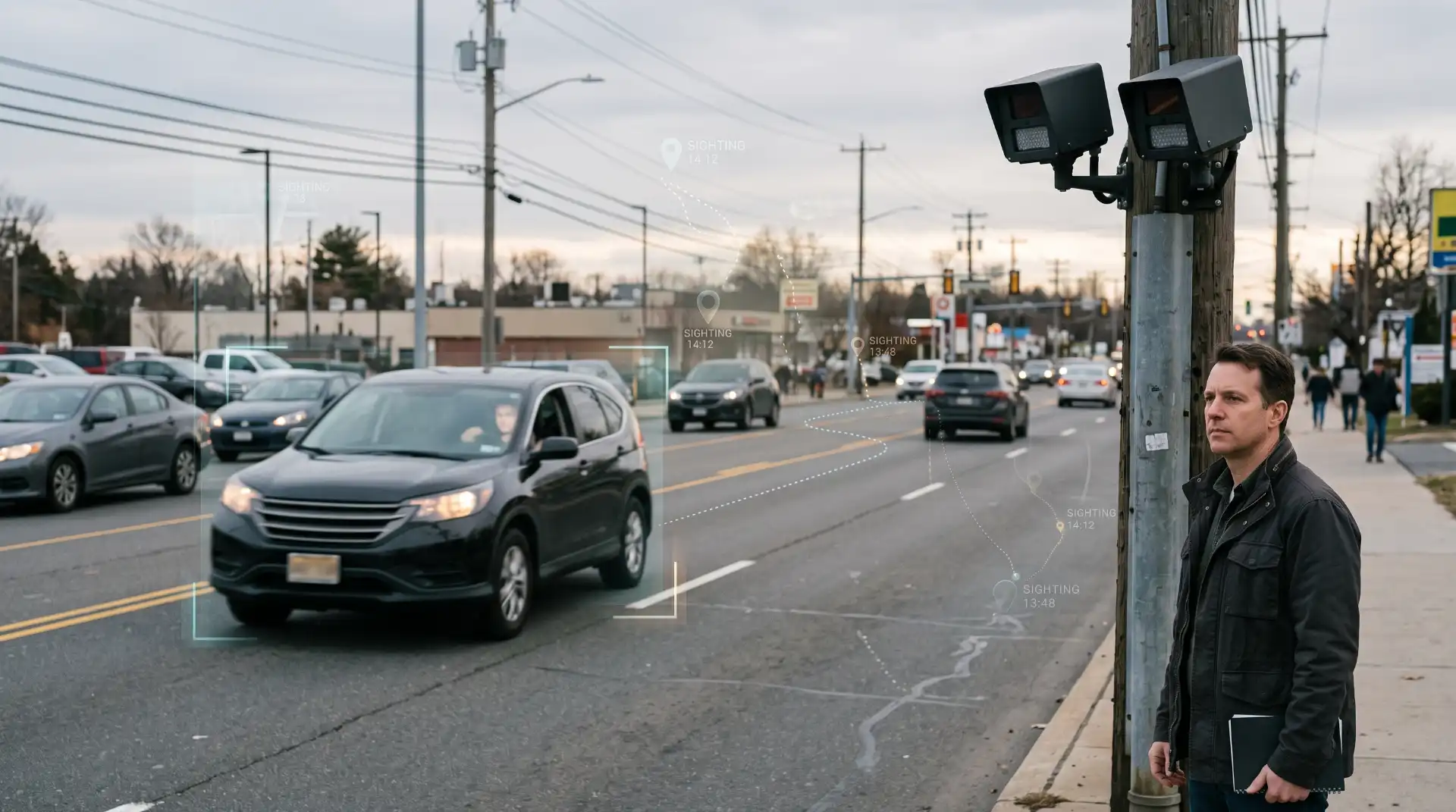
A single observation might show that a particular vehicle passed a particular intersection at 2:15 p.m. Standing alone, that information may reveal relatively little. A large network of cameras operating over weeks or months can potentially create a much more detailed picture of where a vehicle has traveled.
This distinction is at the heart of the modern Fourth Amendment debate.
The question is no longer simply whether a police officer can see a vehicle traveling on a public road. The more difficult question is whether the government should be able to digitally assemble thousands of individual observations into a detailed historical record of a person’s movements without judicial authorization.

Why Police Departments Use License Plate Readers
Law enforcement agencies generally describe ALPR systems as investigative tools rather than general-purpose surveillance systems.
A stolen vehicle can be difficult for an officer to locate manually. If that vehicle passes an ALPR camera, however, the system can potentially alert law enforcement to the vehicle’s presence.
The same principle can apply when police are searching for a missing person, investigating a hit-and-run, locating a vehicle associated with a violent crime, or attempting to identify a suspect who fled an incident.
There are also situations where the technology can help officers respond quickly to emergencies. Recent reporting has highlighted an incident in Richmond, Virginia, where ALPR technology helped police locate a stolen vehicle containing two children. Supporters of the technology argue that situations like this demonstrate why completely eliminating ALPR systems could have serious public-safety consequences.
The legal issue is therefore not necessarily whether license plate readers are useful. They clearly can be.
The more difficult issue is how the government should use them and what legal restrictions should apply when the technology can reveal a person’s movements over time.
The Fourth Amendment and Vehicle Surveillance
The Fourth Amendment protects people against unreasonable searches and seizures by the government. Courts have spent decades determining what constitutes a search, particularly when law enforcement uses technology to obtain information about a person’s activities.
Traditional surveillance generally involved physical observation.
An officer might sit in a patrol vehicle and watch a particular location. Investigators might follow a suspect’s vehicle from one place to another. Detectives could document observations and later use them as evidence.
These methods have practical limitations.
An officer cannot normally follow thousands of vehicles simultaneously. A detective cannot easily monitor every movement of a particular vehicle for months without substantial personnel and resources.
Digital surveillance changes that calculation.
A network of cameras can automatically collect information about thousands of vehicles. A searchable database can allow investigators to retrieve historical observations within seconds.
The constitutional question becomes more complicated when technology changes not only the amount of information collected but also the government’s practical ability to analyze it.
United States v. Jones and Long-Term Vehicle Tracking
In that case, federal investigators attached a GPS tracking device to a vehicle and monitored its movements for 28 days. The Supreme Court held that the government’s installation and use of the GPS device constituted a search under the Fourth Amendment.
The case is important because it demonstrated that technological surveillance can raise constitutional concerns even when a vehicle is traveling on public roads.
The Court’s decision included a physical-trespass analysis because government agents had physically attached the tracking device to the vehicle. However, several justices also discussed the broader privacy implications of long-term tracking.
Justice Alito’s concurrence, for example, emphasized the difference between traditional visual surveillance and technology capable of monitoring essentially every movement of a vehicle over an extended period.
That distinction has become particularly relevant to ALPR litigation.
A license plate reader does not necessarily attach anything to a vehicle. Instead, it observes vehicles from public locations. That makes ALPR technology different from the physical tracking device involved in Jones.
However, the volume and persistence of information produced by a modern ALPR network can raise related privacy concerns.
Carpenter and the Constitutional Importance of Historical Location Data
Another important Supreme Court decision is Carpenter v. United States.
The case concerned historical cell-site location information obtained by law enforcement from wireless carriers. The Supreme Court recognized that long-term location records can reveal detailed information about a person’s physical movements and held that the government’s acquisition of the particular records at issue constituted a Fourth Amendment search.
Carpenter is particularly important because the information did not come directly from a tracking device attached to the defendant.
Instead, the government obtained records maintained by a third party.
The Court nevertheless recognized that detailed historical location information can create significant privacy concerns.
The decision rejected the idea that people automatically lose all Fourth Amendment protection simply because their movements occur in public or because information is held by another company.
That reasoning has become part of the larger discussion about modern digital surveillance.
ALPR databases raise a somewhat different question because the information is collected by cameras observing vehicles in public. Nevertheless, the broader constitutional issue is similar: How much historical information about a person’s movements can the government collect and search without judicial oversight?

The 2026 Oklahoma ALPR Ruling
The current controversy intensified in October 2026 after a federal judge in Oklahoma ruled against an officer’s use of Flock’s ALPR system.
According to reporting on the case, a Tulsa County deputy used the system to investigate a vehicle with California license plates. The officer searched the database and obtained information about the vehicle’s travel history, including a trip involving the California-Arizona border area. The government subsequently used the information in a drug-trafficking case.
The federal court concluded that the search violated the Fourth Amendment.
The judge characterized the use of the system as a form of indiscriminate mass surveillance and concluded that the government could not simply reconstruct a person’s travel history without an adequate constitutional basis.
The decision is notable because the court viewed the ALPR network as more than a collection of individual cameras.
The practical ability to search historical records transformed the technology into a tracking system, according to the court’s reasoning.
That distinction could become increasingly important as ALPR networks expand.
The Oklahoma Decision Does Not Automatically Change the Law Nationwide
It is important not to overstate the significance of the ruling.
The Oklahoma decision does not mean that every ALPR search in the United States is now unconstitutional. It is a federal district court decision, and it does not automatically bind courts throughout the country.
The decision also exists alongside appellate decisions that have reached different conclusions.
Recent reporting notes that the U.S. Court of Appeals for the Fifth Circuit upheld the constitutionality of ALPR systems in a March 2026 decision, emphasizing factors such as the public nature of license plates, the location of cameras on public roads, and the limited coverage provided by particular camera networks.
This disagreement illustrates why the issue remains unsettled.
The legal outcome can depend on how a particular court characterizes the technology, the amount of information available, the duration of surveillance, the way investigators searched the database, and the facts supporting the search.
Why the Number of Cameras Matters
One of the most important questions surrounding ALPR surveillance is scale.
A single camera that records a vehicle passing one intersection presents a different privacy question from a network of thousands of cameras covering a large metropolitan area.
Suppose an officer sees a vehicle driving down a public street. That observation is ordinary police surveillance.
Now suppose the government can instantly search a database and identify every location where the same vehicle was recorded over the previous several weeks.
The second situation can reveal considerably more.
The vehicle may have traveled to a person’s workplace, a relative’s home, a medical facility, a religious institution, an attorney’s office, or another sensitive location.
The government may not have physically followed the person to all of those locations. The database effectively reconstructs the person’s movements after the fact.
That ability can fundamentally change the practical nature of surveillance.
Does a Person Have Privacy on a Public Road?
Law enforcement agencies and ALPR companies often emphasize that people have limited expectations of privacy concerning what they expose on public roads.
A license plate is displayed publicly. A driver cannot normally argue that police are prohibited from seeing the plate.
That principle has significant legal support.
The harder question is whether the constitutional analysis changes when individual observations are aggregated.
There is a difference between seeing a person once and maintaining a permanent searchable record of where that person’s vehicle has been.
Modern privacy law increasingly recognizes that aggregation can create information that does not exist in any individual observation.
A single location record may be relatively ordinary. Thousands of records can reveal patterns.
That is one reason the Supreme Court’s decisions in Jones and Carpenter remain important to discussions about emerging surveillance technology.
The Difference Between a Camera and a Database
The ALPR debate can become easier to understand by separating two different technologies.
The first is the camera itself.
A camera positioned beside a road captures an image of a vehicle that passes within its field of view.
The second is the database.
The database stores observations and allows authorized users to search them.
The privacy concern can increase dramatically when the second capability becomes highly sophisticated.
A camera may tell police where a vehicle was at one moment.
A searchable network may tell police where the vehicle has repeatedly appeared over a substantial period.
This distinction could influence future constitutional cases.
Courts may increasingly need to examine not only whether a surveillance camera can lawfully capture information but also what government officials can do with the accumulated data.
ALPR Searches and Probable Cause
One of the central constitutional questions is when police should need probable cause, a warrant, reasonable suspicion, or some other legal justification before searching ALPR records.
There is no simple nationwide answer covering every possible ALPR search.
A system might generate an automated alert because a vehicle is reported stolen. An officer might search for a particular vehicle connected to a serious crime. An investigator might conduct a broad historical search involving numerous vehicles.
Those circumstances are not necessarily identical.
A narrowly targeted search connected to a specific investigation may raise different concerns from a broad search designed to discover suspicious travel patterns.
The Oklahoma case is particularly important because the judge focused on the use of the technology to reconstruct a person’s movements without adequate constitutional justification.
Future courts may have to determine whether different categories of ALPR searches require different levels of legal authorization.
Could Police Use ALPR Data Without a Warrant?
In some circumstances, police may be able to use ALPR information without obtaining a warrant, depending on the jurisdiction, applicable precedent, the nature of the data, and the reason for the search.
That does not mean that every ALPR search is automatically constitutional.
The legal question can depend on what information is being sought and how the information is being used.
For example, a real-time alert indicating that a stolen vehicle has just passed a camera may present a different legal issue from a retrospective search that reconstructs a vehicle’s movements across several states over an extended period.
Courts may therefore increasingly examine the specific functionality of ALPR systems rather than treating all license plate readers as legally identical.
The Role of Data Retention
Another major privacy issue involves how long ALPR information is retained.
If data is deleted quickly, the government has a smaller historical record available for future searches.
If information is retained for months or years, investigators can potentially reconstruct much more extensive travel histories.
Retention policies therefore directly affect the privacy consequences of the technology.
A city that collects ALPR information but automatically deletes it after a short period creates a substantially different surveillance environment from a city that retains the information indefinitely.
For this reason, privacy policies should address retention rather than simply explaining how cameras operate.
Retention rules can also determine what information remains available when a later criminal investigation begins.
Who Can Search ALPR Databases?
Access controls are another important part of the legal and policy debate.
An ALPR database can become particularly problematic if large numbers of government employees can conduct searches for personal reasons or without meaningful supervision.
Privacy advocates have raised concerns about potential misuse, including searches involving spouses, former partners, friends, neighbors, or other individuals who are not legitimate investigative targets.
The risk is not limited to constitutional litigation.
Unauthorized access can undermine public confidence in law enforcement and expose government agencies to administrative, employment, disciplinary, or potentially civil consequences depending on the circumstances.
A strong ALPR governance program should therefore include authentication, access logs, auditing, restrictions on searches, and meaningful consequences for misuse.
Should ALPR Searches Be Logged?
Access logging can help address one of the most basic accountability questions: Who searched the system, when did they search it, and why?
A properly designed system can potentially record the identity of the user, the vehicle or plate searched, the date and time, and the investigative reason for the search.
Supervisors can then review suspicious or unusual activity.
This type of accountability does not eliminate constitutional concerns, but it can help prevent misuse and create evidence showing whether a particular search was legitimate.
Recent policy discussions surrounding ALPR technology have emphasized access logs, case identifiers, retention limits, audits, and restrictions on searches unrelated to legitimate investigations.
ALPR Data Sharing Across Police Agencies
Modern ALPR systems can also create questions about information sharing.
A local police department may collect the information, but another law enforcement agency could potentially obtain access to the database depending on contractual arrangements, state law, agency policies, or other agreements.
This can make jurisdictional boundaries less meaningful.
A vehicle traveling from California to Arizona and then into another state could potentially generate information across multiple jurisdictions.
That raises an important policy question: Which agency controls the data, and which rules apply when another agency searches it?
The answer may depend on the specific system and legal framework.
As ALPR networks become more interconnected, lawmakers and courts may need to address interstate data sharing more directly.
Privacy Rights and the Modern Digital Roadway
The ALPR debate reflects a broader transformation in privacy law.
Modern Americans routinely generate digital records while moving through public spaces.
Smartphones create location histories. Toll systems record highway transactions. Connected vehicles can generate information about vehicle operation. Traffic cameras capture roadway activity. Retail systems track purchases. Mobile applications can collect location information.
The legal challenge is determining when these individual records become sufficiently detailed to create a constitutionally significant picture of a person’s life.
The Supreme Court’s decision in Carpenter is important because it recognized that detailed historical location information can reveal far more than isolated observations.
ALPR systems raise similar concerns because they can potentially convert ordinary public observations into persistent searchable histories.
How This Connects to Data Privacy Law
The constitutional debate surrounding ALPRs is different from commercial data privacy law, but the two areas increasingly overlap conceptually.
Legal Journal has already examined the changing U.S. data broker environment in [Data Broker Laws in the U.S.: New Privacy Rights Consumers Should Know].
That article discusses the growing legal importance of precise location information and the increasing ability of consumers to exercise deletion and opt-out rights under certain state privacy laws.
ALPR data presents a different context because the government, rather than a commercial data broker, is collecting or searching the information.
Still, both issues involve the same fundamental technological development: information that once existed only in isolated pieces can now be collected, stored, combined, and searched at enormous scale.
The legal system is increasingly being asked to determine what privacy protections should apply to these aggregated records.
California and Other States May Take Different Approaches
State governments have considerable influence over how ALPR systems are deployed.
Some states and cities have adopted detailed restrictions governing retention, access, sharing, and permissible uses.
Other jurisdictions have taken a more permissive approach.
The result is a patchwork of rules that can be difficult for both residents and law enforcement agencies to navigate.
A police department operating an ALPR system must consider not only federal constitutional requirements but also applicable state laws, local ordinances, agency policies, contracts, and evidence-handling requirements.
This becomes particularly important when databases contain information collected across state lines.
The Public-Safety Argument for ALPR Technology
Privacy concerns should not obscure the legitimate benefits of ALPR technology.
A well-regulated system can help police locate stolen vehicles quickly.
It can help identify vehicles connected to serious crimes.
It can help locate missing people.
It can provide investigative leads that would otherwise require substantial manpower.
The Richmond child-abduction incident demonstrates why communities may be reluctant to abandon the technology entirely. Police used ALPR information to help locate a stolen vehicle containing two children, illustrating how rapidly accessible vehicle-location information can assist an emergency response.
The constitutional challenge is therefore not necessarily a choice between public safety and privacy.
A more productive question may be how to design a system that provides legitimate investigative benefits while preventing unrestricted government tracking.
The Case for Strict ALPR Rules
One possible approach is to permit ALPR technology while establishing clear restrictions.
Such rules could address how long information may be stored, which crimes justify historical searches, who can access the system, when supervisory approval is required, how searches are documented, and when information must be deleted.
Independent audits could also help determine whether agencies follow their own policies.
These measures would not necessarily resolve the constitutional debate, but they could reduce misuse.
They could also provide courts with evidence about the practical safeguards surrounding a particular surveillance system.
Could ALPR Regulation Become a Constitutional Issue?
Yes.
The more sophisticated these systems become, the more likely courts will face questions about whether existing constitutional doctrines adequately address them.
A future case could involve a much larger ALPR network than the one considered in an earlier case.
It could involve longer retention periods, broader camera coverage, more precise vehicle identification, automated behavioral analysis, or integration with other government databases.
At some point, the cumulative effect may become central to the legal analysis.
The Fourth Amendment has historically been applied to new technologies by examining whether government conduct meaningfully intrudes on protected privacy interests or otherwise constitutes a search or seizure.
As technology evolves, courts must decide where the constitutional boundaries lie.
Artificial Intelligence Could Make ALPR Surveillance More Powerful
The next stage of the ALPR debate may involve artificial intelligence.
Traditional ALPR systems primarily identify plates and vehicle characteristics.
AI systems can potentially analyze much larger quantities of information and identify patterns that humans might not notice.
For example, an AI-powered system could potentially compare vehicle movements across multiple databases, identify recurring patterns, classify vehicles, or generate investigative leads.
That raises new questions.
If a police department uses AI to infer a person’s associations or habits from ALPR records, is that legally different from simply searching for a particular license plate?
If an algorithm generates a suspicion score based on historical travel patterns, what legal standards should govern that process?
If an automated system makes a mistake, what happens to the person whose vehicle is incorrectly identified?
These questions illustrate why ALPR law may increasingly intersect with broader technology-law issues.
Legal Journal already covers the legal implications of emerging technologies in areas such as software and intellectual property. Its article [AI Software and Patent Protection: What Developers Should Know in 2026] examines another example of how rapidly evolving technology can create new legal questions for U.S. businesses.
What Happens When ALPR Technology Misidentifies a Vehicle?
No surveillance technology is perfect.
A camera may fail to capture a plate correctly because of weather, lighting, distance, obstruction, or image quality.
Software can also make identification errors.
A mistaken plate identification can become more serious if the system generates an alert and officers treat that alert as conclusive evidence.
Law enforcement agencies should therefore have procedures for verifying ALPR information before taking significant action.
An automated database result should not necessarily substitute for independent investigation.
This is especially important when a mistaken identification could lead to a traffic stop, search, arrest, or other significant government action.
Can ALPR Data Be Used in Criminal Court?
Potentially.
ALPR records may become evidence in criminal investigations and prosecutions.
However, defendants can challenge evidence when they believe it was obtained through an unconstitutional search or seizure.
If a court determines that evidence resulted from an unlawful search, suppression may become an issue depending on the circumstances and applicable law.
The Oklahoma ruling demonstrates how significant this issue can become. The federal judge’s decision involved the government’s use of ALPR information in a criminal prosecution and concluded that the warrantless search violated the Fourth Amendment.
Future litigation will likely determine how broadly that reasoning applies.
What Drivers Should Know About ALPR Surveillance
Most drivers cannot realistically know whether an ALPR camera is recording their vehicle at any particular location.
People should therefore understand that license plate information may be collected by government agencies or other entities depending on the jurisdiction and circumstances.
Drivers generally do not have a constitutional right to prevent police from observing their vehicle on a public roadway simply because an officer can see the license plate.
The more important legal questions concern how information is collected, stored, searched, combined, and used.
If someone becomes involved in a criminal investigation involving ALPR records, the legality of the government’s surveillance may depend heavily on the specific facts.
An attorney can examine how the information was obtained, what databases were searched, whether a warrant or other authorization existed, and whether the government’s conduct complied with applicable law.
What Law Enforcement Agencies Should Consider
Police departments using ALPR systems should not treat the technology as merely another camera.
The system creates a database of potentially sensitive information about vehicle movements.
Agencies should establish clear written policies governing collection, retention, access, sharing, auditing, and deletion.
Training should explain not only how officers can use the system but also when they should not use it.
Departments should also consider whether searches should require a case number, investigative justification, or supervisory approval.
These safeguards can help demonstrate that the technology is being used for legitimate law enforcement purposes rather than unrestricted surveillance.
What Courts May Need to Decide Next
Several unresolved questions could shape future ALPR litigation.
One question is whether a certain duration or volume of ALPR surveillance becomes constitutionally significant.
Another is whether the answer changes depending on the geographic coverage of the network.
Courts may also consider whether a historical search differs from a real-time alert.
The legal status of interagency database sharing could become another important issue.
Finally, courts may need to consider what happens when ALPR systems become integrated with artificial intelligence, facial recognition, vehicle classification, predictive analytics, and other technologies.
The constitutional analysis may become increasingly focused on the combined surveillance capability rather than any single technology.
Internal Privacy and Technology Issues for Businesses
Although ALPR surveillance primarily concerns government activity, businesses should also pay attention to the broader legal trend toward increased scrutiny of location and tracking data.
Companies operating connected vehicles, transportation platforms, parking systems, security services, or mobility applications may collect information capable of revealing where people travel.
Businesses should understand what data they collect, why they collect it, how long they retain it, who can access it, and whether it can be shared with government agencies.
Legal Journal’s existing coverage of [Data Broker Laws in the U.S.: New Privacy Rights Consumers Should Know] provides useful background on the growing legal importance of location data and consumer privacy.
Companies should also understand that privacy and intellectual-property issues can overlap when sensitive datasets become valuable business assets. Legal Journal’s article [Cybersecurity and Intellectual Property: Protecting Trade Secrets From Data Breaches] examines how businesses must protect confidential information when cyber incidents threaten valuable proprietary data.
The Importance of Transparency
Public confidence is likely to become an important part of the ALPR debate.
People may be more willing to accept surveillance technology when they understand how it operates and what safeguards are in place.
Police departments can improve transparency by publishing policies, retention periods, audit procedures, authorized uses, and information about database access.
Transparency does not mean revealing sensitive investigative information.
Instead, it means allowing residents to understand the general rules governing a powerful surveillance system.
Without transparency, communities may reasonably worry that a technology introduced for one purpose will eventually be used for another.
Why Purpose Limitation Matters
A surveillance system should ideally have clearly defined purposes.
If ALPR cameras are introduced to locate stolen vehicles and serious-crime suspects, officials should explain whether the information can also be used for minor traffic violations, civil enforcement, immigration-related investigations, or unrelated purposes.
Expanding the use of a database after it has been created can dramatically increase its privacy implications.
This is sometimes called function creep: technology introduced for one purpose gradually becomes infrastructure for many different purposes.
Strong legal and administrative rules can limit that risk.
The Future of License Plate Reader Surveillance
ALPR technology is unlikely to disappear.
The public-safety benefits are substantial, and police agencies have strong incentives to use tools that can help locate stolen vehicles, missing people, and criminal suspects.
At the same time, public concern about surveillance is increasing.
The recent Oklahoma decision demonstrates that at least some federal judges are willing to examine ALPR technology through the lens of modern mass surveillance rather than treating every camera observation as equivalent to traditional police observation.
Other courts may disagree.
That means the legal landscape is likely to remain unsettled while appellate courts, state courts, legislatures, and potentially the U.S. Supreme Court consider the issue.
Frequently Asked Questions About License Plate Reader Surveillance
Are license plate readers legal in the United States?
Generally, ALPR technology itself is not categorically illegal in the United States. Police agencies across the country use automated license plate readers. However, the constitutional legality of particular searches or uses of ALPR data can depend on the circumstances and applicable law.
Do license plate readers violate the Fourth Amendment?
Not automatically. Courts have reached different conclusions about ALPR surveillance. The recent Oklahoma federal ruling found a particular warrantless use of Flock data unconstitutional, while other courts have upheld ALPR systems under different circumstances.
Can police track my vehicle using a license plate reader?
ALPR systems can record vehicle sightings and, when multiple cameras are connected to a searchable database, investigators may be able to reconstruct portions of a vehicle’s travel history. Whether a particular search is constitutional depends on factors including the scope and purpose of the surveillance and the applicable legal authority.
Do police need a warrant to search an ALPR database?
There is not currently one simple nationwide rule requiring a warrant for every ALPR database search. The legal requirements can depend on the jurisdiction, the type of search, the amount of information involved, and controlling precedent.
What did the 2026 Oklahoma ALPR case decide?
A federal judge in Oklahoma concluded that a law enforcement officer’s warrantless use of Flock ALPR data to reconstruct a driver’s travel history violated the Fourth Amendment. The decision is significant but does not automatically establish a nationwide constitutional rule.
How is ALPR surveillance different from GPS tracking?
GPS tracking can continuously monitor a vehicle’s movements, while ALPR systems generally record vehicles when they pass fixed cameras. However, a large ALPR network can create a substantial historical record of vehicle movements, which has prompted courts and privacy advocates to question whether the practical difference becomes less significant as networks expand.
What did the Supreme Court say about GPS vehicle tracking?
In United States v. Jones, the Supreme Court held that the government’s installation and use of a GPS device to monitor a vehicle’s movements constituted a search under the Fourth Amendment.
Why is Carpenter important to ALPR privacy?
Carpenter v. United States recognized that detailed historical location information can receive Fourth Amendment protection. The case involved cell-site location records rather than ALPR data, but its reasoning is relevant to broader debates about technology capable of documenting a person’s movements over time.
Can ALPR data be shared between police departments?
Depending on the system and applicable rules, ALPR information can potentially be shared among law enforcement agencies. Data-sharing arrangements can create additional privacy and jurisdictional questions, particularly when information crosses state boundaries.
How long do police keep ALPR data?
Retention periods vary by agency, state, local policy, and technology provider. Some systems may retain information for relatively short periods while others can maintain historical records for much longer. Retention rules are increasingly becoming an important part of ALPR policy debates.
Conclusion: Technology Is Forcing a New Debate About Privacy
License plate reader surveillance illustrates one of the central challenges facing U.S. constitutional law in the digital age.
The government has always been able to observe vehicles traveling on public roads. What has changed is the government’s ability to automate those observations, store them, connect them across locations, and search the resulting records almost instantly.
That technological change can transform isolated observations into a detailed history of movement.
The Fourth Amendment does not prohibit all government surveillance, and courts have historically recognized that people have reduced privacy expectations concerning information exposed in public. But Supreme Court decisions such as United States v. Jones and Carpenter v. United States demonstrate that technological surveillance can raise constitutional concerns when it allows the government to obtain information about a person’s movements on a scale that traditional surveillance could not realistically achieve.
The recent Oklahoma ALPR decision adds another important chapter to that discussion. The ruling does not settle the national legal question, but it demonstrates that courts are increasingly willing to examine what modern surveillance systems actually allow government agencies to do rather than focusing only on the mechanics of individual cameras.
The future of ALPR law will likely depend on finding a workable balance.
Police need effective tools to investigate serious crimes and protect the public. Americans also have legitimate interests in preventing the government from creating unrestricted records of where they travel.
Clear rules concerning warrants, probable cause, database searches, retention periods, access controls, interagency sharing, auditing, and permissible uses could help establish that balance.
As ALPR systems become more connected and increasingly incorporate artificial intelligence, the legal questions will become even more significant.
The fundamental issue is ultimately broader than license plates.
It is about whether technological efficiency should allow the government to obtain information that would have been practically impossible to collect through traditional surveillance.
As courts continue to address that question, the Fourth Amendment will remain an important safeguard—and an important legal test for determining how far modern surveillance technology can go.