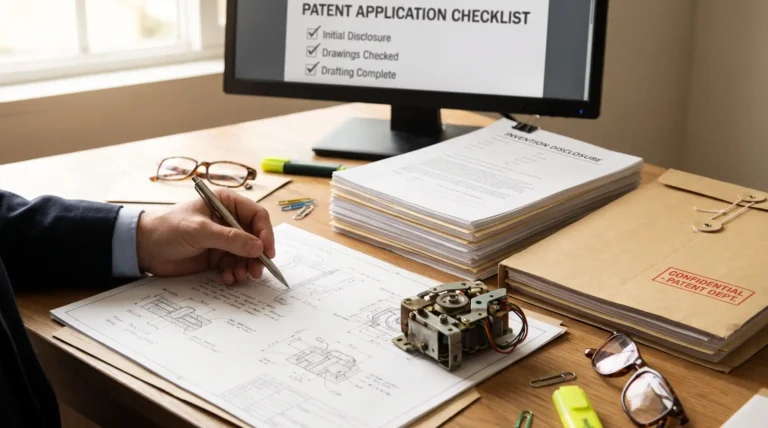
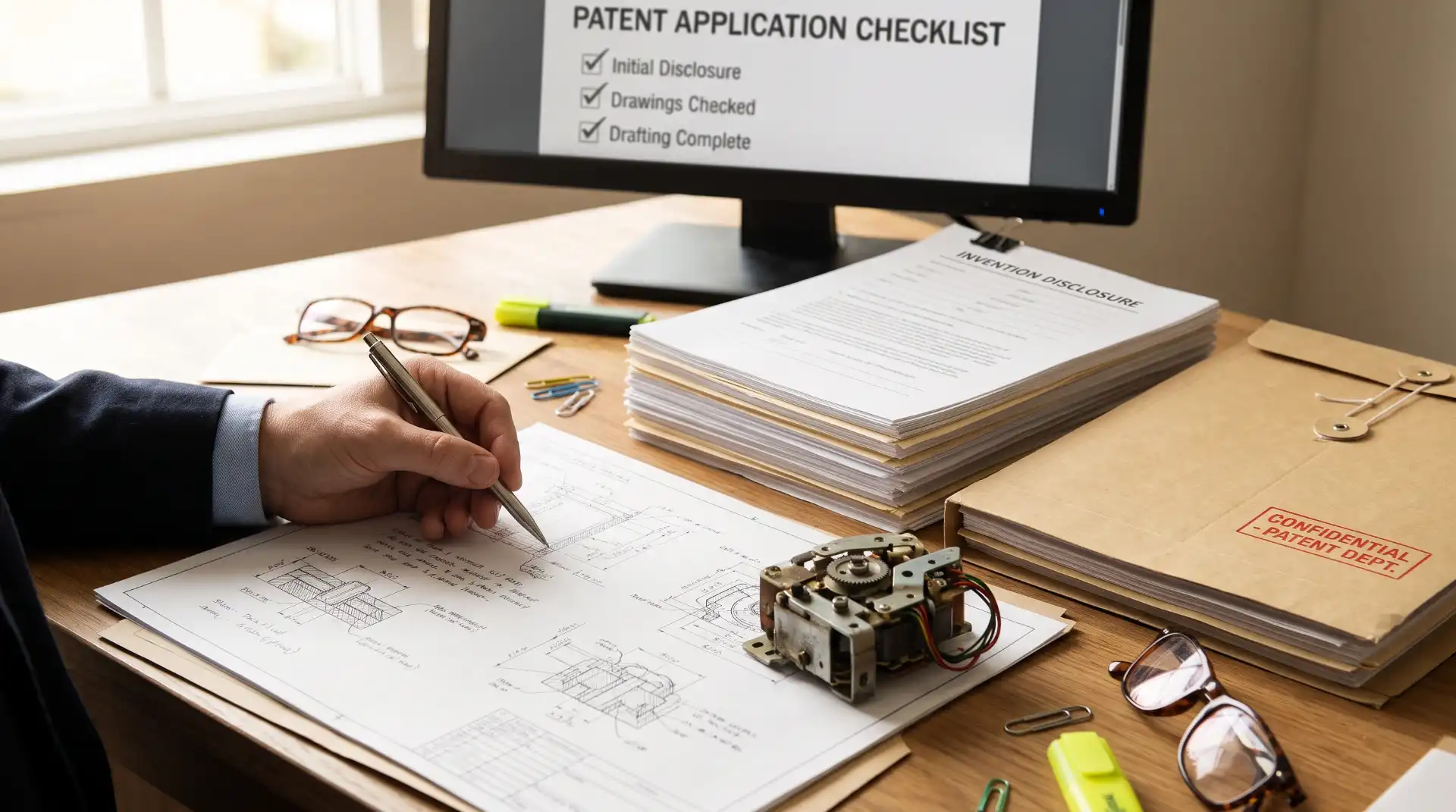
Artificial intelligence tools are becoming part of everyday research and product development in the United States. Inventors use AI assistants to explore technical problems, generate design alternatives, analyze data, write code, improve prototypes, and organize research. For startups and independent inventors, these tools can reduce development time and make sophisticated technical assistance more accessible.
However, using AI during invention development raises an important intellectual property question: Can sharing confidential invention details with an AI tool jeopardize your U.S. patent rights?
The answer depends on what information you share, which AI service you use, the service’s applicable terms and data-handling practices, whether the disclosure is confidential or publicly accessible, and what you intend to protect.
Sharing technical information with an AI tool does not automatically destroy patent rights. A private interaction with an AI service is not necessarily equivalent to publishing an invention for the entire world to see. Likewise, the use of an AI assistant does not automatically prevent an invention from qualifying for a U.S. patent.
Nevertheless, careless disclosure can create meaningful risks. An inventor may expose a trade secret, weaken contractual confidentiality protections, create uncertainty about who has access to technical information, or inadvertently disclose an invention before filing a patent application. Some AI services may retain submitted information, allow human review under certain circumstances, or use data according to settings and contractual terms that inventors have not examined.
Patent law adds another layer of complexity. Public disclosure before filing can affect patentability, particularly outside the United States. AI-assisted invention also raises questions about human inventorship, ownership, and documentation.
For inventors, engineers, research teams, and technology businesses, the best approach is not necessarily to avoid AI altogether. Instead, it is to understand the legal risks, establish clear rules for confidential information, and coordinate AI use with an effective patent strategy.
Why Inventors Are Sharing More Information With AI Tools
AI assistants can help solve problems that previously required extensive manual research or specialized technical support. A mechanical engineer might ask an AI system to compare alternative cooling arrangements. A software developer might request suggestions for reducing processing delays. A medical-device startup might use AI to organize test results or identify potential design weaknesses.
These activities can be useful during early-stage development, when inventors are exploring possibilities and have not yet decided which technical solutions deserve commercial investment.
The difficulty is that the most useful prompts often contain the most sensitive information.
An inventor may describe an unpublished mechanism, upload detailed engineering drawings, paste proprietary source code, explain an unusual manufacturing process, or provide experimental data that reveals how an invention works. The AI system may produce a useful answer precisely because the inventor supplied information that would otherwise remain confidential.
That creates a practical tension between productivity and protection.
An invention may have substantial commercial value before a patent application is filed. Its value could depend on a new technical arrangement, a more efficient process, a novel material combination, a specialized algorithm, or a manufacturing method that competitors have not discovered.
If the inventor shares these details without understanding the service’s privacy terms or the consequences of disclosure, the business may take an avoidable risk.
The central question is not whether AI is inherently unsafe. It is whether the information being submitted is appropriate for the particular tool, account, and contractual arrangement.
Does Sharing an Invention With AI Automatically Destroy Patent Rights?
No. There is no general U.S. patent rule stating that every submission of invention details to an AI system automatically invalidates the invention or makes a patent impossible.
The legal analysis depends on the circumstances.
A private interaction with an AI service may be treated differently from a public social media post, an openly accessible technical report, or a presentation that reveals the invention to an unrestricted audience. The applicable terms, access controls, confidentiality obligations, and actual handling of the submitted information can all matter.
For example, an engineer may ask an approved enterprise AI tool to summarize a confidential technical document under a company agreement that restricts the use and disclosure of submitted data. That situation is materially different from uploading the same document to a public forum where anyone can read and copy it.
However, even a private AI interaction deserves scrutiny. An inventor should not assume that a service is confidential merely because the conversation appears inside an account or is not visible to other ordinary users.
A service may have specific rules governing data retention, human review, model improvement, account administration, and disclosure in response to legal obligations. Those rules can vary by provider, subscription, product, and configuration.
The safest approach is to determine the service’s actual protections before submitting sensitive technical information.
Private AI Use Versus Public Disclosure
Patent law distinguishes between information that remains confidential and information that becomes publicly available. But an inventor should not assume that every disclosure outside a patent office is automatically private or that every disclosure to a third party is automatically public.
The relevant facts can include whether the information was accessible to the public, whether recipients were bound by confidentiality obligations, and whether the disclosure revealed enough technical detail to affect patentability.
A prompt that describes a general problem without revealing the inventive solution may pose less risk than uploading complete drawings and explaining the specific mechanism that makes the invention work.
Similarly, a limited technical discussion with an appropriately obligated professional may differ from posting the same details on an unrestricted website.
The practical lesson is to assess the content and the circumstances of the disclosure rather than relying on the assumption that AI conversations are always private.
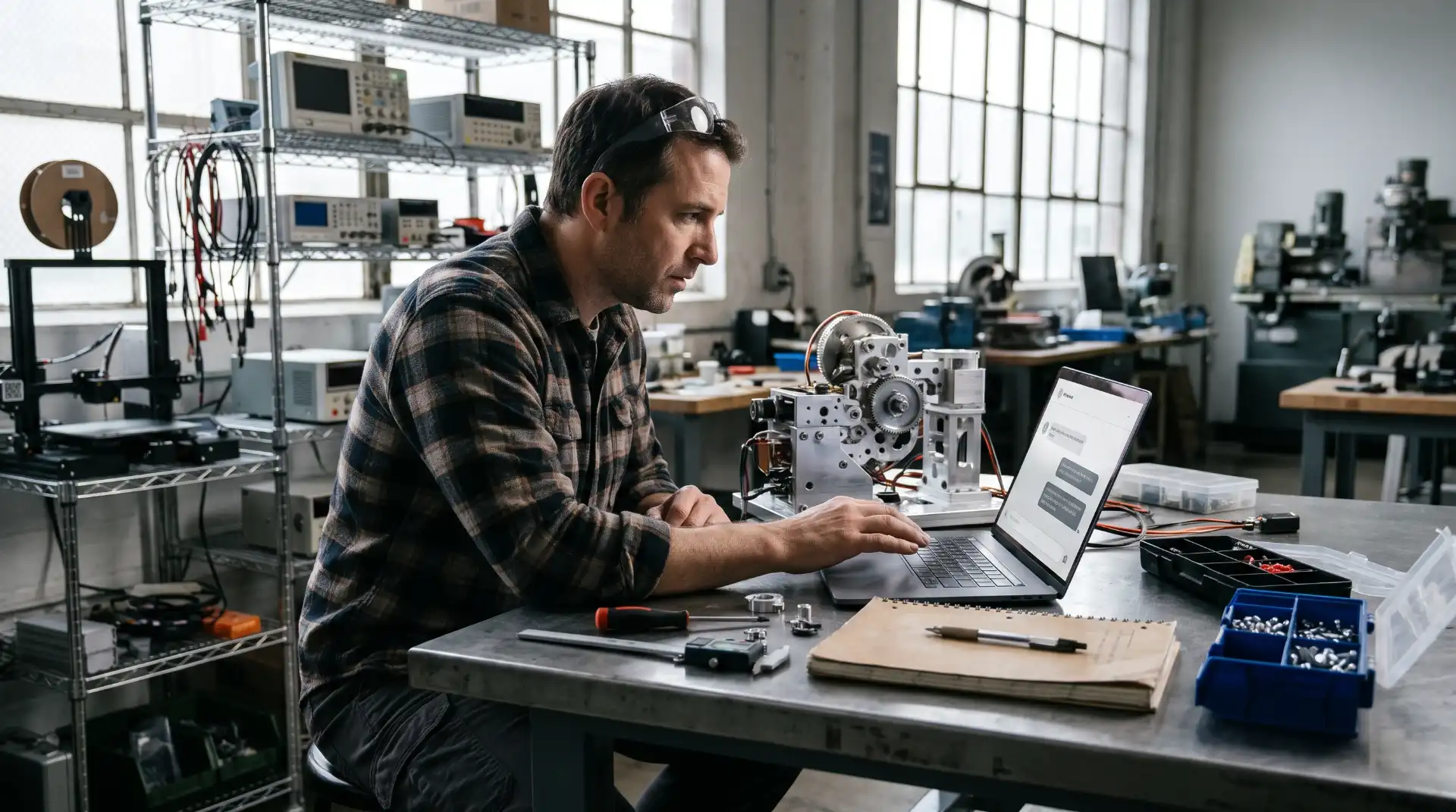
How U.S. Patent Law Treats Public Disclosure
Under the America Invents Act, U.S. patentability rules generally consider whether claimed subject matter was patented, described in a printed publication, in public use, on sale, or otherwise available to the public before the relevant effective filing date, subject to statutory exceptions.
This framework is important because patent protection depends in part on timing.
An inventor who publicly reveals an invention before filing may create an obstacle to obtaining a patent. Whether a particular disclosure qualifies as prior art requires a fact-specific legal analysis.
The U.S. Patent and Trademark Office explains these principles in its patent guidance and educational materials. Its Provisional Application for Patent guidance also discusses public disclosure and the importance of filing dates.
An ordinary private AI conversation does not automatically establish that the invention became publicly available. Nevertheless, if submitted material is subsequently published, exposed to an unrestricted audience, or otherwise made available in circumstances relevant under patent law, the disclosure could become significant.
The inventor may not know how the service handles the information unless the applicable terms and technical settings have been reviewed.
This uncertainty is one reason to avoid submitting a complete, unfiled invention disclosure to an unfamiliar AI platform.
The U.S. One-Year Grace Period Is Not a Safety Net for Every Disclosure
U.S. patent law provides limited exceptions for certain inventor-originated disclosures made within one year before the effective filing date. This is commonly described as the one-year grace period.
However, it is dangerous to treat that period as permission to disclose an invention freely.
The exception is not a universal cure for every disclosure, every source of prior art, or every patentability problem. A disclosure by another person, a separate earlier filing, or other circumstances may require a different analysis.
More importantly, many foreign jurisdictions apply stricter rules concerning pre-filing disclosure and may not offer a comparable grace period.
An inventor who wants protection in multiple countries could therefore lose important foreign patent opportunities even if a particular U.S. claim remains potentially available.
A business should ideally determine its filing strategy before making the invention public or submitting sensitive details to an AI service whose confidentiality arrangements are uncertain.
The Biggest Risk May Be Losing Trade Secret Protection
Patent rights are only one part of intellectual property protection. Many businesses also rely on trade secrets to protect valuable technical information.
A trade secret can include a manufacturing method, formula, algorithm, process, source code, technical specification, testing procedure, or other information that derives economic value from not being generally known and is subject to reasonable efforts to maintain its secrecy.
The federal Defend Trade Secrets Act and applicable state laws provide legal protection for qualifying trade secrets. However, protection depends on the relevant legal requirements and facts.
This is where AI use can create a separate problem.
Suppose a small manufacturing company has developed a proprietary method for reducing waste during the production of a specialized component. The company has not filed a patent application because its competitive advantage depends on keeping the process secret.
An engineer uploads the complete manufacturing procedure to an AI assistant and asks for ways to improve efficiency.
If the service’s terms, configuration, or handling practices permit the information to be disclosed or used in ways inconsistent with the company’s secrecy measures, the company may face a difficult trade-secret issue.
That does not mean every AI submission destroys trade-secret status. The legal analysis depends on the actual circumstances, including the confidentiality arrangements and reasonable measures taken to protect the information.
Nevertheless, a business that permits employees to upload sensitive technical material without reviewing the relevant service’s protections may undermine the secrecy controls on which its trade-secret strategy depends.
Protecting confidential invention details is particularly important when a company uses AI during software development. Before submitting proprietary code, technical specifications, or unpublished designs to an AI service, businesses should understand their intellectual property rights and confidentiality obligations. Legal Journal’s article Software Patents and Generative AI: What Developers and Companies Need to Know explores related risks involving AI-assisted development, patent protection, and the protection of technical innovations.
Patent Protection and Trade Secret Protection Are Different
A patent generally requires an application that discloses the claimed invention sufficiently to satisfy patent law. In return, an issued patent can provide enforceable rights within the scope of its claims for the applicable term.
Trade secret protection operates differently. It can continue while the information qualifies as a trade secret and reasonable secrecy measures are maintained, subject to the applicable law. It does not generally prevent independent development or lawful reverse engineering.
An inventor must therefore decide which strategy best suits the technology.
A readily reverse-engineered product may be a stronger candidate for patent protection. A confidential manufacturing process that competitors cannot easily discover might be better suited to trade-secret protection, depending on the business circumstances.
AI tools should be evaluated within that larger decision. If a company intends to preserve a technical method as a trade secret, submitting the method to an unapproved external service may be inconsistent with its protection strategy.
For more background on protecting confidential technical information, inventors can consult the Legal Journal article Software Patents and Generative AI: What Developers and Companies Need to Know, which discusses intellectual property considerations surrounding AI-assisted technical development.
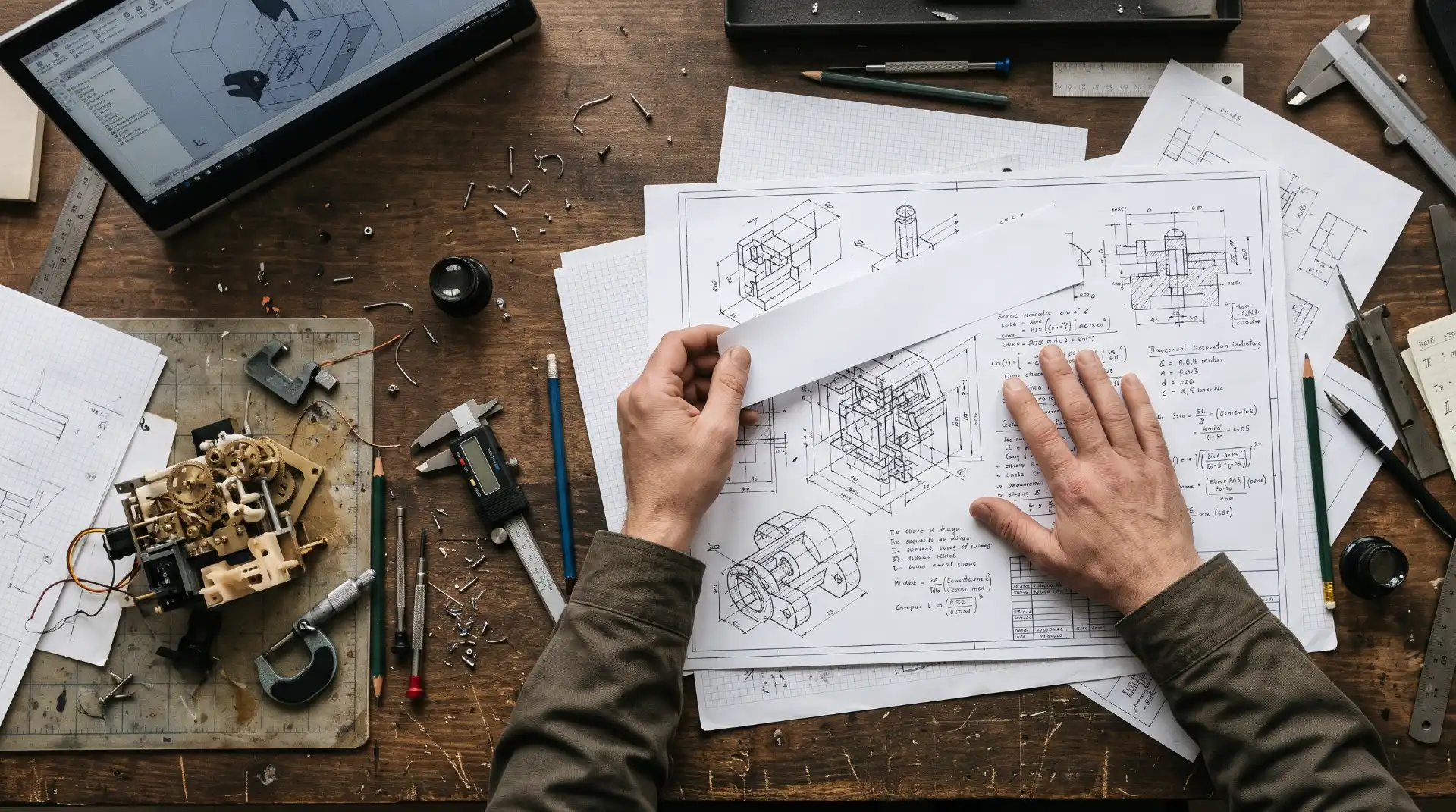
Can an AI Provider Use or Disclose Your Invention Details?
The answer depends on the service and the agreement that applies to your account.
AI providers may offer different products for individual users, businesses, developers, and enterprise customers. Their data-handling practices may differ across those products.
Relevant terms may address whether submitted content can be used to improve models, whether authorized personnel can review it, how long information is retained, and what happens when an account is deleted. Business services may also offer additional contractual safeguards or administrative controls.
Inventors should not rely on general statements about an AI company’s privacy practices when a specific product or account configuration is involved. They should review the terms that actually govern their use.
For example, an individual user might have different settings and contractual protections from an employee using an organization-managed enterprise service. The existence of an enterprise offering does not automatically establish that every enterprise account has the same settings or protections.
The inventor should identify the specific product, applicable terms, account configuration, and company policies before submitting confidential information.
Read the Terms Before Uploading Technical Documents
Before using an AI service for patent-sensitive work, determine whether the terms permit the intended use and what protections apply to submitted information.
Pay attention to data-use permissions, retention, human review, confidentiality commitments, account administration, and deletion procedures. If the provider offers an enterprise agreement, examine whether it addresses confidential information and whether the organization has configured the product as intended.
Also consider whether information may be shared with third-party service providers or processed through external systems. Such arrangements do not necessarily mean information becomes public, but they can matter when assessing confidentiality and contractual protections.
For especially sensitive inventions, the company may require a legal or security review before approving a tool.
A general privacy policy should not be treated as a substitute for understanding the exact obligations governing the particular service.
What Happens If You Upload Patent Drawings, Source Code, or Technical Specifications?
The sensitivity of the information matters.
A broad question such as “What factors affect heat transfer in a compact enclosure?” may reveal little about an invention. Uploading a detailed drawing of a new heat-management mechanism, together with exact dimensions and an explanation of its unique operation, could reveal much more.
Similarly, asking an AI assistant to explain a general programming concept is different from submitting an unreleased source-code repository containing a proprietary algorithm.
Technical documents can disclose the inventive concept through a combination of details. Even if no single drawing or paragraph seems decisive, the complete set of information may reveal how the invention works.
Before uploading files, inventors should consider whether the AI tool genuinely needs the original document. In many cases, they can obtain useful help by asking a generalized question, removing identifying details, or providing a simplified example that does not reveal the key technical feature.
Redaction should be meaningful, not cosmetic. Removing a company name while leaving the full invention architecture intact may do little to protect the underlying information.
For a highly sensitive invention, the safest option may be not to upload the document at all until an authorized legal and security review has taken place.
Could Sharing Invention Details Affect Patent Novelty?
Potentially, but the answer depends on the nature of the disclosure and the facts.
Novelty concerns whether the claimed invention meets the applicable requirements in view of prior art. A public disclosure of the inventor’s own work may be relevant under the applicable rules, while a private submission that does not make the information publicly available may be treated differently.
An inventor should not assume that uploading a file to an AI service automatically makes it prior art. Nor should the inventor assume that the upload is harmless simply because the service does not display the file on a public webpage.
The key questions include whether the information became available to the public, whether another person could access or publish it, whether confidentiality obligations applied, and what the submitted material revealed.
If the AI service or an associated process later exposes the information publicly, the disclosure could require careful analysis.
The inventor’s filing date, the content of the disclosure, the status of any patent application, and the countries in which protection is sought may all matter.
Why International Patent Rights Need Special Attention
U.S. inventors often seek protection in other markets. A startup might develop a product in California while planning to manufacture or sell it in Europe, Japan, South Korea, or other jurisdictions.
Patent systems differ in how they treat disclosures made before filing. The United States has a limited grace-period framework for certain inventor-originated disclosures, but many foreign systems emphasize filing before public disclosure.
Consequently, a disclosure that does not necessarily prevent a U.S. patent from issuing may still jeopardize foreign patent opportunities.
This is particularly important for businesses that expect to license their technology internationally or seek investment based on a global patent portfolio.
An inventor should not rely on the U.S. grace period without considering foreign filing goals.
Does Using AI Change Who Can Be Named as the Inventor?
Sharing invention details with an AI tool can also raise questions about human inventorship, especially when the system suggests a technical solution that the inventor later develops.
Under current U.S. patent law, only natural persons can be named as inventors. AI systems can assist the inventive process, but they cannot themselves be listed as inventors on a U.S. patent application.
The USPTO’s November 2025 revised guidance confirms that the same legal standard for determining inventorship applies whether or not AI is used during the invention process. The agency rescinded its February 2024 AI inventorship guidance and emphasized that the focus remains on human contribution.
The current guidance is available through the USPTO’s FAQs on Inventorship Guidance for AI-Assisted Inventions.
This means that using AI to explore a technical problem does not automatically disqualify a human inventor. However, the person who entered a prompt is not automatically the inventor merely because they operated the system.
The relevant analysis concerns the human contribution to the conception of the claimed invention under the applicable legal standard.
AI-assisted invention also raises questions about how human contributions should be documented and evaluated. The distinction between using AI as a development tool and identifying the legally recognized inventor is important when preparing a patent application. For additional guidance, read AI Software and Patent Protection: What Developers Should Know in 2026, which examines U.S. patent eligibility, inventorship, and the challenges of protecting AI-assisted software innovations.
Document the Human Contribution
Inventors and companies should maintain appropriate records of how significant inventions developed.
These records may include engineering notes, test results, prototypes, design revisions, technical discussions, and records of important decisions made after reviewing AI-generated suggestions.
The purpose is to preserve a reliable history of the invention, not to create unnecessary paperwork for every routine use of an AI assistant.
For example, an engineer might use AI to generate several possible cooling-system designs, then independently evaluate them, combine technical features, modify the geometry, and conduct experiments that lead to a new solution.
A useful record would describe the technical problem, the alternatives considered, the human decisions and modifications, and the results of testing. This may help patent counsel assess inventorship and prepare an accurate application.
Companies should also avoid naming people as inventors simply because they supervised a project, managed the team, or operated the AI tool. Inventorship must be assessed according to the actual contribution to the claimed invention.
Can AI Tools Help Draft a Patent Application Safely?
AI systems can assist with organizing technical information, summarizing research, developing preliminary outlines, and improving the clarity of written descriptions. However, the use of AI for patent drafting creates both confidentiality and accuracy concerns.
A patent application is a legal document. Its specification and claims must accurately describe the invention and satisfy applicable requirements. A system may produce plausible language that misstates a technical relationship, invents a feature, omits a limitation, or describes an implementation that the inventor has not actually developed.
Uploading confidential invention details into an AI tool can also create the same data-handling questions discussed above.
For these reasons, inventors should use AI drafting tools only within an approved process that addresses confidentiality, technical verification, and legal review.
A patent professional should evaluate the claims, disclosure, inventorship, filing strategy, and other relevant issues before the application is submitted. AI-generated text should not be assumed to be legally sufficient merely because it reads professionally.
Patent Applications Must Enable the Invention
A patent application must satisfy statutory disclosure requirements, including written description and enablement. In general terms, the application must adequately describe the claimed invention and teach the relevant skilled person how to make and use it, as required by law.
A generic AI-generated description may be too vague to meet these requirements. Conversely, a technically detailed AI-generated passage may include unsupported assumptions or inaccurate statements.
The application should reflect the invention that the human inventor actually developed and the subject matter the applicant seeks to claim.
An inventor should not allow an AI system to create fictional experimental results, claim features that have not been established, or describe an implementation that is inconsistent with the actual work.
Technical accuracy is essential because defects in the application can affect the patent rights ultimately obtained.
What About Provisional Patent Applications?
Some inventors consider filing a provisional patent application before discussing an invention with outside parties or using AI tools more extensively.
A provisional application can establish an early filing date for the subject matter adequately disclosed in the application, provided the legal requirements are met and the applicant later takes the required steps to pursue a nonprovisional application.
However, a provisional application is not an automatic patent grant, and it does not protect every future improvement simply because the applicant uses a broad title or a short description.
The technical disclosure matters. If a provisional application fails to describe a particular feature adequately, a later application may not receive the provisional filing date for that feature.
Inventors should therefore avoid treating a rushed, incomplete provisional filing as a universal solution to confidentiality risks.
A properly prepared provisional application may be useful as part of a broader filing strategy, but the appropriate approach depends on the invention, the available evidence, commercial objectives, and the relevant deadlines.
Practical Examples: When AI Use May Create Patent Risks
Example 1: A Startup Uploads Its Complete Prototype Design
A startup develops a new mechanism for improving battery cooling. Before filing a patent application, an engineer uploads the full CAD drawings, dimensions, materials, and operating principles to an unfamiliar AI service.
The service produces useful design recommendations, but the engineer has not reviewed the service’s data-handling terms.
This does not automatically mean the startup has lost its patent rights. The next step is to determine what information was submitted, how the service handles it, whether the information was accessible to others, and what confidentiality arrangements applied.
The startup should preserve relevant records and consult patent counsel before making further disclosures. It should also review whether the invention remains protected as a trade secret and whether filing should be expedited.
Example 2: An Engineer Uses an Approved Enterprise AI Tool
A company has approved an enterprise AI service for confidential engineering work after reviewing its contractual and security protections. An engineer uses the service to summarize test results and compare possible manufacturing approaches.
The company has established access controls, employee training, and rules governing what may be uploaded.
This arrangement may reduce certain risks, depending on the actual contractual and technical safeguards. It does not eliminate every patent or confidentiality issue, but it illustrates how AI can be incorporated into a controlled development process.
The company should still evaluate inventorship, preserve appropriate development records, and file before making the invention publicly available when that is important to its patent strategy.
Example 3: An Inventor Posts an AI-Generated Design Online
An inventor asks an AI system to help improve a mechanical device and then publishes the resulting design, including detailed drawings, on an unrestricted website.
This situation is different from a private AI interaction. The public post may qualify as a disclosure relevant to patentability, depending on its content and the applicable law.
The inventor should promptly seek advice about filing dates, U.S. grace-period rules, and foreign patent options. Waiting until the invention attracts commercial interest could make the problem more difficult.
Example 4: AI Suggests a Feature That the Inventor Never Developed
An engineer asks an AI assistant to improve a sensor. The system proposes a novel feature, and the engineer copies the description into an invention disclosure without testing or independently developing the concept.
The company should not automatically assume that the engineer is the inventor of every feature in the AI output. It should assess the human contribution to the claimed invention and determine whether the proposed feature is technically established and adequately supported.
The correct response is careful technical and legal review, not automatic inclusion of every AI suggestion in a patent application.
How to Use AI Tools Without Unnecessarily Risking Patent Rights
A practical AI policy should distinguish between general technical questions and confidential invention information.
Employees may be permitted to ask general questions about engineering principles, common algorithms, public patent documents, or publicly available technical literature. Submitting unpublished invention details, proprietary source code, unreleased drawings, or sensitive test results should require a higher level of authorization.
The organization should maintain a list of approved AI tools and explain which categories of information may be entered into each service. Employees should know whether their accounts are personal or company-managed and whether the relevant terms have been reviewed.
The company should also train staff to recognize information that could reveal a patentable invention or trade secret. A prompt does not have to contain the word “confidential” to disclose valuable technical information.
Where possible, users should minimize the information shared. They may be able to obtain useful assistance by describing the general technical problem without revealing the unique mechanism, proprietary values, or complete design.
For particularly sensitive work, an organization may decide that no external AI tool should receive the information unless a specific agreement and security review authorize it.
Establish a Pre-Filing Review Process
Before a potentially valuable invention is disclosed outside the organization, the company should consider a formal review involving the engineering team and patent counsel.
The review can identify what is new, who contributed to its conception, whether the company intends to seek patent protection, and whether a filing should occur before further disclosure.
It can also determine whether parts of the technology should remain trade secrets rather than being included in a patent application.
This process does not need to delay every engineering experiment. It should focus on inventions that have meaningful commercial potential or contain particularly sensitive information.
A structured review is especially valuable for startups, research laboratories, manufacturers, and companies developing AI-related technologies.
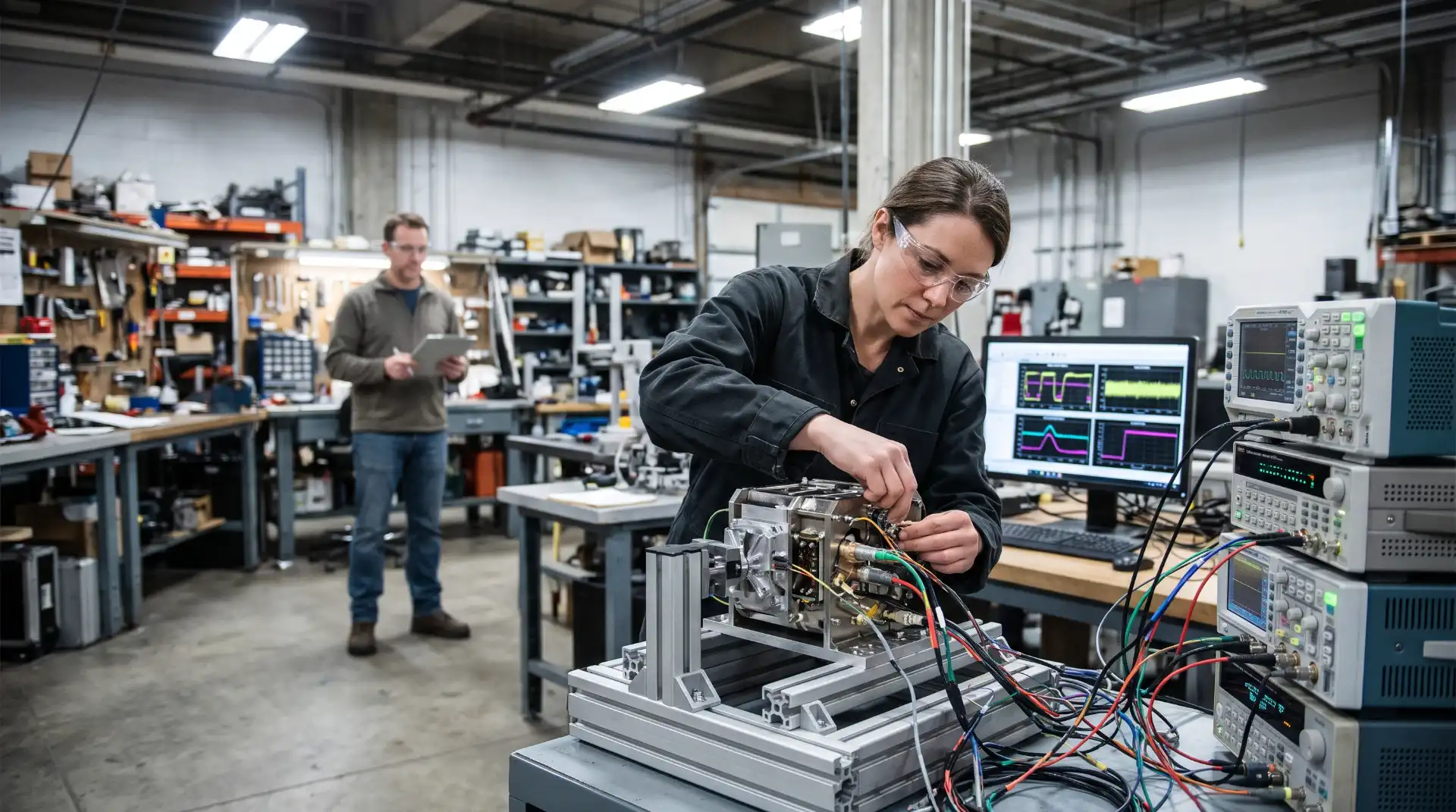
What to Do If You Have Already Shared Confidential Invention Details With AI
If you have already submitted sensitive invention details to an AI service, avoid assuming either that your patent rights are lost or that there is nothing to worry about.
Start by identifying exactly what was shared, when it was submitted, which account and service were used, and what terms and settings applied at the time.
Preserve relevant records, including the prompt, uploaded documents, account settings, service terms, and any available deletion or retention information. Do not destroy records that may be relevant to a later legal assessment.
Next, determine whether the information was actually disclosed publicly or whether the concern is limited to possible retention or processing under the service’s terms. These are different circumstances and may require different responses.
If the invention has significant commercial value, contact a patent attorney promptly. The attorney can assess the disclosure, the invention’s filing history, the potential impact on U.S. and foreign rights, and whether an application should be filed or another protective step taken.
If the information is also a trade secret, the company should review its confidentiality controls and determine whether additional steps are appropriate.
Avoid making further disclosures while the situation is being evaluated. A careful, fact-based assessment is more useful than immediately concluding that all rights have been lost.
A Practical Checklist for Inventors and Technology Companies
Before submitting invention details to an AI service, consider the following safeguards:
- Identify the information. Determine whether the prompt contains an unfiled invention, confidential drawings, proprietary code, experimental results, or trade secrets.
- Review the service. Check the applicable terms, data-use permissions, retention practices, account settings, and confidentiality commitments.
- Use approved accounts. Follow company policy and avoid transferring confidential work to an unapproved personal account.
- Minimize disclosure. Provide only the technical details needed to obtain useful assistance.
- Document invention development. Keep meaningful records of human contributions, technical decisions, testing, and revisions.
- Review filing strategy early. Consider patent protection before public disclosure or other activities that could affect rights.
- Consider foreign markets. Do not assume that the U.S. grace period protects international patent opportunities.
- Protect trade secrets. Maintain access controls, confidentiality agreements, and reasonable secrecy measures.
- Seek legal advice when needed. Consult qualified patent counsel before taking steps that could affect valuable intellectual property.
These measures cannot eliminate every risk, but they can help inventors use AI more responsibly while protecting their commercial interests.
Frequently Asked Questions
Can I ask ChatGPT about my invention without losing patent rights?
A private AI interaction does not automatically destroy U.S. patent rights. However, you should review the specific service’s terms and settings before sharing confidential technical details. If the invention is valuable and has not yet been filed, consider using a generalized description or consulting patent counsel first.
Does uploading an invention to AI count as public disclosure?
Not necessarily. The answer depends on the circumstances, including accessibility, confidentiality obligations, service terms, and how the information is handled. An upload should not automatically be treated as public, but it should not be assumed to be confidential without reviewing the relevant facts.
Can AI companies steal or patent my invention?
The legal answer depends on the circumstances. Uploading information does not automatically transfer ownership of an invention to an AI provider. However, contractual terms, confidentiality practices, unauthorized access, and the handling of the submitted material may matter. Only natural persons can be named as inventors under current U.S. patent law, although ownership of patent rights can be assigned to companies or other entities as permitted by law.
Should I file a provisional patent application before using AI?
A provisional application may be appropriate for some inventions, but it must adequately describe the subject matter for which an early filing date is sought. It is not a universal solution to every confidentiality issue, and it does not automatically provide a patent. A patent attorney can help determine whether and when filing is appropriate.
Can I use AI to improve a patentable invention?
Yes. AI can assist with research, design exploration, testing, and technical analysis. The important issues include confidentiality, accurate documentation, human inventorship, and whether the final invention satisfies patentability requirements.
What if I already uploaded confidential drawings or source code?
Preserve the relevant records, review the service’s terms and settings, determine what was disclosed, and seek legal advice promptly if the information has significant commercial value. Do not assume that patent rights have automatically been lost, but avoid making additional disclosures until the risks have been assessed.
Conclusion: Protect the Invention Before Sharing the Details
AI tools can make invention development faster and more accessible, but their convenience should not replace careful intellectual property planning.
Sharing invention details with AI does not automatically destroy U.S. patent rights. The real risk depends on the information submitted, the service’s terms and data-handling practices, whether the disclosure becomes public, and the inventor’s overall patent and trade-secret strategy.
For inventors, the most important step is to recognize that confidential technical information can have significant value before a patent application is filed. A complete prototype design, source-code repository, manufacturing procedure, or explanation of a novel mechanism should not be treated like ordinary text.
Review the service, minimize unnecessary disclosure, follow approved company policies, and document the human contribution to important inventions. If patent protection is being considered, evaluate filing strategy before making the invention publicly available. If trade-secret protection is important, maintain reasonable measures to preserve secrecy.
The goal is not to abandon AI. It is to use AI in a way that supports innovation without needlessly exposing valuable intellectual property.
When the invention has substantial commercial potential, a qualified U.S. patent attorney can help evaluate the relevant facts, identify filing options, and develop a strategy that balances AI-assisted productivity with confidentiality and long-term patent protection.
Legal Disclaimer: This article provides general educational information about U.S. patent and intellectual property law. It is not legal advice and does not create an attorney-client relationship. The effect of sharing information with an AI service depends on the facts, the applicable terms, the disclosure involved, and the jurisdictions in which protection is sought. Consult a qualified attorney regarding a specific invention or disclosure.