A Billion-Dollar Patent Dispute Raises Important Questions About Federal Government Contracts
The development and distribution of COVID-19 vaccines transformed the pharmaceutical industry and created one of the most significant public health and scientific efforts in modern American history. Pharmaceutical companies, biotechnology researchers, government agencies, universities, and private investors worked together to accelerate vaccine development during an unprecedented global emergency.
However, the rapid development of these vaccines also created complicated intellectual property disputes.
One of the most important legal controversies involves Moderna, Inc., the manufacturer of the COVID-19 vaccine Spikevax, and two biotechnology companies, Arbutus Biopharma Corporation and Genevant Sciences GmbH. The dispute concerns patents covering lipid nanoparticle technology, which helps deliver fragile messenger RNA (mRNA) into human cells.
The companies accused Moderna of using patented technology without authorization when developing and manufacturing its COVID-19 vaccine. Moderna disputed the claims and raised an unusual legal defense: because the United States government purchased large quantities of its vaccine through federal contracts during Operation Warp Speed, certain alleged patent infringement should be treated as activity performed for the government.
This argument relies on a federal statute that many businesses outside government contracting rarely encounter: 28 U.S.C. § 1498(a).
The statute generally provides that when a patented invention is used or manufactured by or for the United States with government authorization or consent, the patent owner’s remedy is an action against the federal government in the U.S. Court of Federal Claims rather than an ordinary infringement action against the government contractor.
The distinction is important.
A pharmaceutical company does not automatically receive immunity from patent infringement claims simply because it sells products to the federal government. The company must establish that the relevant patented activity falls within the statute’s requirements.
In Moderna’s case, the central question became whether vaccine doses purchased under a federal contract but distributed to members of the general public were genuinely manufactured or used for the government within the meaning of Section 1498.
On February 2, 2026, the U.S. District Court for the District of Delaware issued an important decision addressing that argument. The court distinguished between doses supplied directly for federal government employees and doses purchased by the government but distributed to the public.
The dispute subsequently reached the U.S. Court of Appeals for the Federal Circuit. Oral arguments took place on November 5, 2026, making the litigation an important development for pharmaceutical companies, patent owners, government contractors, and intellectual property attorneys.
There is another significant financial development. Moderna and Arbutus/Genevant entered into a settlement agreement in March 2026 involving an initial payment of $950 million and a further contingent payment of $1.3 billion tied to the outcome of the government-liability appeal.
As of November 10, 2026, the Federal Circuit had not issued its decision.
The case raises a question extending far beyond COVID-19 vaccines: Can pharmaceutical companies rely on federal procurement contracts to shift patent infringement liability to the United States, and how much control must the government exercise over the allegedly infringing activity?
Understanding the answer requires examining the technology behind the vaccine, the history of the patent dispute, the federal statute, and the implications for future government-supported pharmaceutical development.
1. Understanding the Moderna COVID-19 Vaccine Patent Dispute
The dispute between Moderna, Arbutus Biopharma, and Genevant Sciences centers on a technology known as lipid nanoparticles, commonly abbreviated as LNPs.
Lipid nanoparticles are microscopic structures made from lipid-based materials. They can surround and protect fragile genetic material, allowing it to enter cells.
This technology became especially important during the development of mRNA vaccines.
Messenger RNA carries instructions that cells can use to produce particular proteins. In an mRNA vaccine, the genetic instructions help cells temporarily produce a selected protein associated with a pathogen. The immune system can then recognize that protein and develop an immune response.
However, mRNA is fragile and can be degraded before reaching its intended destination.
Lipid nanoparticles help protect the genetic material and facilitate its delivery into cells.
The technology is not unique to COVID-19 vaccines. It has broader applications in pharmaceutical research, genetic medicine, and other forms of nucleic acid delivery.
Why Lipid Nanoparticle Technology Became Legally Important
Developing an effective LNP delivery system required extensive scientific research.
The composition of the nanoparticles matters because different lipids perform different functions. Some provide structural stability, while others help with encapsulation, delivery, and release of the genetic material.
Researchers must carefully consider the proportions of the components and the processes used to create the particles.
Arbutus and its affiliated company Genevant asserted that they held patents covering relevant aspects of this technology.
Their allegations focused on several U.S. patents involving lipid nanoparticle compositions and manufacturing methods.
The companies claimed that Moderna used protected technology without obtaining an appropriate license.
Moderna disputed the allegations and raised several defenses involving patent validity, infringement, and the application of federal government contracting law.
It is important to distinguish between an allegation of infringement and a final legal determination. The parties’ March 2026 settlement resolved the broader litigation, subject to the limited government-contract appeal that remained pending.
Why the Case Matters Beyond COVID-19
The dispute is important because lipid nanoparticle technology has potential applications beyond a single vaccine.
Pharmaceutical companies invest heavily in delivery systems, manufacturing methods, formulations, and specialized processes.
These innovations can require years of research and substantial financial investment.
Patent owners depend on intellectual property protection to license technology, negotiate partnerships, attract investors, and recover research costs.
At the same time, pharmaceutical manufacturers often collaborate with government agencies, universities, research institutions, and private contractors.
When a government-supported project involves patented technology, questions about authorization, compensation, and infringement can become complicated.
The Moderna litigation provides an important example of how these competing interests can intersect.

2. How Operation Warp Speed and Federal Vaccine Contracts Entered the Dispute
Operation Warp Speed was a U.S. government initiative launched in 2020 to accelerate the development, manufacturing, and distribution of COVID-19 vaccines and treatments.
The program brought together federal agencies and private pharmaceutical companies to support research, manufacturing capacity, and vaccine procurement.
Moderna became one of the major participants.
The federal government’s involvement was significant because vaccine development normally involves substantial financial and commercial risks.
During the pandemic, the government sought to reduce those risks by supporting development and committing to purchase vaccine doses.
These arrangements helped manufacturers plan production and expand manufacturing capacity before all regulatory and commercial uncertainties had been resolved.
Moderna’s August 2020 Supply Contract
On August 9, 2020, Moderna entered into a supply contract known as the C-100 Contract with the Army Contracting Command, an agency within the U.S. Department of Defense.
The agreement included provisions from the Federal Acquisition Regulation (FAR), including FAR 52.227-1 and its Alternate I provision.
The relevant language authorized and consented to certain use and manufacture of inventions covered by U.S. patents in the performance of the contract.
This provision became central to Moderna’s later legal argument.
Moderna maintained that the government’s authorization and consent meant that vaccine manufacturing covered by the contract should be treated as activity performed for the United States.
Under Section 1498(a), this could change who the patent owner must sue.
Instead of pursuing an ordinary patent infringement action against Moderna for qualifying government-directed activity, the patent owner would generally need to seek compensation from the United States in the Court of Federal Claims.
The Difference Between Government Procurement and Government Use
The difficult issue is that government procurement does not necessarily mean every product purchased by the government is used by the government in the same legal sense.
The federal government purchased substantial quantities of Moderna’s vaccine.
However, those doses were not all administered to federal employees or retained for direct government use.
Many were distributed to members of the general public as part of the national vaccination campaign.
This raised a question about the meaning of the words “for the Government” in Section 1498(a).
Does a pharmaceutical company manufacture a product for the government whenever the government purchases it?
Or must the product be intended for a more direct government purpose?
The answer has significant consequences for pharmaceutical companies that manufacture patented products under federal procurement arrangements.
3. What Is 28 U.S.C. § 1498(a), and How Does It Protect Government Contractors?
Section 1498(a) is a federal statute addressing patent and copyright cases involving the United States.
Its patent provisions establish a special legal framework for situations in which a patented invention is used or manufactured by or for the federal government without the patent owner’s authorization.
Under the statute, the patent owner’s remedy generally becomes an action against the United States in the U.S. Court of Federal Claims for reasonable and entire compensation.
The statute also addresses contractors and subcontractors.
It provides that qualifying use or manufacture by a contractor, subcontractor, or other person for the government and with the government’s authorization or consent is treated as use or manufacture for the United States.
This means that the government can become the legally responsible defendant for qualifying activity.
Why Congress Created This Framework
The statute addresses a practical problem.
The federal government regularly purchases goods, technology, equipment, construction services, and other products from private companies.
Those products may involve patented inventions.
If every patent dispute involving government procurement could automatically prevent the government from obtaining essential products, federal operations could face substantial disruption.
Section 1498 provides an alternative.
Rather than allowing an ordinary infringement lawsuit against the contractor to interfere with qualifying government activity, the statute channels the patent owner’s claim toward compensation from the United States.
The arrangement allows government procurement to continue while preserving a mechanism through which patent owners can seek financial compensation.
This is not the same as eliminating patent rights.
The patent owner may still have a claim for compensation, although the identity of the defendant, the court, and certain available remedies change.
Is Section 1498 a Complete Immunity for Pharmaceutical Companies?
No.
The statute should not be interpreted as a blanket immunity for every company that receives a federal contract.
A contractor generally must establish that the allegedly infringing use or manufacture was:
- Covered by a U.S. patent.
- Performed by or for the United States.
- Authorized or consented to by the federal government.
- Connected to the qualifying government activity.
The relationship between the specific patented activity and the government contract is especially important.
For example, suppose a pharmaceutical manufacturer develops a patented drug delivery process under a federal procurement contract.
If the government authorizes the use of a patented invention in performing that contract, Section 1498 may become relevant.
However, if the same company separately manufactures and sells the product for ordinary commercial distribution, those activities do not automatically receive the same protection.
The analysis depends on the particular contract, government authorization, product, and alleged infringement.
The statute is available through the official United States Code, 28 U.S.C. § 1498.
4. What Did the Delaware Federal Court Decide in February 2026?
The February 2, 2026 decision in Arbutus Biopharma Corporation v. Moderna, Inc., Case No. 1:22-cv-00252, was a significant development.
The U.S. District Court for the District of Delaware examined Moderna’s argument that Section 1498(a) transferred responsibility for the alleged patent infringement to the federal government.
Moderna argued that the government contract authorized and consented to the use of patented technology during vaccine manufacturing.
Arbutus and Genevant challenged the argument, emphasizing that the vaccine doses purchased by the government were not all intended for direct federal government use.
The court examined the contract language and the circumstances surrounding the vaccine purchases.
The Court Distinguished Between Different Vaccine Recipients
One of the most important aspects of the decision involved the destination of the vaccine doses.
The district court concluded that Section 1498 applied to approximately 6,244,340 doses supplied directly to federal government employees under the relevant arrangement.
For those doses, the court entered judgment in Moderna’s favor on the Section 1498 defense.
However, the court rejected Moderna’s argument for doses purchased by the government but not distributed directly to federal employees.
Those doses were ultimately made available to the general public.
The court concluded that the government purchase alone did not establish that all those doses were manufactured for the government within the meaning of the statute.
This distinction is central to the dispute.
The court did not simply ask whether the government paid for the vaccines. It considered the purpose and destination of the products and how the government contract applied to the relevant manufacturing activity.
Why the Decision Was Important
The ruling suggested that a government purchase order may not automatically transfer patent infringement responsibility to the federal government.
A company cannot necessarily avoid a patent lawsuit by showing that its customer was a government agency.
The relationship between the patented invention, the contractual obligations, and the government’s intended use may matter.
For pharmaceutical manufacturers, this creates an important legal consideration when structuring federal supply agreements.
A contract that authorizes certain patented activities does not necessarily provide protection for every product manufactured under the same commercial arrangement.
The ruling also raised questions about how Section 1498 should apply when the government purchases products for distribution to the public during a national emergency.
5. Why Moderna Appealed the Government-Contract Ruling
Moderna challenged the district court’s treatment of the government contract.
The company’s argument focused on the statutory language and the government’s authorization and consent to manufacturing activity under the C-100 Contract.
Moderna maintained that the federal government had authorized the relevant manufacturing activities and purchased the vaccine doses through a government procurement arrangement.
From this perspective, the distinction between doses administered to federal employees and doses distributed to the general public should not necessarily determine whether the statutory protection applies.
The federal government also supported Moderna’s position in the appeal.
The Department of Justice argued that interpreting Section 1498 too narrowly could create difficulties for government contracting.
The government’s position raised concerns about how federal procurement agreements would operate if contractors could face ordinary patent infringement litigation for products manufactured under authorized government contracts.
The Patent Owners’ Position
Arbutus and Genevant had a different interpretation.
They argued that the government contract should not automatically shield Moderna from responsibility for manufacturing vaccines that were ultimately distributed to the public.
The patent owners emphasized the distinction between products genuinely supplied for federal government use and products that were purchased by the government but intended for broader public distribution.
The companies also had an important financial interest in the outcome.
The patent dispute involved substantial allegations concerning the use of their LNP technology, and the legal treatment of hundreds of millions of vaccine doses could have major financial consequences.
The Federal Circuit Appeal
The appeal was filed in the U.S. Court of Appeals for the Federal Circuit as Case No. 2026-1581.
The Federal Circuit has national jurisdiction over many patent-related appeals.
The court’s interpretation of Section 1498 could influence future disputes involving government contractors and patented technologies.
On November 5, 2026, the Federal Circuit heard oral arguments.
The judges considered the parties’ positions concerning the meaning of “for the Government,” the scope of the federal contract, and the potential consequences of Moderna’s interpretation.
As of November 10, 2026, the court had not issued a decision.
It is therefore important not to describe Moderna’s appellate position as having been accepted or rejected by the Federal Circuit.
6. The $2.25 Billion Settlement: Why the Appeal Still Matters
One of the most interesting developments in the Moderna dispute is that the parties reached a settlement while the government-contract issue remained unresolved.
On March 3, 2026, Moderna, Arbutus, and Genevant entered into a settlement agreement resolving the broader patent litigation involving the companies’ LNP technology.
The agreement included a fixed payment and an additional contingent payment tied to the outcome of the Section 1498 appeal.
The Initial $950 Million Payment
Under the agreement, Moderna agreed to pay an aggregate $950 million to Arbutus and Genevant.
The payment was made on July 8, 2026.
This was a substantial financial resolution of the broader dispute.
However, the settlement did not simply eliminate every remaining legal question.
Moderna retained the right to appeal the district court’s decision concerning Section 1498.
The Additional $1.3 Billion Contingent Payment
The settlement also included a further aggregate payment of $1.3 billion under specified circumstances.
The payment is linked to whether the Federal Circuit affirms the rejection of Moderna’s Section 1498 defense for the relevant vaccine doses or otherwise determines that the statute does not bar the patent owners’ claims.
If the appellate court concludes that Section 1498 protects Moderna for some but not all relevant doses, the contingent payment can be adjusted according to the settlement’s terms.
This arrangement explains why the appeal remains financially important even though the broader patent litigation has been settled.
The appeal could determine whether the additional $1.3 billion becomes payable, in whole or in part.
The settlement therefore creates an unusual situation in which the parties have resolved the commercial dispute but still have a substantial financial interest in the appellate interpretation of federal patent law.
Why This Is Not Simply a Patent Infringement Trial
The remaining appellate dispute is narrower than the original litigation.
The Federal Circuit is not being asked to retry every issue involving the scientific technology or every patent infringement allegation.
The central remaining question concerns the application of Section 1498(a) to the relevant vaccine doses.
That distinction matters when discussing the case.
The settlement addressed the broader claims, while the appellate proceeding concerns the allocation of responsibility between Moderna and the federal government under the statute.
7. Could Pharmaceutical Companies Use Federal Contracts to Avoid Patent Lawsuits?
The Moderna dispute could influence how pharmaceutical companies approach federal procurement agreements.
Government contracts can create significant commercial opportunities.
Federal agencies may purchase vaccines, medicines, medical equipment, diagnostic technologies, and other products to address public health and national security needs.
However, companies must understand that government procurement does not automatically eliminate patent risk.
Government Authorization Must Be Examined Carefully
One important consideration is the language of the government contract.
Section 1498 specifically addresses government authorization or consent to the use or manufacture of patented inventions.
A company negotiating a federal contract should examine whether the agreement includes relevant authorization and consent language.
The company should also understand which activities the language actually covers.
For example, a contract might authorize the manufacture of a particular medical product for government delivery.
The company may still need to examine whether that authorization extends to manufacturing additional quantities for commercial customers or other distribution channels.
The exact contractual language and surrounding circumstances can be decisive.
The Government’s Intended Use May Matter
Another important consideration is the purpose of the government purchase.
The Moderna dispute illustrates why the destination of the products can become important.
A federal agency might purchase a medical product for direct use by government personnel.
Alternatively, it might purchase the same product for distribution to the general public during an emergency.
These situations can raise different legal questions under Section 1498.
The Federal Circuit’s eventual decision may provide additional guidance about the relationship between federal procurement, public distribution, and patent infringement responsibility.
Commercial Sales Should Be Evaluated Separately
Pharmaceutical manufacturers often operate through multiple distribution channels.
A company might manufacture a drug under a federal contract while also supplying private hospitals, pharmacies, healthcare networks, and international customers.
Each arrangement should be evaluated independently.
A federal contract should not be assumed to protect unrelated commercial activity.
Businesses should maintain records identifying which products were manufactured under particular contracts, which quantities were delivered, and how those products were distributed.
This information can become important in future patent litigation.
8. What the Moderna Dispute Means for Pharmaceutical Patent Owners
The litigation also provides important lessons for patent owners.
Pharmaceutical research frequently involves collaboration among universities, biotechnology companies, manufacturers, and government agencies.
Patents can protect important innovations while allowing companies to negotiate licenses and commercial partnerships.
However, government-supported projects can create additional legal complications.
Patent Owners Should Monitor Government Procurement Agreements
A patent owner whose technology is being used in a federally supported project should consider whether the activity could involve Section 1498.
This is particularly important when the manufacturer has a direct contract with a federal agency or is performing work through a government contractor.
Patent owners should examine the contractual structure and determine whether the government has authorized or consented to the relevant use or manufacture.
The existence of a government contract does not automatically resolve the question.
However, ignoring the contract can create problems when a patent infringement dispute develops.
Licensing Agreements Should Address Government Use
Patent licensing agreements can also become more complicated when a licensee supplies products to the federal government.
A patent owner may wish to address government procurement, authorized manufacturing, distribution rights, reporting obligations, royalties, and the treatment of products manufactured under federal contracts.
These provisions can help reduce uncertainty.
For example, a biotechnology company licensing a delivery technology to a pharmaceutical manufacturer may want to establish how royalties are calculated when the licensee supplies government agencies.
The parties may also need to determine how the agreement treats products distributed to members of the public under a federal procurement program.
Clear drafting can reduce the likelihood of later disputes.
Patent Owners Should Preserve Evidence of Unauthorized Use
When patent infringement is suspected, documentation can be essential.
Patent owners should preserve relevant licensing agreements, communications, manufacturing records, technical information, and evidence concerning the allegedly infringing products.
In government-related disputes, identifying the specific products and quantities involved can be particularly important.
The Moderna case illustrates that even the destination of individual vaccine doses may become relevant to the statutory analysis.
9. The Difference Between Section 1498 and the PREP Act
Another important issue involves the distinction between patent liability and public health liability protections.
During the COVID-19 pandemic, federal officials relied on the Public Readiness and Emergency Preparedness Act, commonly known as the PREP Act.
The PREP Act provides liability protections for certain covered persons and activities involving qualifying medical countermeasures during a declared public health emergency, subject to statutory requirements and exceptions.
However, the PREP Act and Section 1498 address different legal issues.
Section 1498 concerns patent and copyright claims involving qualifying government-authorized use or manufacture.
The PREP Act addresses certain liability claims associated with the administration or use of covered medical countermeasures.
A company should not assume that a liability protection under one statute automatically resolves a dispute under the other.
For example, a vaccine manufacturer may have arguments concerning PREP Act protection in a personal injury lawsuit while facing a separate patent infringement claim involving patented technology.
The legal analysis depends on the particular statute and the nature of the claim.
This distinction is important because discussions about pandemic-related legal immunity sometimes combine very different legal doctrines.
10. How the Case Could Affect Future Government-Supported Pharmaceutical Research
The Moderna litigation could have implications beyond vaccine procurement.
The federal government supports research and development in numerous scientific fields.
Agencies may fund or purchase pharmaceutical products, medical devices, diagnostic technologies, laboratory equipment, and other inventions.
These arrangements can involve patented technology owned by universities, startups, established biotechnology companies, and research institutions.
The treatment of government-authorized patent use can therefore affect future commercial agreements.
Biotechnology Startups
Smaller biotechnology companies often rely on patents to attract investment and negotiate licensing arrangements.
A startup may develop a specialized drug delivery platform and license it to a larger pharmaceutical manufacturer.
If the manufacturer later supplies products under federal contracts, the parties may need to determine how Section 1498 affects their licensing arrangements.
The potential shift in patent liability could influence royalty structures, indemnification provisions, and contract negotiations.
Startups should not assume that their patents will be treated identically in private commercial sales and government-supported procurement.
Universities and Research Institutions
Universities frequently develop technologies through federally funded research.
The Bayh-Dole Act allows qualifying federal contractors, including universities and nonprofit organizations, to retain title to certain inventions developed with federal funding, subject to statutory conditions and government rights.
However, the ownership of a patent and the government’s potential rights under federal funding arrangements are separate legal questions from the application of Section 1498.
The Moderna dispute demonstrates why biotechnology licensing agreements should account for both patent ownership and government procurement.
Large Pharmaceutical Manufacturers
Large pharmaceutical companies may have extensive federal contracting relationships.
They may supply vaccines, medicines, treatments, and other products to federal agencies.
The legal interpretation of Section 1498 could influence how these companies evaluate patent risks before accepting large government orders.
If the Federal Circuit adopts a broad interpretation, manufacturers may have greater confidence that qualifying government-directed activity will be treated as use for the United States.
If the court adopts a narrower interpretation, companies may need to evaluate the destination and purpose of government-purchased products more carefully.
Neither outcome would eliminate the need for patent clearance and licensing strategies.
11. Government Contracts and Patent Risk: Practical Steps for Pharmaceutical Companies
Pharmaceutical companies can use the Moderna dispute as an opportunity to improve their intellectual property and government contracting practices.
The most important lesson is that patent risk should be evaluated before production begins rather than after a dispute develops.
Conduct Patent Clearance Before Manufacturing
Companies should identify relevant patents covering the technology they intend to use.
This can involve patent searches, claim analysis, technical comparisons, and legal review.
A patent search alone does not determine whether infringement exists.
The analysis generally requires comparing the specific patent claims with the accused product or manufacturing process.
For pharmaceutical products, this may involve formulations, delivery systems, manufacturing methods, compositions, and other technical features.
Review Federal Acquisition Clauses
Companies should carefully review relevant FAR provisions in their federal contracts.
They should determine whether the agreement contains authorization and consent language relevant to patented inventions.
The scope of that language should be evaluated in relation to the actual work performed.
Businesses should also understand the difference between authorization to manufacture products for a federal agency and permission to conduct unrelated commercial activity.
Maintain Separate Production and Distribution Records
Manufacturers should maintain accurate records identifying products manufactured under each government contract.
They should also document quantities, delivery destinations, and the relationship between production activities and contractual requirements.
These records can help establish whether particular products were supplied for qualifying government use.
In a future dispute, the company may need to demonstrate which quantities were manufactured under a particular authorization and where those products ultimately went.
Review Indemnification and Licensing Provisions
Government contracts and private licensing agreements may contain provisions allocating financial responsibility for intellectual property disputes.
Companies should carefully review these provisions with qualified legal counsel.
An indemnification clause may allocate certain risks between contracting parties, but it does not automatically eliminate the patent owner’s statutory rights.
Similarly, a license agreement may establish royalty obligations that remain relevant even when a product is supplied under a government contract.
Monitor Appellate and Legislative Developments
The Federal Circuit’s decision in the Moderna appeal could influence future government contracting strategies.
Companies should monitor developments involving Section 1498, federal procurement regulations, and patent litigation.
A change in judicial interpretation could affect how pharmaceutical manufacturers negotiate future federal supply agreements.
12. Could the Federal Government Become the Defendant in Future Patent Disputes?
One of the broader questions raised by Moderna’s appeal is how far the federal government’s responsibility can extend when private contractors manufacture patented products.
Section 1498 creates a framework in which the United States may become the defendant for qualifying government-authorized patent use.
The statute does not require every patent dispute involving a government contractor to proceed against the federal government.
The contractor must establish that the activity falls within the statutory framework.
If the requirements are satisfied, the patent owner’s remedy generally becomes an action against the United States in the Court of Federal Claims.
Why the Court of Federal Claims Matters
The U.S. Court of Federal Claims handles certain monetary claims against the federal government.
A patent owner pursuing a Section 1498 claim generally seeks compensation for qualifying government use or manufacture.
This differs from an ordinary patent infringement lawsuit against a private company in federal district court.
The change can affect the litigation strategy, available remedies, jurisdictional questions, and financial exposure.
For patent owners, the distinction can be substantial.
For contractors, the statute may provide important protection when they perform authorized government work.
Does Section 1498 Eliminate the Need for Patent Licensing?
No.
Pharmaceutical companies should not treat Section 1498 as a substitute for patent licensing.
The statute applies only when its requirements are satisfied.
Companies developing commercial products should continue to evaluate patent ownership, freedom to operate, licensing requirements, and infringement risk.
A federal procurement contract should not be treated as a universal license to use every patented technology involved in a product.
The Moderna litigation demonstrates why the limits of government authorization matter.
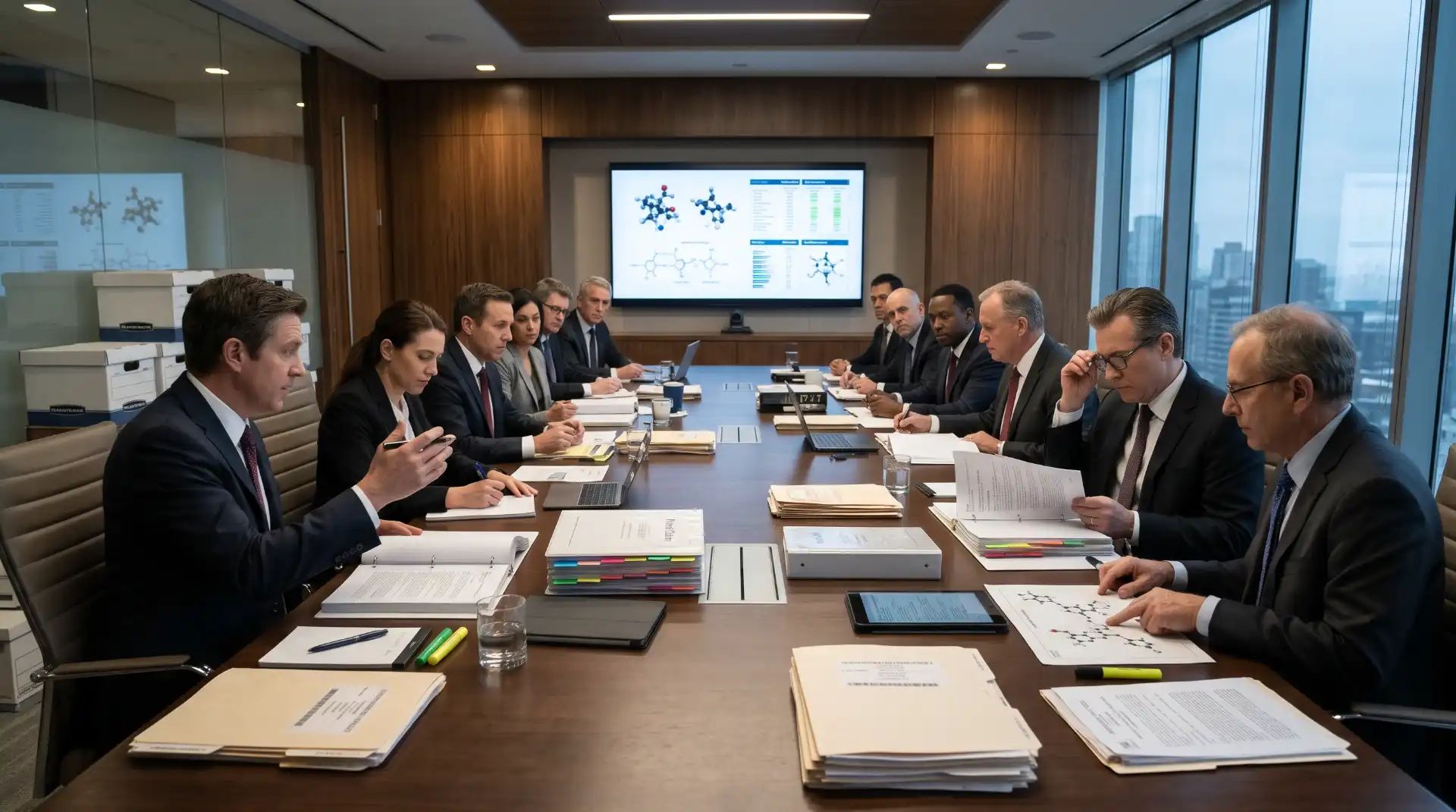
13. What to Watch for After the November 2026 Oral Argument
The next important development is the Federal Circuit’s decision in the appeal.
The court will need to address the legal interpretation of Section 1498 and the relationship between the government’s contractual authorization and the distribution of the vaccine doses.
Several issues deserve attention.
First, the court may provide additional guidance on what it means for an invention to be used or manufactured “for the Government.”
Second, the court may address whether government purchase and contractual authorization are sufficient when products are distributed to members of the public.
Third, the decision could clarify how courts should analyze patent infringement claims involving government procurement during national emergencies.
Fourth, the ruling could influence the contingent payment provisions in Moderna’s settlement agreement.
The financial consequences are substantial, but the legal significance may be even broader.
A ruling could affect pharmaceutical procurement, defense contracting, medical technology development, and other industries that supply patented products to the federal government.
Until the Federal Circuit issues its decision, companies should avoid treating either party’s interpretation as the final legal standard.
Conclusion: Can Pharmaceutical Companies Avoid Patent Liability Through Federal Government Contracts?
The Moderna COVID-19 vaccine patent dispute highlights the complicated relationship between pharmaceutical innovation, patent ownership, and federal government procurement.
At the center of the dispute is Section 1498(a), a federal statute that can shift responsibility for qualifying patent infringement from a private government contractor to the United States.
Moderna argued that its federal supply contract authorized the use of patented technology during vaccine manufacturing and that the government should therefore be responsible for qualifying patent claims.
Arbutus and Genevant challenged that interpretation, arguing that vaccine doses purchased by the government but distributed to the public should not automatically receive the same treatment as products supplied directly for federal use.
The Delaware district court drew a distinction between doses delivered directly to federal employees and doses distributed to the general public.
Moderna appealed that decision, and the Federal Circuit heard oral arguments on November 5, 2026. As of November 10, no appellate ruling had been issued.
The dispute also resulted in a substantial settlement involving a $950 million initial payment and a further $1.3 billion contingent payment linked to the appeal.
For pharmaceutical companies, the central lesson is that federal government contracts can affect patent infringement liability, but they do not provide automatic immunity.
The precise language of the contract, the government’s authorization, the purpose of the manufacturing activity, and the destination of the products may all become important.
For patent owners, the case demonstrates why licensing agreements and government procurement arrangements should be evaluated together.
For biotechnology startups and research institutions, it highlights the importance of understanding how federally supported innovation interacts with patent ownership and commercial licensing.
Ultimately, the Federal Circuit’s interpretation could help define the boundaries of Section 1498 in modern pharmaceutical procurement.
The broader challenge is balancing two important interests: ensuring that the federal government can obtain essential products during emergencies and preserving meaningful compensation for companies that develop patented technologies.
The Moderna dispute is therefore more than a disagreement about vaccine manufacturing. It is an important test of how American patent law treats private innovation when that innovation becomes part of a federal government program.
Frequently Asked Questions About the Moderna COVID-19 Vaccine Patent Dispute
1. What is the Moderna COVID-19 vaccine patent dispute about?
The dispute involves allegations by Arbutus Biopharma and Genevant Sciences that Moderna used patented lipid nanoparticle technology in its COVID-19 vaccine without authorization. Moderna raised several defenses, including an argument under 28 U.S.C. § 1498(a) involving federal government procurement.
2. What is Section 1498(a) of the U.S. Code?
Section 1498(a) is a federal statute addressing patented inventions used or manufactured by or for the United States with government authorization or consent. When the requirements are satisfied, the patent owner’s remedy generally becomes an action against the United States in the Court of Federal Claims.
3. Does a federal government contract automatically protect a company from patent infringement lawsuits?
No. A federal contract does not automatically eliminate patent liability. The company must establish that the allegedly infringing activity qualifies as use or manufacture for the United States and was authorized or consented to by the government.
4. Why did Moderna argue that the government should be responsible for patent infringement claims?
Moderna relied on its August 2020 C-100 Contract with the Army Contracting Command. The agreement contained authorization and consent language that Moderna argued brought qualifying vaccine manufacturing within Section 1498(a).
5. What did the Delaware court decide in February 2026?
The district court concluded that Section 1498 applied to approximately 6.24 million doses supplied directly to federal government employees. It rejected Moderna’s defense for doses purchased by the government but distributed to the general public.
6. Did Moderna settle the patent dispute with Arbutus and Genevant?
Yes. The parties entered into a settlement agreement on March 3, 2026. Moderna agreed to a $950 million fixed payment, which was paid on July 8, 2026, and a further $1.3 billion contingent payment tied to the Section 1498 appeal.
7. Has the Federal Circuit decided Moderna’s appeal?
As of November 10, 2026, no. The Federal Circuit heard oral arguments on November 5, 2026, but had not issued its decision.
8. Can other pharmaceutical companies use Section 1498?
Potentially, if their activities satisfy the statute’s requirements. However, the availability of the protection depends on the specific government contract, authorization or consent, and the relationship between the patented invention and the government activity.
9. Does Section 1498 eliminate a patent owner’s right to compensation?
No. The statute generally changes the defendant and the legal forum for qualifying government use. The patent owner may seek reasonable and entire compensation from the United States.
10. Does the PREP Act provide the same protection as Section 1498?
No. The PREP Act addresses certain liability claims involving covered medical countermeasures. Section 1498 addresses patent and copyright claims involving qualifying government-authorized use or manufacture. They are separate legal frameworks.
11. Why is the Moderna case important for biotechnology startups?
The dispute highlights how government procurement can affect patent licensing, royalty arrangements, infringement claims, and the commercial value of biotechnology inventions. Startups should understand how their licensing agreements address government-supported manufacturing.
12. What should pharmaceutical companies do to reduce government-contract patent risks?
Companies should conduct patent clearance, review federal contract provisions, document government authorization, maintain production and distribution records, negotiate appropriate licensing terms, and obtain legal advice before manufacturing patented products under government procurement agreements.
Legal Disclaimer: This article provides general information about U.S. patent law, pharmaceutical intellectual property, and federal government contracting. It is not legal advice. The Moderna appeal was pending as of November 10, 2026, and the final interpretation of Section 1498 in this dispute remained subject to the Federal Circuit’s decision. Companies facing patent infringement or government procurement issues should consult qualified intellectual property and government contracts attorneys.