
Patent Eligibility for AI Medical Devices After Recent USPTO Guidance
Artificial intelligence is transforming healthcare by helping physicians diagnose diseases, analyze medical images, monitor patients, and develop personalized treatment plans. As AI-powered medical devices become more advanced, companies developing these technologies are increasingly seeking patent protection to safeguard their innovations.
However, obtaining a patent for an AI medical device in the United States requires navigating complex questions about patent eligibility. Recent guidance from the United States Patent and Trademark Office (USPTO) has emphasized the importance of demonstrating that artificial intelligence inventions provide a specific technological improvement rather than simply using an algorithm to perform a known activity.
For medical technology companies, startups, researchers, and investors, understanding how patent eligibility rules apply to AI-based healthcare inventions is critical. A strong patent strategy can help protect valuable innovations while reducing the risk of rejection during the application process.
According to the USPTO, patent applicants must show that their inventions satisfy the requirements of U.S. patent law, including that the invention is new, useful, and sufficiently different from existing technology. Companies seeking protection for AI medical devices should carefully consider how their technology solves a specific healthcare problem through an improved technical process.
For additional information about current patent practices and examination procedures, applicants can review resources provided by the United States Patent and Trademark Office (USPTO).
Why AI Medical Devices Are Creating New Patent Challenges
Traditional medical devices have long been eligible for patent protection when they include new mechanical designs, improved components, or innovative medical functions. AI medical devices introduce additional complexity because many inventions rely on software, machine learning models, and data-processing techniques.
The challenge is that software-based inventions can face increased scrutiny under U.S. patent eligibility standards. Courts and the USPTO have repeatedly evaluated whether computer-related inventions represent a genuine technological advancement or merely an abstract idea implemented using a computer.
For AI medical device developers, the difference often depends on how the invention is described. An application that only claims the use of artificial intelligence to analyze medical information may face challenges. However, an invention that explains how AI improves diagnostic accuracy, enhances device functionality, reduces processing time, or creates a new medical treatment workflow may have stronger eligibility arguments.
For example, an AI system that analyzes medical scans using a specialized neural network designed to identify early-stage conditions may present stronger patent opportunities than a general software platform that simply organizes patient information.
This distinction has become increasingly important as healthcare companies invest billions of dollars into artificial intelligence technologies. Businesses must carefully prepare patent applications that highlight the technical improvements created by their AI systems.
How USPTO Guidance Impacts AI Medical Device Patent Applications
The USPTO has issued guidance explaining how patent examiners should evaluate inventions involving artificial intelligence and other emerging technologies. The guidance does not create new patent law but provides additional insight into how examiners should apply existing legal standards.
One major focus is whether an invention improves technology or provides a practical application beyond simply using an AI model. Patent applicants should explain the specific improvements achieved by their technology and how the invention operates differently from conventional methods.
For AI medical devices, successful applications often focus on the relationship between artificial intelligence and the physical healthcare environment. This may include improved medical sensors, enhanced imaging systems, more accurate diagnostic processes, or automated medical functions that were previously impossible.
For example, an AI-powered cardiac monitoring device may have stronger patent eligibility if the application explains how the AI system processes real-time physiological signals to improve patient monitoring compared with traditional devices.
Similarly, an AI-assisted surgical system may present stronger arguments when the patent application describes specific improvements to surgical accuracy, robotic movement, or real-time decision support.
Patent Eligibility Requirements for AI Healthcare Innovations
Companies seeking patents for AI medical devices must satisfy several requirements under U.S. patent law. The invention must generally be novel, non-obvious, and adequately described so that others skilled in the field can understand and reproduce the technology.
The novelty requirement means that the invention cannot already exist in prior patents, publications, or publicly available technology. AI healthcare developers must conduct thorough patent searches to determine whether similar devices, algorithms, or medical applications have already been disclosed.
The non-obviousness requirement creates another significant challenge. Even if an AI medical device is technically new, patent examiners may question whether the invention would have been obvious to someone working in the field.
Developers can strengthen their applications by identifying unexpected technical benefits. These may include improved diagnostic results, reduced error rates, faster medical analysis, or improved patient outcomes compared with existing approaches.

The Importance of Claim Drafting for AI Medical Device Patents
Patent claims define the legal boundaries of an invention. For AI medical devices, carefully drafted claims can determine whether an application successfully protects the technology or receives a rejection.
Weak claims may focus too broadly on the idea of using artificial intelligence in healthcare. Stronger claims typically describe specific technical elements, including the interaction between software, hardware components, medical sensors, and data-processing systems.
Patent professionals often recommend that AI medical device applications include detailed descriptions of how the system operates, how data is processed, and what technical improvements result from the invention.
Common USPTO Rejections for AI Medical Device Patent Applications
Although artificial intelligence has created significant opportunities in healthcare innovation, many AI medical device patent applications encounter challenges during the examination process. Understanding common rejection issues can help inventors and companies prepare stronger applications from the beginning.
One common issue involves patent eligibility concerns under Section 101 of the U.S. Patent Act. Patent examiners may determine that certain claims are directed toward an abstract idea if they focus primarily on collecting, analyzing, or organizing information without demonstrating a specific technological improvement.
For example, an application describing an AI system that reviews medical records and predicts health risks may face eligibility questions if the claims do not explain how the system improves computer functionality, medical technology, or healthcare operations.
Another challenge involves insufficient technical detail. AI inventions often depend on complex algorithms, machine learning models, and data-processing techniques. However, patent applications must provide enough information to explain how the invention works.
Simply stating that an AI model performs a medical task may not be enough. Applicants should describe the technical architecture, data inputs, processing methods, device components, and measurable improvements created by the invention.
Patent examiners may also evaluate whether similar technologies already exist. Because artificial intelligence research is developing rapidly, prior art searches have become increasingly important for companies seeking protection.
How Healthcare Companies Can Strengthen AI Medical Device Patent Applications
Businesses developing AI-powered healthcare technologies should approach patent protection strategically. A successful patent application requires more than describing an innovative idea. It requires demonstrating why the invention represents a meaningful advancement in medical technology.
One important strategy is focusing on the technical problem the invention solves. Patent applications should explain the limitations of existing medical devices and how the AI technology provides a measurable improvement.
For example, an AI diagnostic tool may improve healthcare technology by identifying medical conditions earlier, reducing false results, processing medical images more efficiently, or assisting physicians with complex decisions.
Another important consideration is protecting both hardware and software innovations. Many modern medical devices combine physical components with artificial intelligence systems. Depending on the invention, companies may pursue claims covering device structures, software processes, data analysis methods, or combinations of these elements.
Companies should also consider international patent strategies. Healthcare technology businesses often operate globally, and patent protection may be valuable in markets outside the United States. Coordination between U.S. patent filings and international applications can help protect innovations as products expand.
The Growing Role of AI in Medical Device Innovation
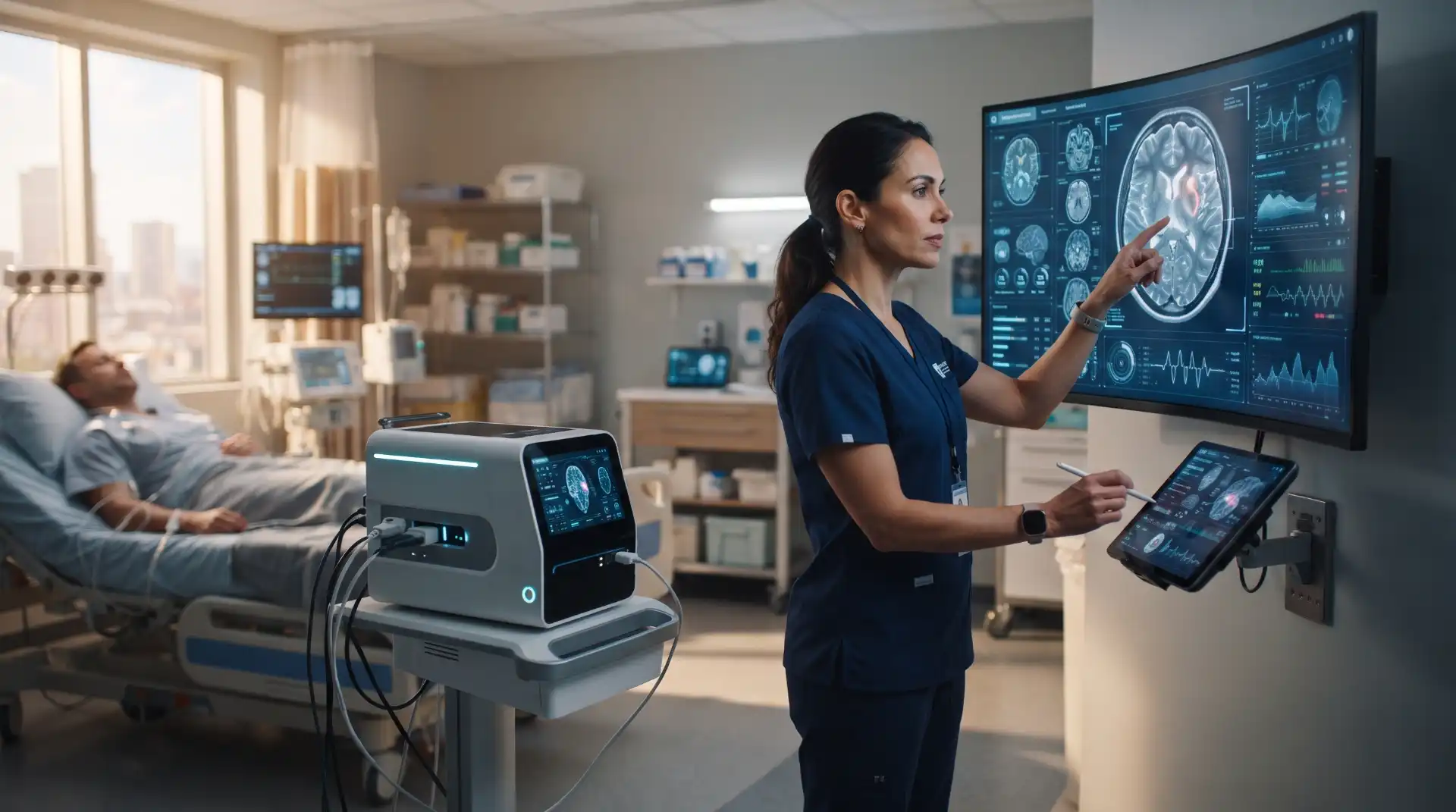
Artificial intelligence is becoming increasingly integrated into medical devices across multiple healthcare fields. From diagnostic imaging systems to wearable monitoring devices, AI technologies are changing how medical professionals identify, prevent, and treat health conditions.
In radiology, AI systems can assist physicians by analyzing medical images and identifying patterns that may be difficult to detect through traditional methods. In cardiology, AI-powered monitoring devices can analyze patient signals and provide real-time information about potential health concerns.
Medical robotics is another area where artificial intelligence is creating new patent opportunities. AI-assisted surgical systems may improve precision, provide decision-support tools, and enhance the capabilities of healthcare professionals.
As these technologies continue to develop, companies that invest in intellectual property protection may gain important competitive advantages. Patents can help businesses attract investment, establish market positions, and prevent competitors from copying innovative solutions.
AI Medical Device Patents and the Future of Healthcare Technology
The future of healthcare will likely involve increasing collaboration between artificial intelligence, medical devices, and data-driven decision-making. As AI systems become more advanced, patent law will continue adapting to address new challenges created by emerging technologies.
For innovators, the key will be demonstrating that AI medical devices provide real technological improvements rather than simply applying artificial intelligence to existing healthcare processes.
Companies that carefully document their innovations, conduct comprehensive patent searches, and work with experienced intellectual property professionals will be better positioned to secure patent protection.
The healthcare industry is entering a period of rapid technological transformation. AI medical devices have the potential to improve patient care, increase diagnostic accuracy, and create entirely new approaches to medicine. Protecting these innovations through effective patent strategies will remain an important priority for businesses and researchers across the United States.
Conclusion
Artificial intelligence is reshaping the medical device industry, creating opportunities for companies developing innovative healthcare solutions. However, obtaining patent protection requires careful attention to USPTO eligibility standards and a strong explanation of the technology’s technical improvements.
AI medical device developers should focus on showing how their inventions improve healthcare technology, solve specific medical challenges, and provide advantages over existing approaches. As artificial intelligence continues advancing, effective patent strategies will become increasingly important for protecting the next generation of healthcare innovations.
By understanding current USPTO expectations and preparing detailed patent applications, companies can better position themselves to protect valuable AI medical technologies in the competitive U.S. healthcare market.