Software Patents and Generative AI: What Developers and Companies Need to Know
Generative artificial intelligence is changing the way software is designed, developed, tested, and commercialized in the United States.
Developers can now use AI systems to generate source code, suggest algorithms, identify bugs, design architectures, create test cases, optimize performance, and explore technical solutions that previously required substantial amounts of human time.
For technology companies, the productivity benefits can be substantial.
But the increasing use of generative AI also creates an important intellectual property question:
The answer is potentially yes, but the analysis is more complicated than simply asking whether AI was used.
U.S. patent law continues to focus on the nature of the claimed invention, its technical characteristics, its novelty and nonobviousness, the adequacy of the disclosure, and the identity of the human inventor. The United States Patent and Trademark Office has specifically clarified that the use of AI does not create a separate inventorship standard. Under current USPTO guidance, AI systems are treated as tools, while only natural persons can qualify as inventors.
That distinction is increasingly important for software companies, startups, developers, engineers, and businesses incorporating generative AI into research and development.
Why Generative AI Is Changing Software Patent Strategy
Traditional software development generally involved a relatively straightforward chain of human decisions.
A developer identified a technical problem, designed a solution, wrote or supervised the code, tested it, and integrated the software into a larger system.
Generative AI can introduce several additional steps.
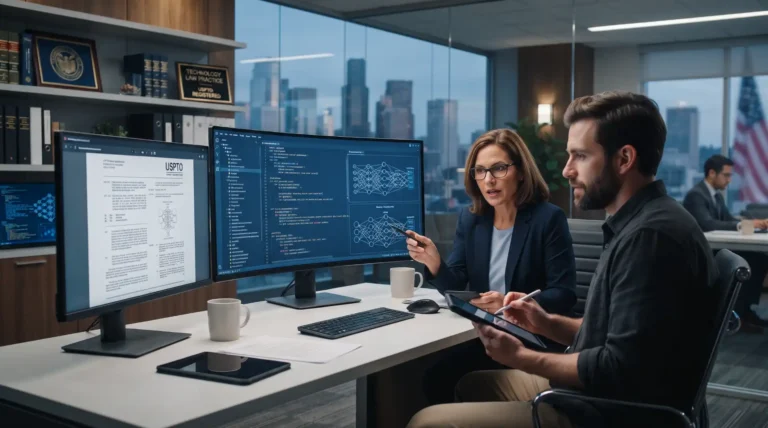
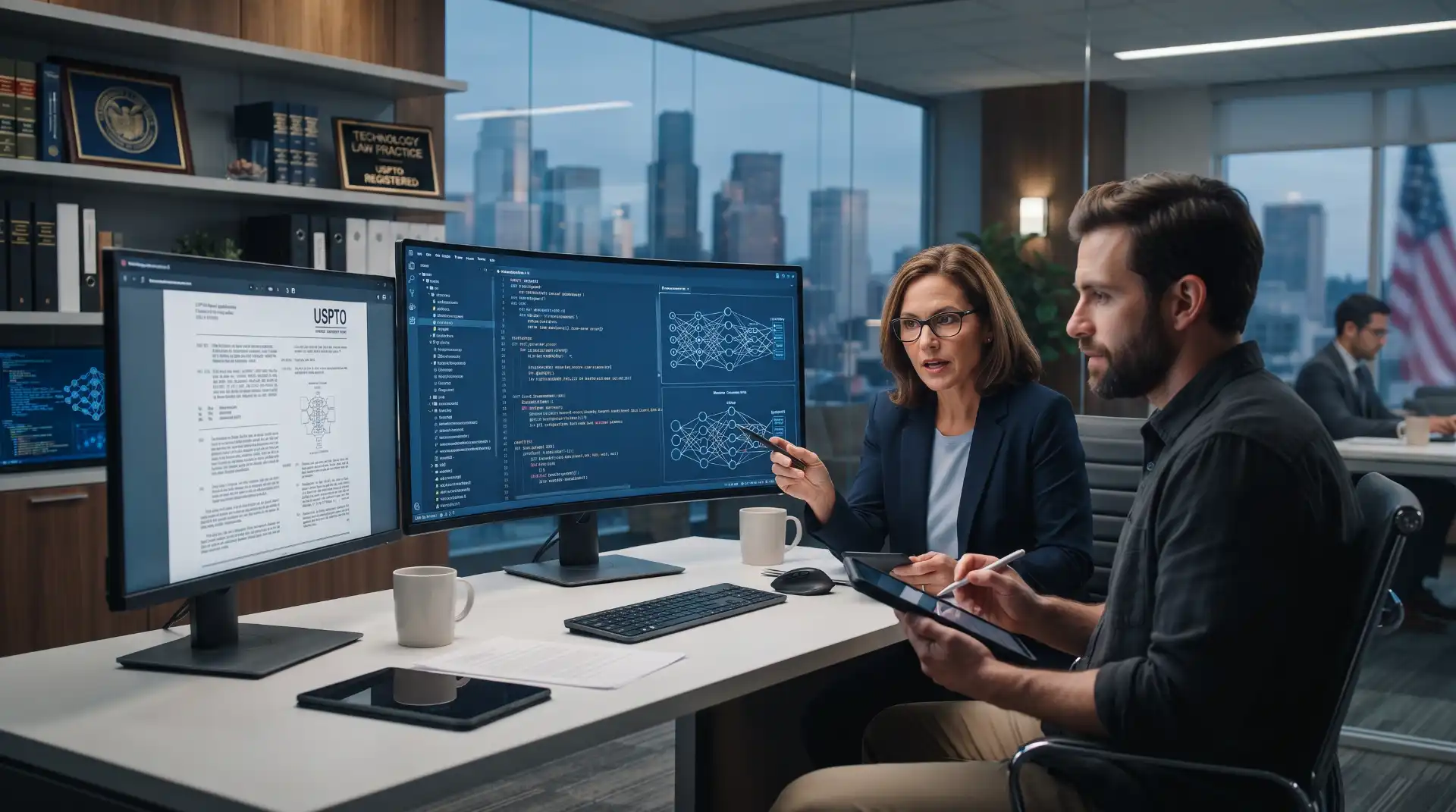
A developer might ask an AI system to suggest algorithms. The system may produce multiple approaches. The developer may evaluate those approaches, combine elements from different outputs, modify the proposed architecture, conduct testing, identify technical limitations, and ultimately create a working solution.
In another situation, AI might generate a significant portion of the implementation while humans define the architecture and technical objectives.
These different workflows can create different patent questions.
The critical issue is not simply whether AI appeared somewhere in the development process. The legal analysis must focus on what the human contributors actually conceived and what the patent claims ultimately seek to protect.
This makes documentation and invention management increasingly important.
Legal Journal has already examined the broader role of AI in patent practice in [The Role of AI in Modern Patent Law: Opportunities and Challenges]. That article provides useful background on how AI is changing patent searches, drafting, infringement analysis, and IP portfolio management. The Role of AI in Modern Patent Law: Opportunities and Challenges
The next step is understanding how these developments affect software inventions specifically.
Are Software Patents Still Available in the United States?
Software is not automatically excluded from the U.S. patent system.
However, not every software-related idea qualifies for patent protection.
Under 35 U.S.C. § 101, patentable subject matter generally falls into categories including processes, machines, manufactures, and compositions of matter. Courts have also developed exceptions involving abstract ideas, laws of nature, and natural phenomena. The USPTO currently evaluates patent eligibility under the framework reflected in MPEP §§ 2103 through 2106.07.
This is particularly important for software inventions.
A patent application that merely describes an abstract business concept and says to perform it using a generic computer can face significant eligibility problems.
By contrast, software that provides a concrete technological improvement may have a stronger eligibility position.
For developers and companies using generative AI, the distinction can be crucial.
A patent application should not merely describe that an AI system performs a useful task.
It should explain the technical problem, the technical solution, how the system operates, and why the claimed approach represents a meaningful technological improvement.
The Difference Between Software and a Patentable Software-Based Invention
One of the biggest misconceptions surrounding software patents is that writing valuable code automatically creates a patentable invention.
It does not.
Copyright and patent law protect different aspects of software.
Copyright may protect qualifying original expression in source code. Patent law can potentially protect a qualifying technical invention implemented through software.
For example, a company might develop a new software architecture that significantly improves how an AI model processes information.
The company’s patent strategy could potentially focus on the technical method, system architecture, processing technique, or other qualifying technological features rather than merely claiming the source code itself.
This distinction becomes even more important when generative AI produces portions of the code.
The question becomes less about who typed every line and more about what technical invention was conceived, how it works, and whether the patent claims satisfy the requirements of U.S. patent law.
Current USPTO Guidance on AI-Assisted Inventions
The USPTO significantly clarified its position on AI-assisted inventions in November 2025.
The agency issued revised inventorship guidance and rescinded its February 2024 guidance in its entirety. The revised guidance emphasizes that the same legal standard for determining inventorship applies regardless of whether AI was used during the inventive process.
This is an important point for companies.
There is not a separate patent system for AI-assisted inventions.
Instead, existing inventorship principles continue to apply.
The USPTO explains that AI systems, including generative AI and other computational models, can function as tools used by human inventors, but AI itself cannot qualify as an inventor.
For a company developing AI-assisted software, the practical question is therefore:
Which human individual or individuals actually qualify as the inventor or inventors of the claimed invention?
That question should be addressed before a patent application is filed.
AI Cannot Be Listed as the Inventor
Under current U.S. patent law, an AI system cannot be named as an inventor on a U.S. patent application.
The USPTO’s revised 2025 guidance states that only natural persons can properly be named as inventors.
This principle has major implications for generative AI.
Imagine that a developer asks an AI system to generate ten potential approaches for improving the efficiency of an AI inference engine.
The AI produces several suggestions.
The developer evaluates the suggestions, discovers a new technical combination, tests it, modifies the architecture, and determines that one approach solves a previously recognized technical problem.
The resulting patent application cannot list the AI system as an inventor.
The human contribution must be evaluated under existing inventorship principles.
This does not mean AI-assisted inventions are automatically unpatentable.
The USPTO has expressly stated that AI-assisted inventions can receive patent protection when the requirements of patent law are satisfied and the appropriate human inventor is identified.
Human Contribution Is Still Central
For companies developing software with generative AI, human contribution should be carefully documented.
Consider a development process in which a software engineer defines the problem, develops the system architecture, selects the technical approach, evaluates AI-generated alternatives, modifies the proposed implementation, and determines how the final system solves a technical problem.
That human involvement can be highly relevant to inventorship.
By contrast, simply recognizing that a problem exists and asking an AI system to solve it does not necessarily establish that the person who entered the prompt is the inventor.
The USPTO’s earlier AI inventorship examples emphasized the importance of the human contribution to conception. Although the USPTO subsequently rescinded the 2024 guidance, the underlying principle that U.S. patent inventorship remains human-centered continues under the revised 2025 framework.
Companies should therefore avoid reducing inventorship to whoever operated the AI software.
The person who pressed the button is not automatically the inventor.
Why AI Development Records Matter
Generative AI can make the history of an invention more difficult to reconstruct.
Traditional invention records may include engineering notebooks, diagrams, emails, prototypes, source-code repositories, technical specifications, and invention disclosure forms.
AI-assisted development can add prompts, model outputs, generated alternatives, AI-assisted code, testing results, and revision histories.
Keeping appropriate records can help a company understand how an invention developed.
A good internal record might identify the original technical problem, the people involved, the role of AI tools, the technical alternatives considered, the human decisions made, and the final technical solution.
The purpose is not necessarily to create a massive archive of every interaction with an AI system.
Instead, the objective is to preserve enough information to explain the human inventive contribution when it matters.
Patent Eligibility for AI Software
Patent eligibility is another major issue.
The USPTO has continued updating its subject-matter eligibility materials as AI technologies develop.
In December 2025, the USPTO announced updates addressing improvements to computer functionality, data structures, learning models, and other applied technologies. The agency emphasized that examiners should consider the claimed invention as a whole and evaluate whether an asserted technological improvement is properly reflected in the eligibility analysis.
This development is particularly relevant to generative AI software.
A claim directed toward an AI system should ideally explain what the technology actually improves.
For example, an invention could involve a new method for reducing computational resources, improving model inference, increasing system reliability, optimizing memory usage, improving data processing, or changing how a machine-learning model operates.
The stronger the connection between the claim and a concrete technological improvement, the more meaningful the eligibility analysis becomes.
That does not guarantee patent eligibility.
Patent eligibility is only one part of the process.
Patent Eligibility Is Not the Same as Patentability
A software invention must satisfy multiple legal requirements.
Section 101 eligibility is only one stage.
An invention can potentially satisfy subject-matter eligibility and still fail because it is not novel.
It can also fail because the differences between the claimed invention and prior art would have been obvious to a person having ordinary skill in the relevant field.
The application must also satisfy disclosure requirements.
The USPTO explains that patent examination involves separate statutory requirements, including eligibility, novelty, nonobviousness, written description, enablement, and other requirements.
For AI software companies, this means a strong patent strategy cannot focus exclusively on whether an invention involves AI.
The more important question is whether the specific claimed technology satisfies all applicable patent requirements.
Generative AI Makes Prior-Art Analysis More Complicated
Prior-art searching has always been an important part of patent strategy.
Generative AI makes the process both more powerful and potentially more complicated.
AI systems can analyze large quantities of patent documents, technical papers, publications, source code, and other materials.
A developer might use an AI tool to identify similar approaches before filing a patent application.
That can be useful.
But AI-generated research should not automatically be treated as a substitute for professional prior-art analysis.
AI systems can misunderstand technical distinctions, overlook important references, misinterpret patent claims, or produce inaccurate summaries.
For a company investing significant resources in a new software technology, relying exclusively on an AI-generated prior-art search can create unnecessary risk.
Human review remains important.
AI-Generated Code and Patent Rights Are Different From Copyright Rights
Another important distinction involves copyright.
Legal Journal recently addressed this issue in [Who Owns Software Created With Generative AI?], explaining that patent and copyright protection can apply differently to AI-assisted software. Who Owns Software Created With Generative AI?
A company may have questions about whether particular portions of AI-generated code qualify for copyright protection.
At the same time, the underlying technical invention could potentially be relevant to patent law.
These are separate analyses.
For example, an AI coding assistant could generate implementation code for a technical architecture conceived by human engineers.
The company may need to evaluate copyright ownership of the code, patent protection for the underlying technical invention, trade-secret protection for confidential implementation details, and third-party licensing issues.
Generative AI therefore encourages companies to think about intellectual property as a portfolio rather than a single legal category.
Open-Source Code Creates Another Risk
Generative AI coding tools may sometimes produce code that resembles or incorporates concepts found in publicly available software.
This creates potential licensing and copyright concerns.
Legal Journal’s recent article [Open Source AI Code and Copyright Risks for U.S. Developers] explores this issue in greater detail. Open Source AI Code and Copyright Risks for U.S. Developers
Patent strategy should also account for the broader technology environment.
A company may create a genuinely innovative software solution while relying on open-source components or third-party libraries.
That does not automatically prevent patent protection.
However, businesses should understand the licenses and third-party rights associated with the technology they incorporate.
Patent ownership, copyright ownership, open-source licensing, and contractual rights can overlap.
Confidentiality Is Critical Before Filing
Generative AI also creates confidentiality concerns.
Developers may be tempted to enter proprietary technical information into public or third-party AI systems to obtain assistance.
That can create problems if confidential information leaves the company’s controlled environment.
A company developing a potentially patentable invention should consider whether AI tools are permitted to receive confidential technical information.
This is particularly important for inventions that have not yet been disclosed publicly.
Public disclosure can affect patent rights and filing strategies.
Companies should therefore establish internal policies governing how employees use generative AI during research and development.
Those policies should address confidential information, source code, invention disclosures, technical specifications, customer information, trade secrets, and other sensitive material.
Legal Journal’s article [Generative AI and Trade Secret Protection for Businesses] provides additional context on how AI adoption can affect confidential business information. Generative AI and Trade Secret Protection for Businesses
Patent Ownership Is Another Important Issue
Inventorship and ownership are not necessarily the same thing.
The inventor is the person who legally qualifies as the inventor under patent law.
Ownership can be transferred or assigned to another party.
For businesses, employment agreements, invention assignment agreements, contractor agreements, and other contracts can therefore be extremely important.
A startup may have several engineers contributing to an AI software platform.
The company may expect the resulting patent rights to belong to the business.
That expectation should be supported by appropriate contractual arrangements.
Contractors require particular attention.
A company hiring an outside developer or software agency should not assume that payment automatically resolves every intellectual property question.
Contracts should address ownership, assignments, confidentiality, AI use, third-party code, open-source software, and related intellectual property issues.
Startups Should Think About Patents Early
For startups, timing can be especially important.
A young technology company may initially focus on building a minimum viable product.
As generative AI accelerates development, a startup might move from concept to functioning product faster than ever.
That speed can be commercially valuable, but it can also create IP problems if the company publicly discloses important technical details before developing a filing strategy.
Founders should consider patent protection before major public disclosures when patent rights are commercially important.
They should also identify which elements of the technology actually provide competitive value.
Not every feature needs to be patented.
Some technologies may be better protected through trade secrets.
Other elements may receive copyright or trademark protection.
The appropriate strategy depends on the business, the technology, the competitive environment, and the company’s commercial objectives.
What Companies Should Document During AI-Assisted Development
Companies do not necessarily need to document every keystroke.
However, they should establish a reasonable invention-management process.
When an important technical innovation emerges, the company should be able to identify the people who contributed to the inventive concept and explain how the invention developed.
Documentation might include technical design documents, invention disclosures, source-code histories, architecture diagrams, testing results, meeting notes, and records of major AI-assisted development steps.
The goal is to preserve the story of the invention.
That story can become important during patent preparation, ownership discussions, licensing negotiations, diligence for investment or acquisition, and later enforcement.
How Patent Claims Should Address AI-Based Technology
Patent claims should focus on the invention rather than simply using AI terminology as a label.
A claim that says a generic AI system performs a conventional business process may face eligibility or patentability challenges.
A stronger application may explain the specific technical architecture or processing method that produces the claimed result.
For example, the invention might involve a particular model architecture, data-processing technique, hardware-software interaction, optimization process, or computer functionality improvement.
The specification should provide enough technical detail to support the claims and satisfy applicable disclosure requirements.
Generative AI can help engineers explore technical concepts and assist patent professionals with drafting tasks, but the final patent application requires careful human review.
Patent claims are too important to treat as automatically generated text.
Can AI Help Draft a Patent Application?
Yes, AI tools can potentially assist with certain patent-related tasks.
They can help organize technical information, summarize documents, identify terminology, generate preliminary drafts, or help structure an invention disclosure.
But AI-generated patent text should be reviewed carefully.
Patent applications contain technical and legal representations that can have long-term consequences.
An AI system may introduce inaccurate statements, omit important limitations, misunderstand a technical relationship, or create language that does not accurately reflect the inventor’s contribution.
Patent professionals also have obligations concerning accuracy, confidentiality, and practice before the USPTO.
The USPTO maintains dedicated resources addressing AI use in patent practice, including guidance concerning practitioner use of AI-based tools.
For that reason, generative AI should generally be viewed as an assistive technology rather than an autonomous patent attorney.
The Importance of the Patent Specification
For software and AI inventions, the specification can be particularly important.
The application should explain the technical problem and how the invention addresses it.
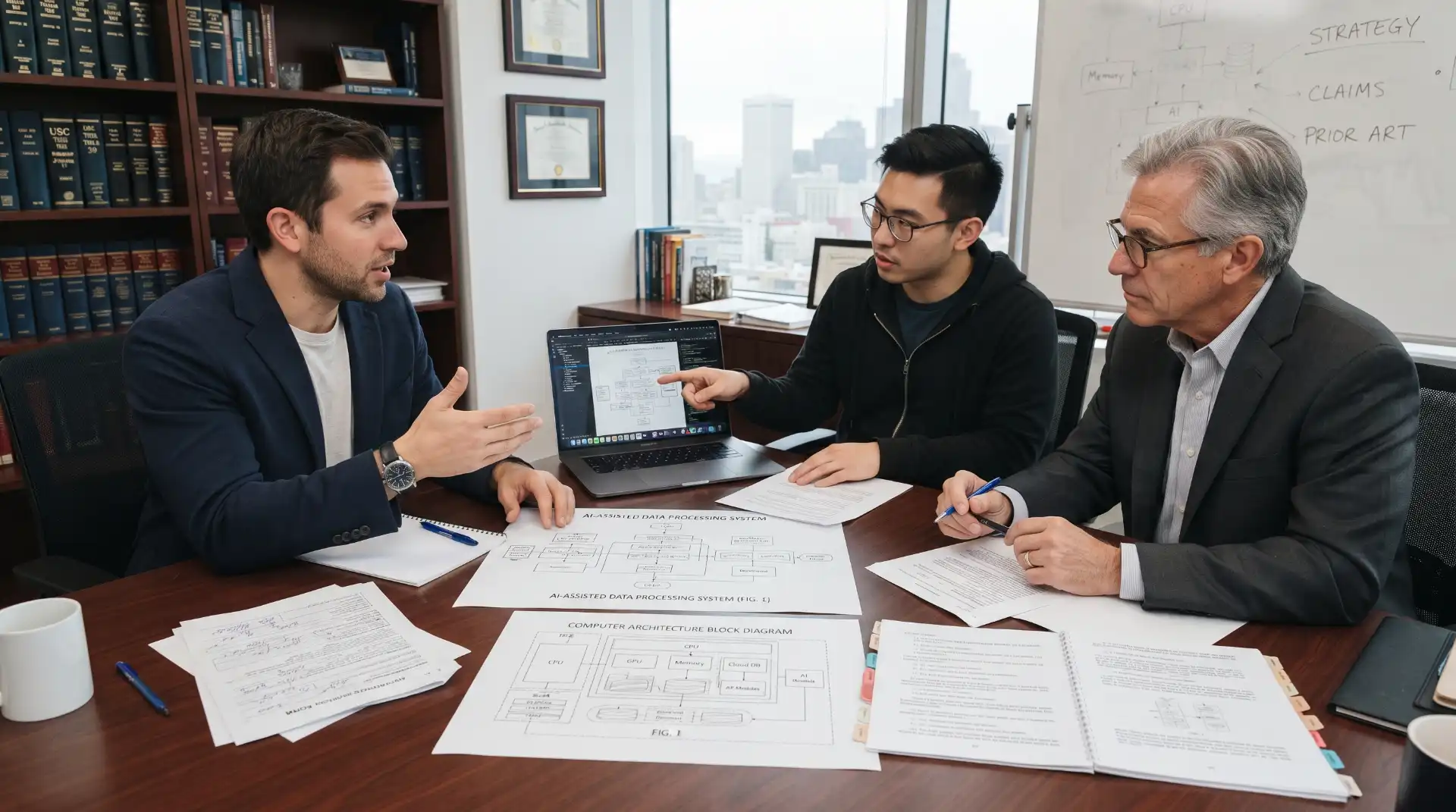
Technical architecture, data flows, processing steps, system components, model interactions, and implementation details may all be relevant depending on the invention.
A vague description can make it more difficult to support broad claims.
A detailed specification can provide a stronger foundation for explaining the invention and pursuing appropriate claim scope.
This is another reason why developers should involve patent professionals early when an AI-assisted innovation appears commercially significant.
The legal team needs to understand the technology.
The engineering team needs to understand the legal objectives.
The best results often come from collaboration between both groups.
AI-Assisted Inventions Are Not Automatically Unpatentable
One of the most important points for developers is that using generative AI does not automatically destroy patent eligibility or patentability.
The USPTO’s current guidance explicitly recognizes that AI systems can assist human inventors. The key remains whether the invention satisfies the applicable legal requirements and whether the proper human inventor or inventors are identified.
This is good news for businesses investing heavily in AI-assisted innovation.
Companies do not necessarily need to avoid AI tools because they are concerned about patents.
Instead, they need responsible workflows.
AI can be used to accelerate research, explore technical alternatives, test implementations, and improve software development while the company maintains appropriate invention records, confidentiality controls, and IP procedures.
A Practical AI Patent Strategy for U.S. Companies
A practical strategy starts with identifying potentially valuable inventions as they emerge.
Engineering teams should have a straightforward process for notifying the company’s legal or IP team when a new technical solution appears commercially significant.
The company can then evaluate whether patent protection makes sense.
During that evaluation, the team should consider the human contribution, potential prior art, technical improvements, confidentiality, ownership, third-party technology, and commercial value.
The company should also decide whether filing should occur before a public disclosure.
For larger organizations, AI invention policies can be integrated into existing research-and-development procedures.
For startups, a simpler invention disclosure process can provide a useful foundation.
The objective is not to slow development.
It is to make sure that rapid development does not cause the company to lose valuable intellectual property opportunities.
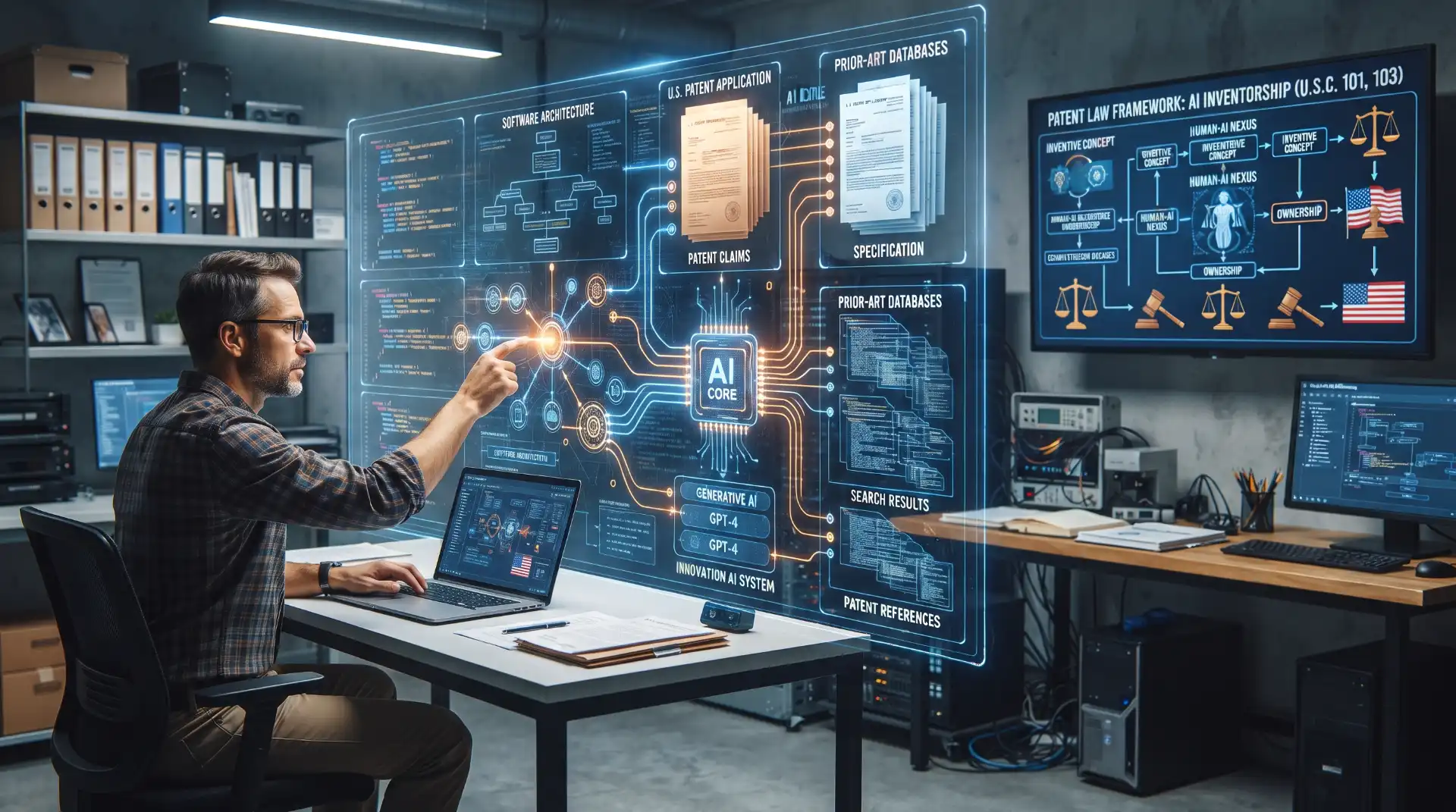
What Developers Should Know Before Using AI for an Invention
Developers do not need to become patent lawyers to use generative AI responsibly.
But they should understand that AI-assisted development can affect intellectual property.
Before using an AI system on a potentially valuable invention, developers should know whether company policy permits the use of that tool and whether confidential technical information can be entered into it.
They should also preserve meaningful records of important human technical decisions.
If AI produces several potential solutions, the developer should be able to explain which solution was selected, why it was selected, what modifications were made, and what technical contribution resulted.
This type of documentation can make later patent analysis much easier.
The Future of Software Patents and Generative AI
Generative AI will likely continue to change software development faster than patent law can change.
Developers are already using AI to write and optimize code.
AI systems are increasingly capable of generating technical alternatives and assisting with complex engineering tasks.
As those systems become more capable, questions about human inventorship will become more difficult in practice even though the legal rule remains clear: U.S. patent inventorship is currently limited to natural persons.
The USPTO’s November 2025 revised guidance confirms that AI does not receive inventor status and that the ordinary inventorship standard applies to AI-assisted inventions.
At the same time, the USPTO continues to develop its approach to patent eligibility for AI and emerging technologies. Its current materials include specific AI-related examples and updated examination guidance concerning technological improvements.
This suggests that software companies should expect continued development in this area.
The legal environment will evolve as courts, the USPTO, Congress, and businesses confront increasingly sophisticated AI systems.
Frequently Asked Questions
Can software developed with generative AI be patented?
Potentially. The use of generative AI does not automatically make software unpatentable. The invention must satisfy U.S. requirements for subject-matter eligibility, novelty, nonobviousness, disclosure, and other applicable standards.
Can an AI system be listed as an inventor?
No. Under current U.S. patent law and USPTO guidance, only natural persons can be named as inventors. AI systems can assist human inventors but cannot themselves be named as inventors.
Does using ChatGPT or another AI coding tool prevent patent protection?
Not automatically. The important questions include what the human developers contributed, what the claimed invention is, whether it is patent eligible, whether it is novel and nonobvious, and whether the application satisfies the disclosure requirements.
Should developers keep records of AI-assisted invention work?
Yes. Companies should consider maintaining reasonable records showing the development of important inventions, including the human technical contributions and significant AI-assisted development steps.
Is software automatically patentable because it uses artificial intelligence?
No. Simply adding AI terminology to a software invention does not establish patent eligibility or patentability. The claimed invention must satisfy the applicable requirements of U.S. patent law.
Can AI help write a patent application?
AI can assist with research, organization, drafting, and other tasks, but patent applications require careful human review. Companies and patent professionals should also consider confidentiality, accuracy, professional obligations, and USPTO rules governing practice.
What is the difference between a software patent and software copyright?
Copyright generally concerns qualifying expression in software, including certain source-code expression. Patent protection concerns qualifying inventions and requires a separate legal analysis. A software product can potentially involve both copyright and patent rights.
Should startups patent AI software?
There is no universal answer. A startup should evaluate the technology’s commercial importance, competitive value, patentability, disclosure strategy, costs, and alternatives such as trade-secret protection. A patent attorney can help determine whether filing makes sense.
Conclusion
Software patents and generative AI are becoming increasingly important areas of U.S. intellectual property law.
Generative AI is changing how developers create software, explore technical solutions, and bring products to market. But the use of AI does not eliminate the fundamental principles of U.S. patent law.
Human inventorship remains central.
The USPTO’s current guidance makes clear that AI systems cannot be named as inventors and that the ordinary legal standard applies to AI-assisted inventions.
At the same time, software inventions still need to satisfy patent eligibility requirements and the other statutory requirements governing novelty, nonobviousness, written description, enablement, and patentability. The USPTO’s recent updates concerning AI and technological improvements demonstrate that the agency continues to refine how these principles are applied to emerging technologies.
For developers, the most important lesson is that using AI responsibly does not mean avoiding AI.
It means understanding how AI fits into the invention process.
For companies, that means creating clear procedures for invention disclosures, AI use, confidentiality, ownership, documentation, prior-art review, and patent filing.
The businesses that approach generative AI as both a technology opportunity and an intellectual property issue will be better positioned to protect the innovations they create.
As AI continues to reshape software development, patent strategy will increasingly depend on the intersection between human creativity, machine-assisted innovation, technical improvements, and carefully documented intellectual property rights.
Authoritative External Resource
For the most current information on U.S. patent eligibility and AI-related examination guidance, readers should consult the U.S. Patent and Trademark Office’s official subject-matter eligibility resources. USPTO Subject Matter Eligibility Resources
The USPTO’s official AI-related resources also provide current materials concerning AI-assisted inventorship, patent eligibility, and AI use in patent practice. USPTO AI-Related Resources
Legal Disclaimer: This article is provided for general educational and informational purposes only and does not constitute legal advice. Patent eligibility, inventorship, ownership, infringement, and filing requirements depend on the specific facts and circumstances of each invention. Developers, startups, and businesses should consult a qualified U.S. patent attorney or other appropriate intellectual property professional regarding specific legal questions.