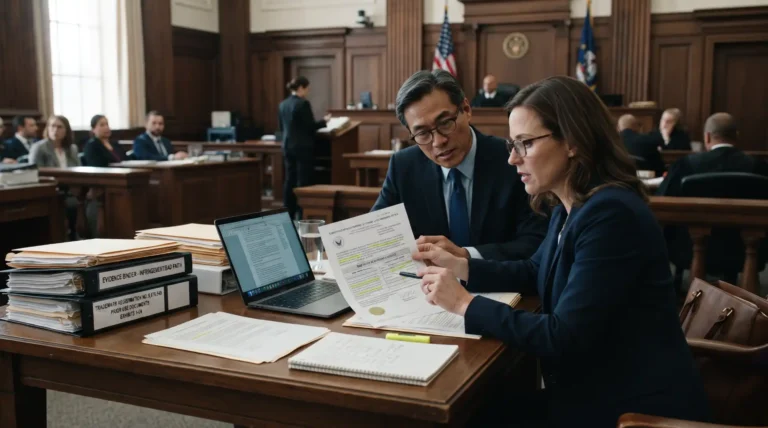

Why Keeping a Patent Family Alive Can Matter
For many U.S. inventors and technology companies, obtaining one patent is not necessarily the end of the patent strategy. In some situations, the first patent protects only one part of a broader invention, while other commercially important aspects remain available for additional claims.
That is where patent continuation applications can become strategically important.
A continuation allows an applicant to pursue another set of claims based on subject matter already disclosed in an earlier application. The continuation does not simply extend the life of the original patent. Instead, it creates a separate application that can be examined independently while maintaining a qualifying relationship to the earlier application.
The U.S. Patent and Trademark Office explains that a continuation application is directed to invention or inventions disclosed in a prior-filed copending application and cannot introduce subject matter that would constitute new matter in the parent application. The continuation must also satisfy applicable requirements for claiming the benefit of the earlier application.
For an inventor, the practical question is therefore not simply, “Can I file a continuation?”
The more important question is:
When does it make business and legal sense to keep a patent family alive?
That decision can involve the commercial value of the technology, competitive activity, claim scope, licensing opportunities, prosecution history, potential infringement, future product development, and the remaining patent term.
A continuation strategy can provide valuable flexibility, but it also creates additional legal and financial costs. Keeping a patent family alive indefinitely without a clear objective can become expensive and may produce little practical benefit.
The right strategy is usually one that connects continuing patent prosecution to a specific business or legal purpose.
What Is a Patent Continuation Application?
A continuation application is a new patent application that claims the benefit of an earlier qualifying application while pursuing claims to subject matter already disclosed in the earlier application.
Unlike a continuation-in-part, a traditional continuation cannot add new matter.
This distinction is fundamental.
Suppose an inventor files a U.S. patent application describing a new industrial machine. The application contains several embodiments and explains multiple ways the machine can be configured.
The first application eventually receives a patent with claims directed primarily to one particular configuration.
The inventor’s business, however, later determines that another disclosed configuration is commercially important.
If the legal requirements are satisfied and the timing remains available, a continuation may allow the applicant to pursue different claims directed toward that previously disclosed subject matter.
The continuation therefore gives the applicant another opportunity to obtain patent claims from the disclosure already placed in the patent application.
The USPTO describes this as a mechanism through which an applicant can introduce a new set of claims and obtain further examination while the earlier application remains in the required procedural posture.
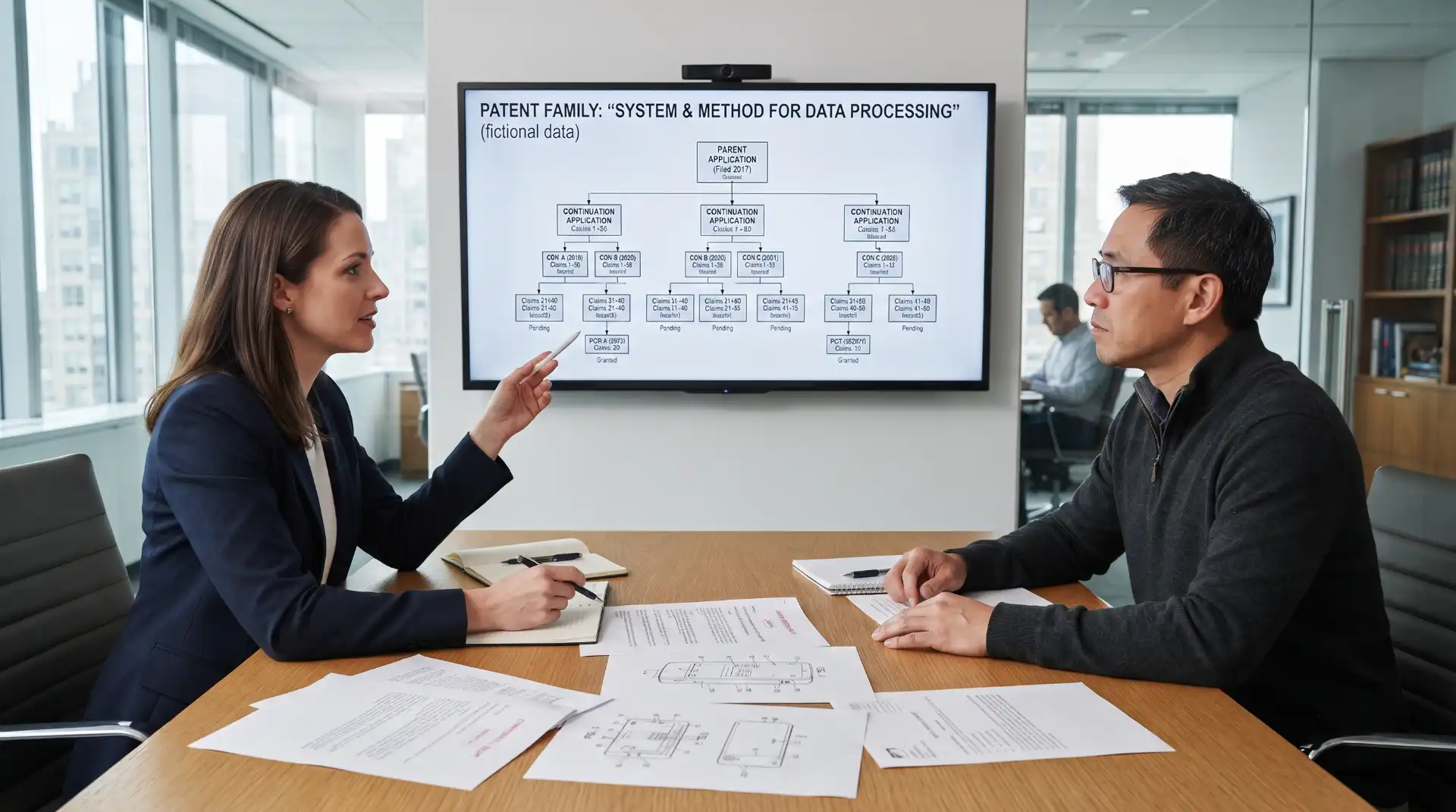
A Continuation Is Not Simply an Extension of the Original Patent
One of the most common misconceptions is that filing a continuation automatically extends the original patent’s expiration date.
That is generally incorrect.
For utility patents filed on or after June 8, 1995, the patent term generally ends 20 years from the earliest relevant U.S. nonprovisional filing date for which benefit is properly claimed, subject to applicable patent term adjustment, patent term extension, disclaimers, and other rules. A continuation does not ordinarily create a completely new 20-year period beginning on its own filing date.
This means that the strategic value of a continuation is usually not about creating more total patent years.
Instead, it is about potentially obtaining different or additional enforceable claims during the remaining patent term.
That distinction matters enormously when evaluating whether to continue prosecuting a patent family.
An inventor might have 12 years remaining in the family term and still decide that a continuation is extremely valuable because the additional claims could cover a commercially important product.
Another inventor might have the same 12 years remaining but determine that another application would not add meaningful protection.
The calendar alone does not answer the question.
Why Inventors Keep Patent Families Alive
There are several reasons a U.S. inventor or company may want to maintain a pending continuation.
One of the most important is that the commercial importance of an invention can change after the original application is filed.
When a patent application is initially prepared, the applicant may not know exactly which embodiment will become the company’s most successful product.
Years later, the market may reveal that a different implementation, system configuration, software process, manufacturing technique, or method of use is more commercially significant.
If that subject matter was adequately disclosed in the original application, a continuation may provide an opportunity to pursue claims directed toward it.
This can be especially useful for technology companies operating in rapidly changing industries.
The original patent may protect the core invention, while a continuation can pursue claim scope that better reflects how the technology is actually being commercialized.
The continuation can therefore function as part of a broader patent portfolio strategy rather than as an emergency filing made only after a dispute begins.
When the Invention Has Multiple Commercial Applications
Another reason to consider a continuation is that one invention may have several different commercial applications.
Imagine that a company develops a new sensor technology.
The original patent application describes the sensor hardware, a particular signal-processing method, a network configuration, and several possible applications.
The first patent might eventually issue with claims focused on the sensor itself.
Years later, the company discovers that the signal-processing method is particularly valuable in medical devices, while competitors are also using similar network configurations.
The company may have strategic reasons to pursue additional claims if the relevant subject matter was properly disclosed in the original application and the procedural requirements are satisfied.
This can create a layered portfolio in which different patents cover different commercially important aspects of a broader technological platform.
That type of strategy can be particularly valuable where competitors might attempt to design around the claims of the first patent.
Continuations Can Help Address Design-Around Risk
A patent provides rights according to its claims.
Competitors therefore do not necessarily need to copy every aspect of an invention to create a competing product.
A competitor may study an issued patent and develop an alternative implementation that avoids the specific limitations of the patent claims.
This is often described as designing around a patent.
A continuation can sometimes provide an opportunity to pursue different claim scope supported by the original disclosure.
For example, a first patent might claim a specific hardware arrangement.
A competitor could develop a product that performs substantially the same commercial function through a different arrangement that was nevertheless described in the original application.
If the original disclosure supports claims covering that alternative arrangement, a continuation could potentially be part of the strategy for obtaining additional protection.
This does not mean a continuation guarantees broader claims.
The claims still have to satisfy the applicable requirements of patent law and survive examination.
But maintaining a pending application can give an applicant additional procedural flexibility that would disappear if the entire application family were allowed to close.
Timing Is Critical
Continuation strategy is heavily dependent on timing.
The USPTO explains that a continuation generally must be filed while the earlier application remains in the required copending status. If the earlier application has been abandoned, the continuation generally must already have been filed before the abandonment.
The USPTO also notes that applicants have a limited window around issuance and recommends filing continuing applications before payment of the issue fee as a best practice.
This makes docket management extremely important.
An inventor should not wait until after an important patent has already issued or an application has already become abandoned before deciding whether additional claim protection is necessary.
Patent prosecution involves deadlines, and missing the appropriate procedural window can eliminate an opportunity that cannot easily be recovered.
For businesses with valuable patent portfolios, continuation decisions should therefore be made well before critical prosecution deadlines.
The Issue-Fee Stage Deserves Special Attention
The period around allowance can be strategically important.
An applicant may receive a Notice of Allowance and feel that the patent process is effectively finished.
But an allowance can actually trigger an important portfolio decision.
The company should ask whether the allowed claims adequately protect the commercial invention.
If the answer is yes, there may be no reason to file another application.
If the answer is no, a continuation may deserve consideration.
For example, the allowed claims might cover a particular implementation while the company also wants protection for another disclosed implementation, system architecture, method, or commercial configuration.
Because the procedural window can be limited, this analysis should happen before the parent application reaches its final stages.
What Should an Inventor Look for Before Filing a Continuation?
The first question should be whether there is commercially meaningful subject matter that remains worth protecting.
The second question should be whether the existing application actually provides adequate disclosure to support the desired claims.
A continuation cannot be used simply to add an entirely new invention.
The USPTO makes clear that a continuation cannot contain new matter that would have been new matter if inserted into the parent application.
This makes the quality of the original application extremely important.
A well-prepared original application may disclose multiple embodiments, alternatives, system configurations, implementation techniques, and potential claim concepts.
That additional disclosure can give the applicant more strategic options later.
A narrowly drafted application may provide fewer opportunities.
The Original Specification Can Become a Strategic Asset
Patent applicants sometimes think primarily about the claims being pursued during the first examination.
But the specification can have long-term importance.
The specification provides the technical foundation from which future claims may be developed.
For example, a software patent application might disclose multiple architectures, processing techniques, data structures, optimization methods, and system interactions.
The initial claims may focus on one particular implementation.
If the specification adequately supports other aspects of the invention, those disclosures may later become important when considering continuation claims.
This is one reason experienced patent counsel often evaluates the long-term portfolio implications of an application rather than treating prosecution as a single isolated event.
Continuation vs. RCE: They Are Not the Same
Inventors sometimes confuse a continuation with a Request for Continued Examination, or RCE.
They serve different purposes.
An RCE allows prosecution to continue in an existing application after certain prosecution events.
A continuation is a separate application with its own application number and prosecution history, although it claims the benefit of the earlier application when the legal requirements are met.
The USPTO describes a continuation as a new application, while an RCE continues prosecution in the existing application.
The choice between these approaches depends on the circumstances.
If the applicant primarily wants to continue negotiating the existing claims, an RCE may be appropriate.
If the applicant wants to pursue a different claim strategy while preserving the relationship to the earlier disclosure, a continuation may be more useful.
Patent counsel should evaluate the prosecution history and strategic objective before choosing the path.
Continuations Can Be Valuable in Patent Licensing
A strong continuation strategy can also support licensing discussions.
A prospective licensee may be interested in more than the claims of the first issued patent.
For example, a technology company might own a patent covering a core platform and have a pending continuation directed toward another commercially significant implementation.
The combination can provide a more complete picture of the company’s intellectual-property position.
A pending continuation may also demonstrate that the company is actively developing its patent portfolio around commercially relevant technology.
However, businesses should avoid filing continuations merely to make a portfolio appear larger.
The application should have a genuine strategic purpose.
Potential licensees and investors may examine whether a patent family has meaningful claim coverage rather than simply counting the number of applications.

Continuations and Patent Enforcement
Continuation strategy can become particularly important when a company discovers potential infringement.
Suppose a competitor launches a product that appears to fall outside the claims of an issued patent.
The patent owner may review the original specification and discover that it contains disclosure supporting a different claim approach.
If a continuation is already pending, that application may become particularly important to the company’s overall strategy.
But timing matters.
A company should not assume that it can simply create a new continuation after discovering infringement.
The ability to file depends on the status of the relevant application and the applicable continuation requirements.
Moreover, patent prosecution and enforcement involve complicated legal doctrines, including prosecution history, claim construction, estoppel, disclosure requirements, and other considerations.
Continuation strategy should therefore be developed as part of a broader enforcement plan rather than treated as a guaranteed response to infringement.
Continuations Can Help Protect Different Layers of a Technology
Modern products often contain multiple layers of technology.
Consider an autonomous industrial system.
The invention might involve sensors, hardware, control algorithms, communications architecture, data processing, software functionality, and a particular method of operation.
One patent application may disclose all of these elements.
The first patent might protect the system architecture.
A continuation could pursue claims focused on the control process.
Another application could potentially focus on a particular technical implementation if supported by the original disclosure.
This layered approach can make the portfolio more resilient.
Competitors may be able to avoid one set of claims while still falling within another set of claims.
Again, however, each patent must independently satisfy the applicable legal requirements.
When Keeping the Family Alive May Not Be Worthwhile
Continuation practice is not automatically beneficial.
There are situations in which allowing a patent family to end may be the sensible business decision.
If the technology has been abandoned, if competitors have moved away from the market, if the relevant product has failed commercially, or if the remaining subject matter has little strategic value, another continuation may simply increase costs without providing meaningful protection.
Patent prosecution requires attorney time, government fees, internal management, technical review, and strategic oversight.
For a small business, those expenses can be significant.
The decision should therefore consider expected commercial value rather than treating continued prosecution as inherently desirable.
The Cost of Keeping a Patent Family Alive
Every additional application creates costs.
These can include filing fees, attorney fees, responses to Office actions, interviews with examiners, claim amendments, prior-art analysis, and portfolio management.
There may also be costs associated with foreign patent strategies.
A continuation can be relatively inexpensive compared with the potential value of a major patent, but that does not mean the cost is insignificant.
A company should evaluate whether the expected value of additional claim protection justifies the investment.
For a highly valuable technology with substantial revenue potential, continuing prosecution may make considerable sense.
For an invention with limited commercial prospects, the same strategy may not be economically rational.
Patent Term Creates an Important Limitation
Because a continuation generally does not restart the patent term clock, the remaining term should be part of the analysis.
For utility patents, the relevant term generally runs 20 years from the earliest qualifying U.S. nonprovisional filing date, subject to applicable adjustments, extensions, and disclaimers. The USPTO specifically explains that patents issuing from continuation applications filed after June 8, 1995 generally have terms ending 20 years from the earliest application for which benefit is claimed.
This means an inventor should not think of a continuation as buying another 20 years.
Instead, the value lies in what claims can potentially be obtained during the remaining family term.
The closer the family is to expiration, the more carefully the economics and expected commercial benefit should be evaluated.
Terminal Disclaimers Can Also Matter
Patent families can encounter double-patenting issues.
In some circumstances, an applicant may need to address a double-patenting rejection through a terminal disclaimer.
A terminal disclaimer can affect the effective patent term and may also involve ownership-related requirements.
This is another reason why continuation strategy should not be based simply on the desire to obtain as many patents as possible.
The relationship among applications, existing patents, claim scope, ownership, and expiration dates needs to be evaluated as a whole.
Continuation Strategy for Startups
Startups can benefit significantly from continuation strategies, particularly when they are building technology platforms that may evolve over several years.
A startup may initially be uncertain which part of its technology will become its most valuable asset.
A strong original patent application can provide flexibility for future claim strategies.
As the company develops its product, enters new markets, attracts competitors, or begins licensing discussions, the startup can evaluate whether additional claims remain worthwhile.
This can be particularly important during fundraising.
Investors may evaluate a company’s intellectual-property portfolio as part of due diligence.
A coherent patent family showing that the company has protected important aspects of its technology can potentially strengthen the overall IP story.
However, startups should avoid spending scarce capital on continuation filings without a defined strategy.
The right question is not how many patent applications the startup can file.
It is which intellectual-property rights can provide meaningful competitive value.
Continuation Strategy for Established Companies
Large companies may have more resources to maintain continuation programs, but that does not mean every patent family should remain active.
Established companies should regularly review their portfolios.
A patent family may have been strategically important five years ago but less important today.
Technology markets change.
Products are discontinued.
Competitors enter or leave markets.
New patents can replace older portfolios.
Corporate acquisitions can also change ownership and strategic priorities.
Portfolio reviews can identify which families deserve additional prosecution and which can be allowed to conclude.
This type of portfolio management can prevent companies from spending resources simply because an application remains available for continuation.
The Importance of Patent Family Reviews
A patent family review should consider more than the number of issued patents.
The company should examine what each patent actually covers.
It should identify pending claims, issued claims, disclosed embodiments, important competitors, commercial products, licensing opportunities, and remaining patent term.
The company should also compare the patent claims with the technology actually being sold.
Sometimes a patent may appear broad when viewed at a high level but provide limited practical protection for the company’s current product.
Other times, a seemingly narrow patent may protect a commercially essential feature.
The purpose of a family review is to connect legal claim scope with real-world technology.
Continuation Applications and Software Patents
Continuation strategy can be particularly relevant to software and artificial intelligence companies.
Software products often evolve quickly.
A company may develop a platform that contains multiple technical innovations.
The initial application might focus on one technical improvement while the specification describes other implementations.
As the software matures, some of those alternative implementations may become commercially important.
This creates potential opportunities for continuation strategies when the original disclosure supports the desired claims.
Legal Journal has covered the patent implications of AI-assisted software development in Software Patents and Generative AI: What Developers and Companies Need to Know. The article discusses U.S. patent eligibility, human inventorship, AI-assisted development, prior-art analysis, and the relationship between patent and other intellectual-property rights.
For technology companies, this is particularly relevant because a continuation strategy should be integrated with the broader development and IP process.
Patent Continuations and Trade Secret Strategy
Not every invention should be fully disclosed through a patent.
Some companies may prefer to maintain certain technical information as a trade secret.
A patent requires public disclosure of the claimed invention, while a qualifying trade secret depends on maintaining secrecy through reasonable protective measures.
This creates an important strategic choice.
A company may patent a technology that competitors can readily reverse-engineer while keeping certain internal implementation details confidential.
Legal Journal’s Generative AI and Trade Secret Protection for Businesses discusses how companies can protect confidential technical information while adopting AI technologies.
Continuation decisions should therefore be evaluated alongside trade-secret strategy.
A company should ask not only whether another patent claim is possible, but whether patent disclosure is the best way to protect the information.
Continuation Strategy and Cybersecurity
Patent portfolios increasingly contain highly valuable technical information.
The patent itself may publicly disclose an invention, while unpublished continuation applications can contain sensitive claim strategies and technical material.
Companies should therefore consider how patent files, invention disclosures, drafts, technical documents, and prosecution communications are stored and accessed.
Legal Journal’s Cybersecurity and Intellectual Property: Protecting Trade Secrets From Data Breaches examines the relationship between cybersecurity and intellectual-property protection for U.S. businesses.
Patent strategy and information-security strategy should not operate in completely separate worlds.
The technical information used to develop and prosecute patents may itself have substantial commercial value.
How an Inventor Can Decide Whether to File a Continuation
There is no universal formula for deciding whether to file a continuation.
A useful starting point is to ask five broad questions.
First, does the original application disclose commercially important subject matter that is not adequately covered by the current claims?
Second, is there a realistic business reason to want additional claim coverage?
Third, are competitors, licensees, investors, or customers making the additional subject matter commercially important?
Fourth, is there sufficient remaining patent term to make additional protection valuable?
Fifth, does the expected benefit justify the cost of continuing prosecution?
If the answers point toward meaningful commercial value, a continuation may deserve serious consideration.
If the answers consistently point toward low commercial value, allowing the family to conclude may be more appropriate.
A Practical Continuation Decision Framework
For an inventor, the decision can be organized around the current business rather than the patent file alone.
Start by identifying the company’s most valuable products and technical capabilities.
Then determine whether the existing patents actually cover those products.
Next, review the original specification to identify additional disclosed subject matter that could potentially support meaningful claims.
After that, examine competitors and potential design-around strategies.
Finally, consider the remaining term, prosecution costs, licensing opportunities, enforcement value, and broader IP strategy.
This approach can turn continuation practice into a business decision rather than a purely procedural exercise.
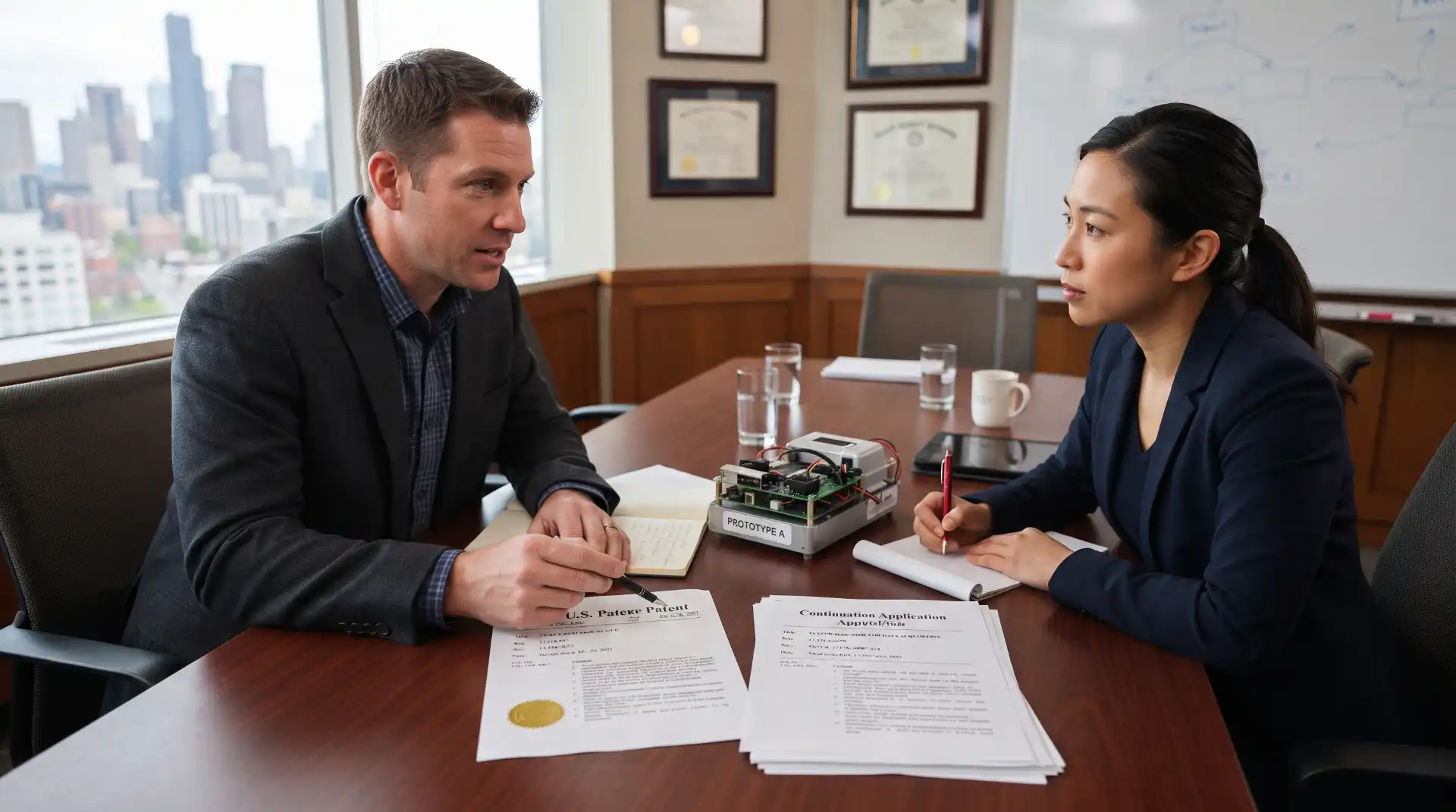
Common Mistakes Inventors Make
One common mistake is waiting too long.
An inventor may assume that a continuation can always be filed later.
That is not necessarily true. Copendency and procedural timing requirements are critical.
Another mistake is assuming that every continuation should seek broader claims.
Sometimes a different type of claim scope may be more commercially valuable than simply seeking broader language.
A third mistake is treating the patent family as separate from the business.
Patent claims should be evaluated against real products, competitor behavior, licensing plans, and commercial objectives.
Another mistake is ignoring the original specification.
Because a continuation cannot simply introduce new matter, the original disclosure can determine how much strategic flexibility remains later.
Finally, some inventors assume that having more patents automatically means having stronger protection.
That is not necessarily true.
A smaller portfolio with well-targeted claims can be more valuable than a large collection of patents that do not meaningfully cover commercially important technology.
When Should a U.S. Inventor Keep a Patent Family Alive?
The strongest reason to keep a patent family alive is usually unresolved commercial value.
If the invention remains commercially important and the existing patent claims do not fully capture the technology or competitive landscape, continued prosecution may be worthwhile.
A continuation can be particularly attractive when the original application contains meaningful alternative embodiments, when competitors are developing design-arounds, when licensing opportunities are emerging, or when the company is entering new markets.
It may also make sense when the first patent protects one layer of a technology while other disclosed layers remain commercially significant.
By contrast, continuation prosecution may be less compelling when the technology has been abandoned, the market has disappeared, the existing claims already provide sufficient protection, or the expected value of additional rights is unlikely to justify the cost.
The decision should be based on the economic and strategic value of the potential claims rather than on the desire to keep an application alive for its own sake.
The Role of a U.S. Patent Attorney
Continuation practice can involve subtle legal and strategic issues.
A patent attorney can review the original specification, prosecution history, existing claims, pending claims, prior-art record, and commercial objectives.
The attorney can also evaluate whether proposed claims are supported by the disclosure and whether there are potential issues involving double patenting, terminal disclaimers, inventorship, ownership, or prosecution history.
This review can be especially valuable before an application reaches allowance or another important procedural deadline.
The goal is not necessarily to file another application.
The goal is to determine whether another application would create meaningful intellectual-property value.
Authoritative External Resource
For official U.S. information about continuation applications, priority claims, and patent prosecution procedures, inventors should consult the U.S. Patent and Trademark Office’s Manual of Patent Examining Procedure, Chapter 200. The USPTO explains the requirements for continuation applications, benefit claims, copendency, and related continuing applications.
Inventors can also review the USPTO’s Patent Process Overview for information about filing, examination, issuance, and maintaining U.S. patents.
Frequently Asked Questions About Patent Continuation Applications
What is a patent continuation application?
A continuation is a new patent application that claims the benefit of a qualifying earlier application and pursues claims to subject matter already disclosed in that earlier application. It cannot simply add new matter that was absent from the parent application.
Does a continuation give an inventor another 20 years of patent protection?
Generally, no. For modern utility patents, the patent term generally runs from the earliest relevant U.S. nonprovisional filing date for which benefit is claimed, subject to applicable adjustments, extensions, disclaimers, and other rules.
When should a continuation be filed?
Timing depends on the status of the parent application, but the continuation generally needs to be filed while the earlier application remains in the required copending status. The USPTO recommends that applicants consider filing continuing applications before payment of the issue fee when appropriate.
Can a continuation add a new invention?
A traditional continuation cannot introduce new matter. If an application adds matter that was not disclosed in the earlier application, a different application strategy may be required, such as a continuation-in-part when legally appropriate.
Is an RCE the same as a continuation?
No. An RCE continues prosecution in an existing application, while a continuation is a separate application that claims the benefit of the earlier application when the applicable requirements are satisfied.
Can a continuation be useful even after the first patent has issued?
Potentially, but the timing and procedural requirements are critical. A continuation generally needs to be filed while the required copendency exists, so inventors should evaluate the continuation strategy before the parent application reaches a point where that opportunity disappears.
Should every valuable invention have a continuation?
No. A continuation should have a strategic purpose. The decision should consider commercial value, claim coverage, competitors, licensing opportunities, remaining patent term, costs, and the strength of the original disclosure.
Conclusion: Keep a Patent Family Alive When the Claims Still Matter
Patent continuation applications can be one of the most useful tools in a U.S. patent strategy, but they should not be treated as automatic extensions of an existing patent.
Their real value comes from preserving the opportunity to pursue additional claims to subject matter already disclosed in the original application.
For an inventor, that flexibility can become particularly important when a technology has multiple commercially valuable embodiments, competitors are developing design-arounds, licensing opportunities are emerging, or the original patent does not adequately cover the way the invention is ultimately commercialized.
At the same time, continuation practice has limits.
A continuation generally cannot introduce new matter. The procedural relationship with the parent application must be properly established. The timing of the filing matters. And the resulting patent generally remains subject to the overall patent-term framework tied to the earliest relevant filing date.
The best continuation strategy therefore begins with the original application.
A carefully prepared specification can provide meaningful options for future claims. A well-managed patent docket can prevent missed continuation opportunities. A regular patent-family review can help a company identify which technologies deserve additional investment and which families should be allowed to conclude.
Ultimately, the question is not simply whether a continuation can be filed.
The better question is whether additional patent claims could create meaningful commercial, competitive, licensing, or enforcement value.
For U.S. inventors and companies, that distinction can turn continuation practice from an administrative exercise into a deliberate intellectual-property strategy.
Legal Disclaimer: This article is for general educational and informational purposes only and does not constitute legal advice. Patent law is highly fact-specific, and continuation eligibility, claim strategy, patent term, priority, inventorship, ownership, prosecution, and enforcement can depend on the details of a particular application. Inventors and businesses should consult a qualified U.S. patent attorney or other appropriate intellectual-property professional regarding their specific circumstances.