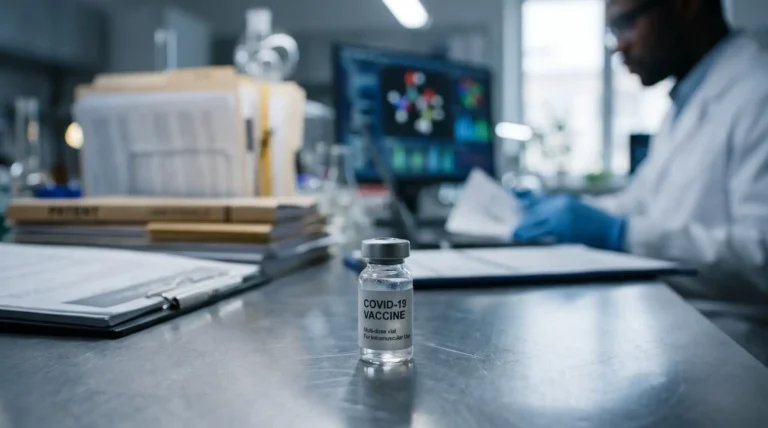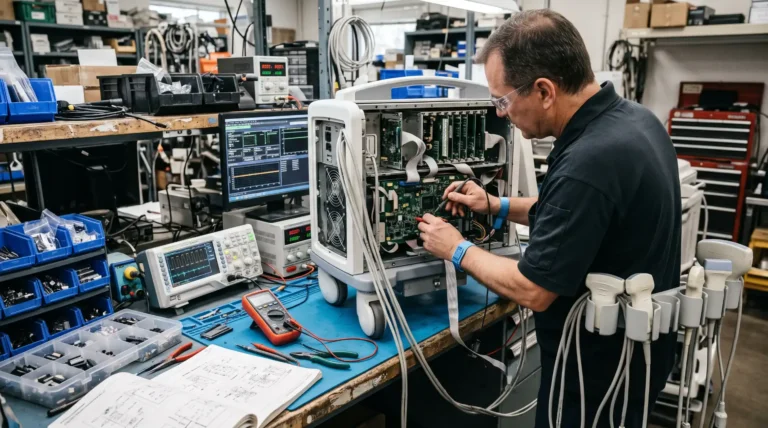
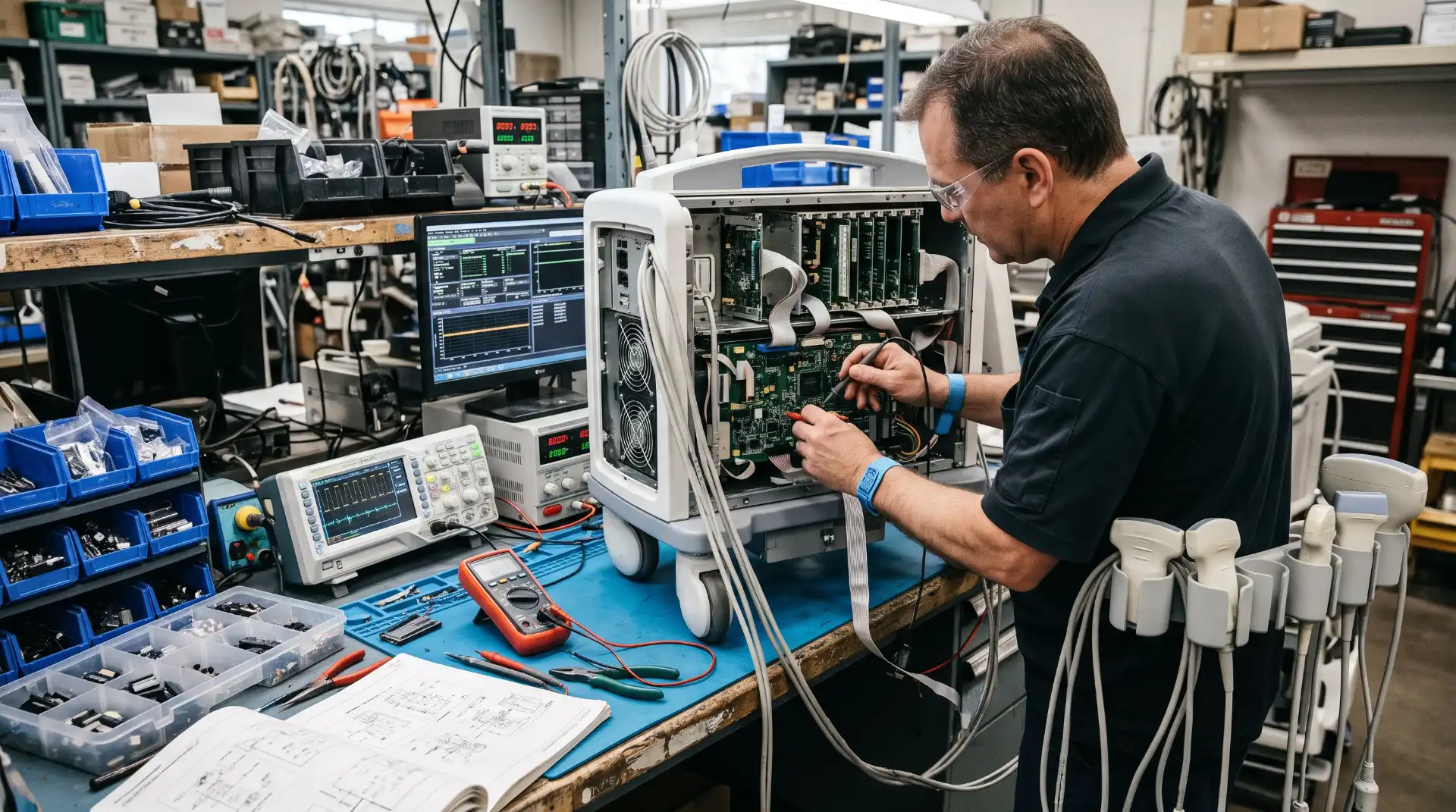
A Major Legal Development for Medical Equipment Repair in America
Modern hospitals depend on sophisticated medical equipment to diagnose illnesses, monitor patients, perform procedures, and deliver essential healthcare services. From magnetic resonance imaging (MRI) scanners and computed tomography (CT) systems to laboratory analyzers, surgical equipment, ventilators, and patient monitoring devices, medical technology has become increasingly dependent on specialized software and electronic control systems.
However, maintaining this equipment can be complicated. When a medical device develops a technical problem, hospitals may discover that repairing it requires proprietary diagnostic software, specialized service tools, authentication credentials, or technical information controlled by the original equipment manufacturer (OEM).
This creates a difficult situation for healthcare providers. Even when a hospital owns or lawfully possesses a medical device, it may not have unrestricted access to the software needed to diagnose or repair the equipment. In some circumstances, the hospital must depend on the manufacturer’s authorized service network or wait for an approved technician to become available.
These restrictions have helped bring the right-to-repair debate into the medical technology industry.
On September 1, 2026, the U.S. Court of Appeals for the District of Columbia Circuit issued an important decision in Medical Imaging & Technology Alliance v. Library of Congress, No. 25-5328. The court upheld the legality of an existing exemption under the Digital Millennium Copyright Act (DMCA) that permits certain circumvention of technological protection measures when necessary to diagnose, maintain, or repair qualifying medical devices.
The decision is important because it rejected an industry challenge to the exemption and reinforced the government’s ability to recognize legitimate repair-related uses of copyrighted software.
However, the ruling should not be interpreted as creating an unlimited right to modify medical equipment, distribute proprietary software, or perform every type of repair without restrictions. It concerns a specific copyright anticircumvention exemption and the legal reasoning supporting its adoption and renewal.
For medical equipment manufacturers, hospitals, independent service organizations, healthcare technology professionals, and intellectual property attorneys, the decision highlights an important question: How should American law balance software ownership, manufacturer control, competition, equipment reliability, and access to essential repair services?
The answer could influence the future of medical equipment maintenance and intellectual property protection throughout the United States.
1. Understanding the Right-to-Repair Debate in the Medical Industry
The right-to-repair movement generally focuses on whether people and businesses should have meaningful opportunities to maintain and repair products they lawfully purchase or possess.
In traditional industries, repairing equipment often involves replacing damaged components, obtaining technical manuals, purchasing replacement parts, and using specialized tools. However, modern products increasingly rely on embedded software, digital authentication, encrypted files, and manufacturer-controlled diagnostic systems.
Medical equipment presents a particularly complicated example because its software may control essential operating functions.
An imaging system, for instance, might rely on software that coordinates mechanical components, processes information from sensors, manages calibration, and communicates with other hospital systems. If the equipment develops an error, a technician may need access to particular diagnostic information to identify the underlying problem.
When manufacturers restrict access to these resources, independent repair companies may face difficulties completing otherwise legitimate maintenance work.
Hospitals may also experience longer equipment downtime or higher servicing expenses if they have limited repair options.
Why Medical Equipment Is Different From Ordinary Consumer Electronics
The medical industry cannot approach repair rights in exactly the same way as the smartphone, automobile, or household appliance markets.
A malfunctioning consumer device may create inconvenience or financial loss. A malfunctioning medical device can potentially affect patient treatment, clinical decisions, and hospital operations.
For example, a hospital that cannot use a particular imaging system may need to transfer patients to another facility or postpone certain diagnostic procedures. A malfunctioning laboratory analyzer may interrupt testing operations. A ventilator that fails to operate according to its required specifications presents an especially serious safety concern.
These risks justify careful repair standards, technician qualifications, quality controls, and appropriate cybersecurity safeguards.
However, patient safety does not automatically require every repair activity to be restricted to the original manufacturer.
Independent service organizations may employ experienced biomedical engineers, electronics specialists, and technicians who understand the equipment they maintain. With appropriate training, technical resources, and quality procedures, third-party professionals can provide valuable servicing support.
The legal challenge is determining how to permit legitimate repair activities without creating unnecessary risks to patients or compromising protected intellectual property.
The Role of Software in Modern Medical Equipment
Medical devices increasingly operate as interconnected hardware and software systems.
A technician might need to access diagnostic logs, firmware information, calibration settings, error codes, or related computer programs to identify why a device is malfunctioning.
Manufacturers frequently use technological protection measures to restrict access to copyrighted software. These measures may include passwords, encryption, authentication systems, and other access controls.
Although these protections can serve legitimate purposes, they may also create obstacles when independent technicians need access to software for a qualifying repair activity.
This is where copyright law becomes relevant.
The legal debate is not simply whether a manufacturer owns the copyright in its software. It is whether copyright-related access restrictions should prevent certain noninfringing repair activities when Congress has authorized a specific exemption.
2. What Happened in the 2026 Federal Appeals Court Case?
The central case is Medical Imaging & Technology Alliance v. Library of Congress, decided on September 1, 2026, by the U.S. Court of Appeals for the District of Columbia Circuit.
The dispute involved two medical technology industry organizations: the Medical Imaging & Technology Alliance (MITA) and the Advanced Medical Technology Association (AdvaMed).
These organizations challenged the Library of Congress’s adoption and subsequent renewal of an exemption involving medical equipment software under Section 1201 of the DMCA.
The exemption allows qualifying parties to circumvent certain technological protection measures that control access to copyrighted computer programs and related data files contained in or used to support medical equipment.
The permitted purpose is limited to diagnosis, maintenance, or repair.
The industry organizations argued that the exemption was legally problematic. Their concerns included whether the Librarian of Congress had properly applied copyright fair-use principles, whether the agency had sufficient authority, and whether the exemption could affect manufacturers’ intellectual property interests.
The litigation went through multiple stages before reaching the September 2026 decision.
The D.C. Circuit ultimately affirmed the district court’s judgment in favor of the Library of Congress and the government.
What the Court Actually Decided
The appeals court concluded that the Librarian of Congress’s decision to adopt and renew the medical device repair exemption was lawful, reasonable, and supported by the administrative record.
The court examined the agency’s treatment of the four fair-use factors under Section 107 of the Copyright Act.
These factors concern:
- The purpose and character of the use, including whether it is commercial or nonprofit.
- The nature of the copyrighted work.
- The amount and substantiality of the portion used.
- The effect of the use on the potential market for or value of the copyrighted work.
The court agreed that the agency had reasonably concluded that qualifying repair-related software access could constitute fair use.
One important consideration was that medical equipment software is primarily functional. Independent technicians generally need access to this material to understand the operation of equipment and restore its functionality, rather than to reproduce and commercially distribute the manufacturer’s software.
The court also considered the distinction between repairing a medical device and creating a competing product using copyrighted software.
That distinction mattered because the exemption was intended to support legitimate maintenance and repair, not to give independent businesses unrestricted rights to commercialize manufacturers’ protected programs.
Why the Court Rejected the Manufacturers’ Challenge
One particularly important part of the decision involved the manufacturers’ argument that a separate market existed for repair software independent of the software used to operate medical equipment.
The appeals court noted that the industry organizations had not established an adequate evidentiary record supporting this distinction during the relevant administrative proceedings or before the district court.
The court therefore rejected their argument that the agency’s treatment of the relevant software was unreasonable.
The decision also emphasized that independent service organizations use the relevant software to restore equipment functionality rather than to replace the original manufacturer’s protected software products.
In the court’s analysis, there was insufficient evidence that the repair activities covered by the exemption harmed the market for the original copyrighted software.
This is significant because it demonstrates that courts may examine the actual purpose and commercial effect of software access rather than automatically treating every circumvention of an access restriction as copyright infringement.
The decision does not eliminate copyright protection for medical technology companies. Instead, it confirms that a properly supported statutory exemption can coexist with legitimate copyright ownership.
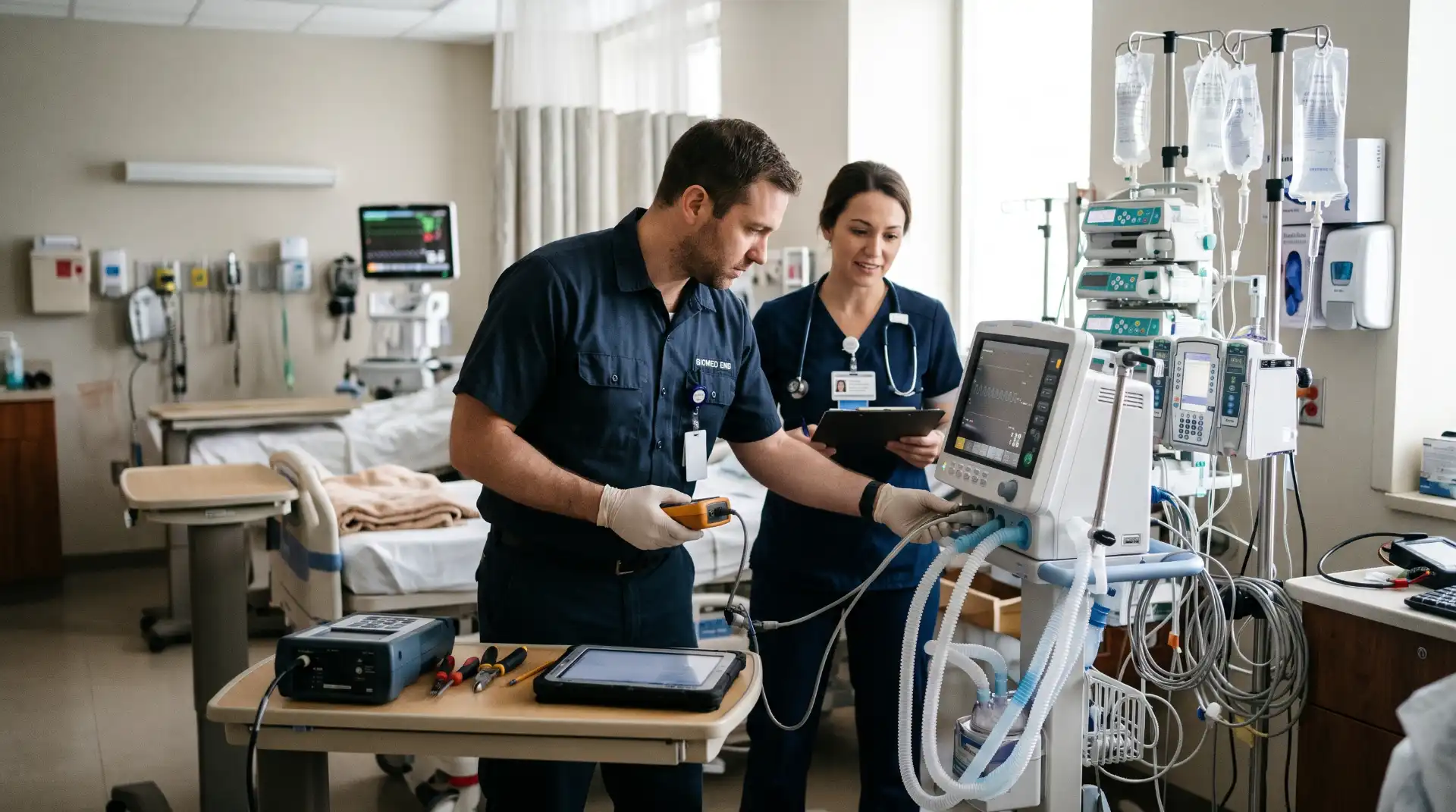
3. How the Digital Millennium Copyright Act Affects Medical Device Repairs
The Digital Millennium Copyright Act is one of the most important federal laws governing copyrighted digital technology in the United States.
Congress enacted the DMCA in 1998 to address issues involving digital copyright protection, unauthorized access, and technological restrictions.
Section 1201 generally prohibits circumventing technological measures that effectively control access to copyrighted works.
For example, a software manufacturer might use encryption or authentication requirements to prevent unauthorized access to a computer program.
A medical equipment manufacturer may implement similar protections in diagnostic imaging systems, laboratory instruments, surgical devices, or other sophisticated products.
These restrictions can help protect proprietary software against unauthorized copying, modification, and distribution.
However, Congress also created a process allowing the Librarian of Congress to establish temporary exemptions for certain classes of copyrighted works when the prohibition on circumvention would adversely affect users’ ability to make noninfringing uses.
The process is conducted every three years through the Copyright Office’s triennial rulemaking proceedings.
The Medical Device Repair Exemption
The medical equipment exemption addresses situations where technological protection measures prevent legitimate diagnosis, maintenance, or repair activities.
In practical terms, it recognizes that technicians may need to bypass certain digital restrictions to access software and related information required to service equipment.
For example, an independent repair company might be asked to investigate a malfunctioning medical imaging system.
The equipment may contain diagnostic information that is inaccessible without circumventing a technological restriction.
If the activity falls within the applicable exemption, the technician may have a legal basis under Section 1201 to perform the qualifying circumvention.
However, the exemption has defined limits.
It does not provide general permission to copy and distribute proprietary software, develop competing commercial products using protected code, or make unrelated modifications to medical equipment.
It also does not automatically resolve contractual disputes or eliminate other legal obligations.
For a broader discussion of the statute and the upcoming regulatory process, Legal Journal has also covered DMCA Section 1201: What the 2027 Exemptions Could Change. That discussion is particularly relevant because the medical device exemption is receiving additional attention during the current rulemaking cycle.
Why the Exemption Matters to Independent Repair Businesses
Independent service organizations often compete with manufacturer-authorized repair providers.
Their business models may depend on obtaining access to diagnostic information, service software, and other technical resources.
When access restrictions prevent technicians from diagnosing a malfunction, a repair company may be unable to complete work even when it has the necessary technical knowledge and replacement components.
The exemption helps address this problem by recognizing certain repair-related software access as legally permissible under the specified circumstances.
This could support competition in medical equipment servicing and provide healthcare facilities with additional maintenance options.
However, independent businesses must still determine whether their specific activities fall within the exemption. The existence of a general right-to-repair policy does not mean every technician can bypass every security restriction.
4. What the 2026 Decision Could Mean for Medical Equipment Manufacturers
For medical equipment manufacturers, the September 2026 ruling creates important considerations involving software protection, service agreements, intellectual property strategy, and competition.
Manufacturers have traditionally relied on proprietary service networks to maintain complex medical equipment.
These arrangements can help companies maintain consistent technical standards, control software access, and ensure that servicing follows manufacturer specifications.
However, restrictions that unnecessarily prevent legitimate repair activities may face increased scrutiny.
The appeals court decision reinforces the legal significance of repair access when the relevant software use falls within an applicable DMCA exemption.
Manufacturers May Need to Reconsider Software Access Policies
Medical technology companies should examine whether their software access restrictions are appropriately tailored to their legitimate business and safety objectives.
A manufacturer may have good reasons to prevent unauthorized changes to safety-critical software.
For example, unrestricted access to certain operating parameters could potentially affect the accuracy of a diagnostic system or the performance of equipment used during surgery.
However, a restriction that prevents an independent technician from obtaining necessary diagnostic information may create a different legal and competitive concern.
Manufacturers should distinguish between access needed for legitimate repair and activities that could compromise device operation or misuse proprietary technology.
A carefully designed access policy can protect valuable intellectual property while allowing qualifying maintenance activities.
Service Contracts May Require Greater Attention
Manufacturers frequently enter into service agreements with hospitals, outpatient facilities, laboratories, and other healthcare organizations.
These agreements may address repair procedures, response times, software updates, replacement parts, maintenance responsibilities, and access to diagnostic resources.
Following the 2026 decision, manufacturers may wish to review whether their contracts clearly explain the limits of permitted service activities.
For example, a contract might establish procedures for obtaining diagnostic access, documenting repairs, maintaining cybersecurity controls, and restoring equipment to its original operating specifications.
Companies should avoid assuming that a contractual restriction automatically overrides a statutory exemption.
At the same time, the DMCA exemption does not automatically invalidate every service agreement or warranty provision. Contractual rights and copyright anticircumvention rules involve different legal questions that require separate analysis.
Intellectual Property Protection Remains Important
The decision should not be interpreted as weakening all intellectual property rights associated with medical devices.
Manufacturers may continue to own copyrights in qualifying software, patents covering eligible inventions, trademarks identifying their products, and trade secrets involving proprietary technical information.
For example, a manufacturer might develop a specialized imaging algorithm that improves the performance of a diagnostic system.
The algorithm, related software, engineering methods, and confidential technical information may involve different forms of intellectual property protection.
Businesses should understand how these rights interact.
Legal Journal has discussed related issues in Software Patents and Generative AI: What U.S. Firms Need, which explains why software copyright and patent protection must be analyzed separately.
The same distinction is important in medical technology. A right to access certain copyrighted software for qualifying repairs does not automatically provide ownership of the underlying invention or permission to commercialize a patented technology.
5. How Hospitals and Healthcare Facilities Could Benefit
Hospitals are among the most important stakeholders in the medical equipment repair debate.
Healthcare facilities invest substantial amounts in diagnostic equipment, operating room technology, laboratory systems, and other specialized devices.
These products may remain in service for many years, making maintenance costs and equipment availability important financial and operational considerations.
When repairs depend exclusively on a manufacturer’s service network, healthcare facilities may have fewer options for addressing equipment failures.
The 2026 ruling could support a more flexible servicing environment by reinforcing the legal basis for qualifying independent repair activities.
Reduced Equipment Downtime
Equipment downtime can create significant operational challenges.
For example, a hospital may rely on one particular imaging system for certain diagnostic procedures. If the system becomes unavailable, administrators may need to reschedule appointments, transfer patients, or use alternative facilities.
Access to additional qualified service providers could potentially shorten the time required to identify and correct technical problems.
The result will depend on the availability of skilled technicians, replacement components, diagnostic tools, and manufacturer-supported technical information.
The court decision does not guarantee faster repairs. However, it may strengthen the legal position of independent service organizations seeking access to resources necessary for qualifying repair work.
Greater Flexibility in Maintenance Planning
Hospitals often operate equipment across multiple departments and locations.
A large healthcare network may maintain imaging equipment, laboratory instruments, patient monitors, surgical devices, and other systems from several manufacturers.
Managing separate service arrangements can be expensive and administratively complicated.
Independent service organizations may offer an additional option for certain maintenance activities.
Healthcare facilities could evaluate these services based on technician qualifications, experience, response times, service quality, cybersecurity practices, and total costs.
However, hospitals should not select a repair provider based solely on price.
Medical equipment maintenance requires careful attention to technical competence and patient safety.
Potential Cost Savings
Independent repair options may create competitive pressure in servicing markets.
When healthcare facilities can choose among qualified providers, they may have greater flexibility when negotiating maintenance agreements and repair costs.
For example, a hospital might compare the cost of an OEM maintenance contract with a proposal from an independent service company that provides appropriate technical support.
The decision should consider more than the initial service fee.
Parts availability, response times, equipment reliability, service documentation, warranties, cybersecurity, and regulatory responsibilities may all influence the actual cost of maintaining the equipment.
The legal ruling creates an opportunity for broader discussion about service competition, but it does not establish that independent repair will always be cheaper or more appropriate.

6. The FDA’s Role: Why Repair Access Does Not Eliminate Safety Requirements
One of the most important issues in medical equipment repair is the relationship between copyright law and federal medical device regulation.
The DMCA governs certain copyright-related access restrictions.
The Food and Drug Administration (FDA), meanwhile, regulates medical devices under the Federal Food, Drug, and Cosmetic Act and applicable regulations.
These legal frameworks serve different purposes.
A technician might be permitted to circumvent a technological protection measure under the DMCA exemption but still need to comply with applicable safety, quality, and regulatory requirements.
The court decision does not give repair businesses a general exemption from FDA oversight.
Servicing Versus Remanufacturing
The FDA distinguishes between servicing and remanufacturing.
Servicing generally involves repair or preventive maintenance intended to return a medical device to the safety and performance specifications established by the original equipment manufacturer.
Remanufacturing involves activities that significantly change the device’s performance specifications, safety specifications, or intended use.
This distinction is important because remanufacturing can trigger different regulatory responsibilities.
For example, replacing a malfunctioning component with an appropriate replacement part may constitute ordinary servicing.
By contrast, changing the device’s intended operation or significantly modifying its safety-related performance may raise remanufacturing concerns.
The FDA’s May 2024 guidance, Remanufacturing of Medical Devices, explains how manufacturers, independent service organizations, and other businesses should evaluate these activities.
The FDA emphasizes that the actual work performed matters more than the label an organization uses to describe itself.
A business cannot automatically avoid remanufacturing responsibilities simply by calling its work repair or maintenance.
The Importance of the Quality Management System Regulation
Another important development is the FDA’s updated Quality Management System Regulation (QMSR), which became effective on February 2, 2026.
The regulation amended the medical device quality management requirements under 21 CFR Part 820 and incorporated ISO 13485:2016 by reference.
The updated regulatory framework is particularly important for entities that perform activities qualifying as remanufacturing.
Manufacturers and remanufacturers should evaluate their responsibilities under the updated requirements, including applicable quality management procedures, documentation, and regulatory obligations.
Independent service organizations should also understand how their activities are classified.
Not every third-party repair company automatically becomes a regulated remanufacturer merely because it services medical equipment. The FDA evaluates the nature and effect of the specific activities.
Patient Safety Must Remain a Priority
Medical equipment repairs should include appropriate testing and verification.
A technician who repairs an imaging system may need to confirm that the equipment operates correctly before it returns to clinical use.
A repair involving a patient monitoring device may require checks to confirm that alarms, sensors, and other important functions work as intended.
For certain devices, cybersecurity controls are also essential.
A poorly secured maintenance connection could create opportunities for unauthorized access or interference with device operation.
The right-to-repair discussion should therefore encourage both access and accountability.
The goal is not to eliminate manufacturer standards. It is to allow legitimate servicing while ensuring that repaired devices remain safe and effective.
7. Cybersecurity Concerns and the Future of Connected Medical Devices
Medical devices are increasingly connected to hospital networks, cloud services, electronic health record systems, and remote monitoring platforms.
These connections create valuable capabilities but also introduce cybersecurity challenges.
A medical device may contain operating software, communication components, diagnostic systems, and remote access functions that must be protected against unauthorized activity.
Manufacturers argue that unrestricted access to device software could introduce security vulnerabilities or create opportunities for improper modifications.
These concerns deserve serious attention.
For example, an unauthorized change to a connected medical system could potentially affect how information is transmitted, how errors are reported, or how equipment interacts with other hospital systems.
However, independent repair organizations also argue that access to diagnostic resources is necessary to identify technical problems and maintain equipment throughout its useful life.
A balanced legal framework should consider both sides.
Secure Access for Independent Technicians
Manufacturers and independent repair organizations can develop procedures that permit authorized repair activities without providing unrestricted access to every component of a device.
Possible safeguards include technician authentication, controlled diagnostic environments, secure access credentials, activity logging, documented authorization, and verification procedures after maintenance.
These measures can help establish accountability.
Hospitals should also evaluate whether outside service providers follow appropriate cybersecurity practices before granting access to connected equipment.
Software Updates and Long-Term Support
Medical devices may remain in service long after their original purchase.
During that period, manufacturers may release software updates to address security vulnerabilities, correct defects, or improve performance.
Healthcare facilities need to understand how updates affect repair access and equipment compatibility.
An independent technician may be able to restore a malfunctioning device while still needing manufacturer information about software versions, supported components, or known technical issues.
Clear documentation can help prevent misunderstandings.
Manufacturers should consider how their software support policies affect the long-term maintainability of medical devices.
8. The Economic Impact on Independent Medical Equipment Repair Companies
The 2026 decision could be important for the independent medical equipment servicing industry.
Independent service organizations often compete with original equipment manufacturers and authorized service providers.
Their services may include preventive maintenance, diagnostic testing, component replacement, equipment calibration, and technical troubleshooting.
The ability to access software and related diagnostic information can be essential to these businesses.
More Opportunities for Competition
When independent companies can perform qualifying repairs without unnecessary copyright-related access barriers, they may have more opportunities to compete.
Hospitals could potentially receive additional service proposals and compare different maintenance arrangements.
This may encourage service providers to improve technician training, response times, documentation, and technical capabilities.
However, competition depends on more than legal access.
Independent companies still need qualified personnel, appropriate replacement parts, technical knowledge, insurance, and reliable service procedures.
They may also need to invest in cybersecurity infrastructure and quality management systems.
New Business Models
The evolving legal environment could encourage different servicing arrangements.
For example, independent businesses might specialize in particular categories of medical equipment rather than attempting to service every device type.
One company could focus on imaging systems, while another might specialize in laboratory equipment or patient monitoring technology.
Some businesses may work directly with healthcare facilities, while others may enter into partnerships with equipment manufacturers or authorized distributors.
These arrangements could provide additional flexibility throughout the medical technology industry.
Intellectual Property and Competitive Boundaries
Independent service organizations must also recognize that repair access does not mean ownership of the manufacturer’s technology.
A business that receives permission under the applicable exemption to circumvent a software access restriction does not automatically obtain the right to distribute the software or use it to manufacture a competing medical system.
Manufacturers can continue protecting legitimate proprietary technology through copyright, patent, trade secret, and contractual rights where applicable.
The legal challenge is determining where legitimate repair ends and unauthorized commercialization begins.
9. The 2027 DMCA Rulemaking Could Be the Next Major Development
Although the September 2026 decision was important, the legal debate is not over.
The U.S. Copyright Office is conducting its tenth triennial rulemaking under Section 1201 of the DMCA.
This proceeding will consider whether certain existing exemptions should be renewed and whether additional exemptions should be adopted.
The medical device repair exemption has received particular attention because industry groups submitted meaningful opposition to its renewal.
On October 28, 2026, the Copyright Office published a Notice of Proposed Rulemaking addressing the next stage of the process.
Rather than allowing the medical device repair exemption to proceed through the streamlined renewal process, the Office decided to consider it as a new petition and request additional submissions and evidence.
This development is important because the D.C. Circuit decision did not eliminate the Copyright Office’s responsibility to evaluate the evidence and legal arguments presented in the current rulemaking.
Why Additional Evidence Matters
The 2026 court decision emphasized that the manufacturers’ challenge lacked sufficient record evidence supporting their argument about a separate market for repair software.
The new rulemaking creates an opportunity for interested parties to provide additional evidence and arguments.
Manufacturers may submit information concerning proprietary software, service markets, cybersecurity, technical risks, and the potential effects of repair-related circumvention.
Independent repair organizations may present evidence concerning equipment downtime, repair costs, access restrictions, service availability, and the practical need for diagnostic information.
Hospitals and healthcare technology professionals may also contribute information about the operational consequences of limited repair options.
The Copyright Office must evaluate the relevant record before making its recommendations.
Important Rulemaking Dates
As of November 10, 2026, the published schedule includes the following deadlines:
- December 7, 2026: First-round comments supporting proposed exemptions or providing relevant information.
- February 22, 2027: Opposition comments.
- March 22, 2027: Reply comments from supporters and other qualifying participants.
The eventual outcome could influence the scope of medical device repair exemptions for the October 2027 through October 2030 period.
Healthcare companies and intellectual property professionals should monitor the proceeding rather than assume that the existing exemption will continue unchanged.
The official U.S. Copyright Office Section 1201 proceeding provides information about the petitions, proposed exemptions, deadlines, and public submissions.
10. What Medical Equipment Manufacturers Should Do Now
Manufacturers should treat the court decision and the upcoming rulemaking as reasons to review their intellectual property and servicing strategies.
The objective should be to protect legitimate business interests while recognizing that qualifying repair activities may receive legal protection.
Review Software Access Restrictions
Manufacturers should identify which software restrictions are necessary for intellectual property protection, cybersecurity, and device safety.
They should also determine whether some restrictions unnecessarily prevent qualifying diagnosis or repair activities.
A more carefully structured access policy may reduce disputes while maintaining appropriate technical controls.
Evaluate Service Agreements
Companies should review existing agreements with hospitals, distributors, authorized repair providers, and independent service organizations.
Contracts should clearly explain service responsibilities, software access procedures, confidentiality requirements, cybersecurity expectations, and documentation obligations.
Manufacturers should avoid relying on vague language that creates unnecessary confusion about permitted repair activities.
Improve Technical Documentation
Clear service documentation can help technicians maintain equipment according to established performance and safety specifications.
Manufacturers should evaluate whether their documentation provides adequate information about preventive maintenance, replacement components, diagnostic procedures, and relevant technical requirements.
The FDA’s guidance encourages manufacturers to consider including appropriate servicing information in medical device labeling.
Providing useful technical information can improve maintenance quality without necessarily requiring manufacturers to disclose every trade secret or proprietary engineering detail.
Protect Trade Secrets Properly
Manufacturers should distinguish between information that genuinely requires trade secret protection and information that may reasonably be shared to support servicing.
Trade secret law depends on the value of confidential information and the owner’s reasonable efforts to maintain its secrecy.
Companies should use access controls, confidentiality agreements, employee training, and appropriate security procedures.
Legal Journal’s coverage of Cybersecurity and Intellectual Property: Protecting Trade Secrets From Data Breaches provides additional context about protecting confidential business information.
A well-designed intellectual property strategy should not depend on preventing every form of legitimate access.
11. What Hospitals and Independent Repair Organizations Should Do
Healthcare facilities and independent service companies should also prepare for the changing legal environment.
The court decision provides important guidance, but organizations should avoid assuming that every repair activity is automatically protected.
Identify the Legal Basis for Software Access
Before bypassing a technological protection measure, an independent repair company should determine whether the specific activity falls within the applicable Section 1201 exemption.
The company should consider the type of software involved, the purpose of the access, the device’s lawful acquisition, and the relationship between the activity and diagnosis, maintenance, or repair.
If the proposed work involves broader modifications or software redistribution, the legal analysis may be different.
Maintain Detailed Repair Records
Documentation is particularly important when repairing medical equipment.
Companies should maintain appropriate records of customer authorization, equipment identification, diagnostic findings, software access, replacement parts, maintenance procedures, and post-repair testing.
These records can help demonstrate what work was performed and whether the activity was intended to restore the device to its established operating specifications.
They can also help healthcare facilities evaluate service quality and identify recurring technical problems.
Verify Technician Qualifications
Independent service organizations should ensure that technicians possess the training and experience necessary for the devices they maintain.
A technician qualified to repair one category of equipment may not have the necessary expertise to service a different system.
Healthcare facilities should evaluate qualifications, references, experience, insurance coverage, quality procedures, and cybersecurity practices before entering into service arrangements.
Monitor Regulatory Changes
The current Section 1201 exemption and the 2027 rulemaking should remain part of ongoing compliance monitoring.
Healthcare organizations should also monitor FDA guidance and applicable quality management requirements.
The legal framework may change as the Copyright Office considers additional evidence and receives public comments.
12. Could the Decision Influence Other Industries?
Although the September 2026 ruling focused on medical equipment, its broader legal reasoning may attract attention in other industries where copyrighted software controls access to physical products.
Modern automobiles, agricultural machinery, industrial equipment, consumer electronics, and specialized manufacturing systems increasingly depend on software.
In each industry, manufacturers may use technological protection measures to control access to proprietary programs.
Independent repair organizations may argue that certain access restrictions prevent lawful maintenance and repair.
The medical equipment decision does not automatically establish a right to repair every category of software-enabled product.
However, it illustrates how Section 1201 exemptions and fair-use principles can become important when technological access restrictions interfere with qualifying noninfringing activities.
Automotive and Industrial Equipment
Modern vehicles may contain software controlling engine management, diagnostics, safety systems, and electronic components.
Agricultural machinery and industrial equipment may also depend on proprietary diagnostic tools.
The legal issues can resemble those involving medical equipment, although the relevant statutory exemptions and regulatory requirements may differ.
Consumer Technology
Smartphones, computers, gaming systems, and household appliances also raise questions about software access and independent repair.
Consumers may own the physical products while relying on software licenses and technological access restrictions.
The broader policy debate concerns whether copyright law should prevent certain repair activities that do not involve unauthorized copying or commercial exploitation of protected software.
Future rulemaking decisions may help clarify how these issues should be addressed across different product categories.
13. What the 2026 Decision Does Not Mean
Because the phrase right to repair can be interpreted broadly, it is important to identify what the court actually decided.
The ruling does not mean that medical equipment owners now have unrestricted access to all manufacturer software.
It does not authorize technicians to distribute copyrighted programs, create competing products using proprietary software, or perform unrelated software modifications.
It does not automatically cancel manufacturer service agreements, warranties, or licensing restrictions.
It also does not remove the FDA’s authority over medical device safety and applicable manufacturing or remanufacturing activities.
Most importantly, the decision does not establish that every repair activity is lawful simply because it is performed by an independent technician.
The relevant exemption has a defined scope and applies to qualifying activities involving the specified copyrighted computer programs and data files.
Organizations should evaluate their circumstances carefully before relying on it.
The court also did not decide every possible dispute between medical equipment manufacturers and independent repair businesses. Future litigation could involve different claims, different evidence, and different legal issues.
The September decision should therefore be understood as an important ruling on the legality of the existing DMCA repair exemption, rather than a complete resolution of the medical equipment right-to-repair debate.
14. The Future of Medical Equipment Repair Law in the United States
The future of medical equipment repair will likely depend on how courts, regulators, manufacturers, healthcare facilities, and independent service organizations address the relationship between intellectual property and equipment maintenance.
Medical technology will continue becoming more sophisticated.
As software becomes more deeply integrated into diagnostic systems, patient monitoring equipment, imaging machines, and other healthcare products, repair access will become an increasingly important legal and commercial issue.
Manufacturers will continue to have legitimate reasons to protect proprietary software and prevent unauthorized changes that could affect device safety.
At the same time, hospitals need reliable equipment and practical options for maintaining devices throughout their useful lives.
Independent repair organizations may play an important role in providing those services.
The September 2026 decision provides a meaningful development in this debate because it confirms that the existing medical device repair exemption survived a significant legal challenge.
However, the ongoing 2027 Copyright Office proceeding means that the issue remains active.
The evidence submitted by manufacturers, repair organizations, hospitals, and other stakeholders could influence the future scope of the exemption.
For businesses, the most effective approach will be to monitor the rulemaking, review software access policies, strengthen technical documentation, and understand the difference between servicing and remanufacturing.
For healthcare facilities, the decision offers another reason to evaluate their maintenance options and understand the legal boundaries surrounding independent repair.
For intellectual property professionals, it demonstrates that copyright protection and legitimate repair access are not necessarily incompatible.
Conclusion: Balancing Intellectual Property Protection With the Need for Reliable Medical Equipment
The September 1, 2026 decision in Medical Imaging & Technology Alliance v. Library of Congress represents an important development in the American right-to-repair debate.
By upholding the medical device repair exemption under Section 1201 of the DMCA, the D.C. Circuit rejected an industry challenge to the government’s decision to permit certain repair-related access to copyrighted medical equipment software.
The ruling reinforces the importance of distinguishing between legitimate software access for diagnosis, maintenance, and repair and unauthorized commercial exploitation of protected technology.
For medical equipment manufacturers, the decision highlights the need to review software restrictions, service contracts, and intellectual property strategies.
For hospitals, it may help support additional repair options and greater flexibility in maintaining essential equipment.
For independent service organizations, it provides important legal context for qualifying repair activities while emphasizing the need to respect the limits of the exemption.
Nevertheless, patient safety remains central. Copyright law does not replace FDA requirements, and permission to circumvent certain software restrictions does not automatically authorize every technical modification.
The next major development will likely emerge from the Copyright Office’s 2027 Section 1201 rulemaking, where the medical device repair exemption will receive additional consideration.
As medical technology continues evolving, the United States will need a legal framework that protects innovation while allowing healthcare providers to maintain the equipment on which patients depend.
The challenge is not simply choosing between manufacturers and independent repair businesses. It is developing a practical balance in which intellectual property rights, fair competition, cybersecurity, and patient safety can coexist.
Frequently Asked Questions About Medical Equipment Right to Repair
1. What was the September 2026 medical device repair ruling?
The U.S. Court of Appeals for the D.C. Circuit upheld the legality of a DMCA exemption allowing certain circumvention of technological protection measures when necessary to diagnose, maintain, or repair qualifying medical equipment.
2. Does the ruling allow independent companies to repair all medical devices?
No. The ruling concerns a specific copyright anticircumvention exemption. It does not provide unlimited permission to access, modify, copy, or distribute manufacturer software. Other applicable laws and regulatory requirements remain relevant.
3. Can hospitals use independent medical equipment repair companies?
Hospitals may use qualified independent service organizations, subject to applicable legal, contractual, safety, and regulatory requirements. The 2026 decision supports the legality of certain repair-related software access under the DMCA exemption.
4. Does the DMCA exemption eliminate medical device manufacturers’ copyrights?
No. Manufacturers retain their qualifying copyright interests. The exemption addresses specified circumvention activities for diagnosis, maintenance, or repair. It does not transfer copyright ownership to repair businesses.
5. Does the FDA regulate independent medical equipment repair companies?
The FDA evaluates the activities performed and the applicable regulatory requirements. Ordinary servicing and remanufacturing are treated differently. Activities that significantly change a device’s performance, safety specifications, or intended use may trigger additional regulatory responsibilities.
6. What is the difference between servicing and remanufacturing?
Servicing generally involves repair or maintenance intended to return a device to the original manufacturer’s safety and performance specifications. Remanufacturing involves significant changes to performance, safety specifications, or intended use.
7. Will medical equipment repair become cheaper after the 2026 decision?
The decision could encourage additional competition in certain servicing markets. However, it does not guarantee lower prices. Actual costs depend on technician availability, parts, equipment complexity, service quality, and contractual arrangements.
8. What happens to the medical device repair exemption in 2027?
The Copyright Office is considering the medical device repair exemption as a new petition in its tenth triennial Section 1201 proceeding because it received meaningful opposition to renewal. The Office will evaluate additional evidence and public comments before the next exemption period.
9. Can manufacturers still protect medical device software?
Yes. Manufacturers may continue using copyright, patent, trade secret, contractual, and other applicable legal protections. The repair exemption does not eliminate those rights.
10. Why is the right to repair medical equipment important?
Reliable maintenance can help hospitals reduce equipment downtime, manage servicing costs, and maintain access to essential diagnostic and treatment technology. The legal challenge is ensuring that repair access does not compromise patient safety, cybersecurity, or legitimate intellectual property rights.
Disclaimer: This article provides general information about U.S. intellectual property and medical device regulation. It is not legal advice. Manufacturers, hospitals, and independent service organizations should consult qualified legal and regulatory professionals about specific repair activities and compliance obligations.