AI-Generated Game Assets and Copyright Protection for Developers
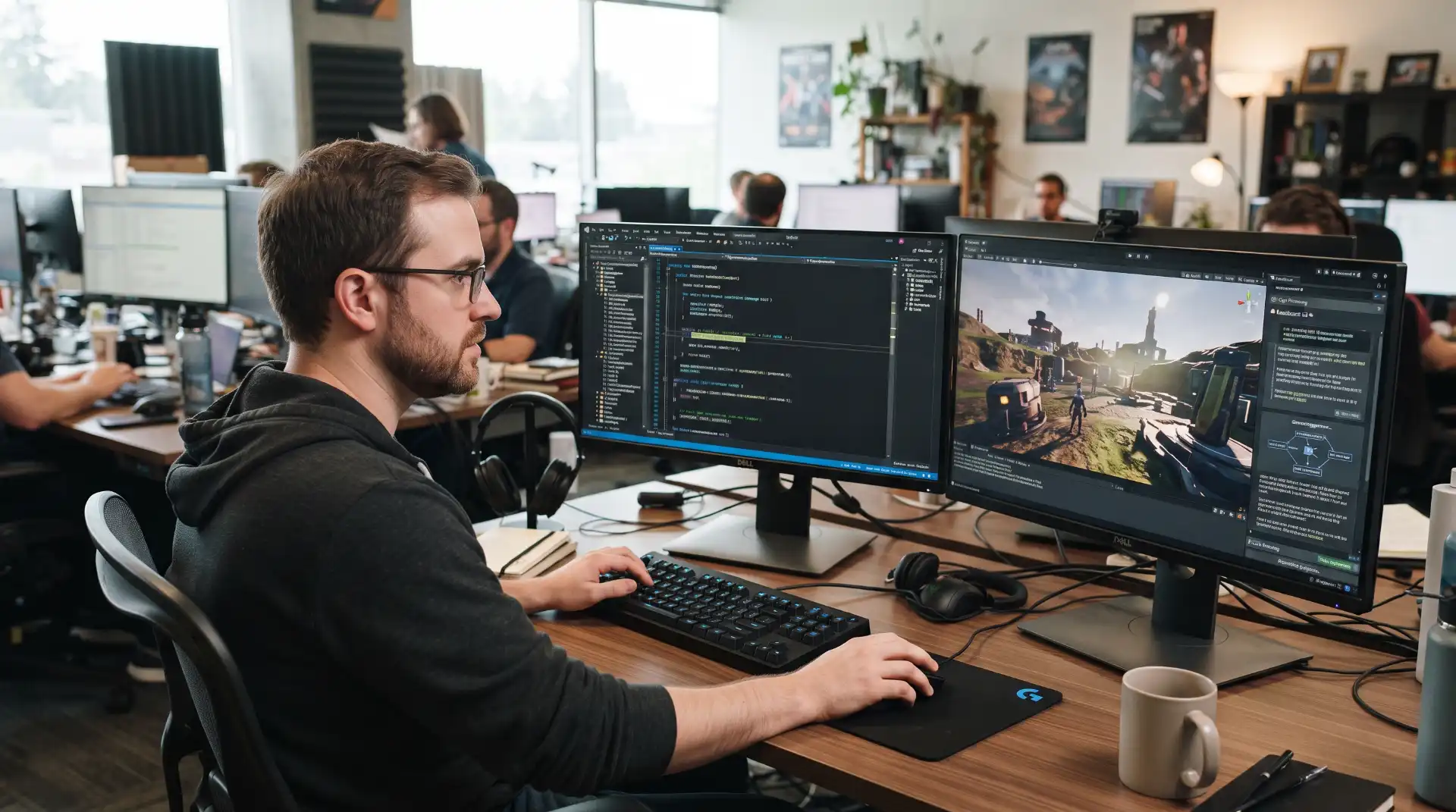
Generative artificial intelligence is rapidly changing how video games are made. Independent developers and major studios can now use AI tools to create concept art, environmental textures, character variations, background scenery, interface elements, promotional artwork, dialogue drafts, music concepts, animation references, and even portions of source code.
The speed advantages are obvious. A developer who previously needed days to create dozens of visual concepts may now produce alternatives in minutes. A small studio can experiment with environments and characters that might once have required a much larger art department.
But that efficiency introduces an increasingly important legal question in the United States: Who owns AI-generated game assets, and can those assets actually receive copyright protection?
The answer is more complicated than simply saying that AI-generated material is either protected or unprotected.
Under the U.S. Copyright Office’s current framework, copyright continues to require human authorship. Generative AI may be used as part of a copyrightable creative process, but material produced entirely by an AI system without sufficient human creative control may not itself qualify for copyright.
For video game developers, this distinction can have major consequences. A game can contain thousands of separate creative components, some created entirely by humans, some generated with artificial intelligence, and others combining both. The resulting product may therefore have several different layers of copyright protection.
Understanding those layers has become part of modern game development.
Video Games Contain Many Different Copyrightable Elements
A video game is not legally treated as one indivisible piece of intellectual property.
Games typically combine numerous forms of creative expression. These can include source code, visual artwork, characters, animations, music, sound recordings, dialogue, narrative material, cinematics, interface graphics, environmental art, and audiovisual sequences.
The U.S. Copyright Office recognizes video games as works that may contain both computer programs and audiovisual material. In some circumstances, the audiovisual material and the program running the game can be registered together when the same party owns both and applicable registration requirements are satisfied.
That structure becomes important when artificial intelligence enters production.
Suppose a studio creates a role-playing game. Employees write the underlying source code and story, composers create the soundtrack, and artists manually design most characters. The team also uses generative AI to produce some background textures and environmental objects.
The copyright status of the entire game does not necessarily rise or fall based on those AI-generated textures.
Human-authored code, music, dialogue, character artwork, animation, and original audiovisual arrangement may remain protectable even when other components lack independent copyright protection.
The better question is therefore not simply, “Does this game use AI?”
It is: Which portions were actually authored by humans?
Human Authorship Remains the Core Copyright Requirement
The central rule affecting AI-generated game assets is the requirement of human authorship.
In January 2025, the U.S. Copyright Office released Part 2 of its report on copyright and artificial intelligence. The Office concluded that existing copyright principles can address AI-assisted works and that copyright protection remains available when a human author determines sufficient expressive elements.
The Office also emphasized that using AI as a creative tool does not automatically prevent copyright protection.
Human-authored material perceptible in the finished output may be protected. Human selection, arrangement, or substantial creative modification of AI-generated material can also potentially qualify for copyright. But merely supplying prompts generally does not, by itself, establish copyright in all expressive elements generated by the system.
This distinction is particularly important in game development because development workflows tend to involve several stages.
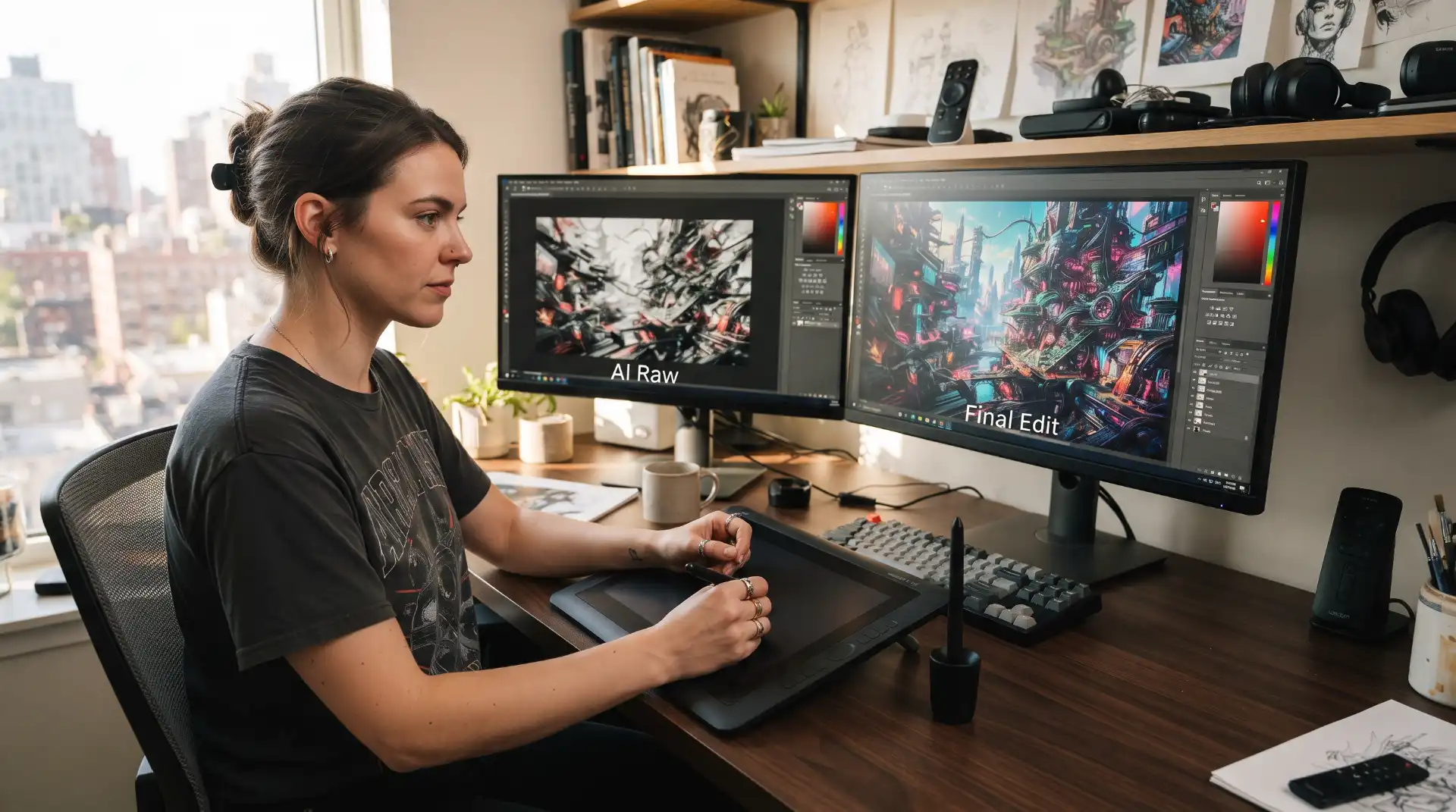
An artist may begin with an AI-generated concept but then redraw the character, change its silhouette, replace clothing, create facial features, design armor, modify proportions, paint textures, and prepare the final model used in the game.
Another developer might simply type a prompt, accept the resulting image, and place it directly into a game.
Those two workflows present very different copyright questions.
The first contains identifiable human creative expression.
The second may contain far less.
Can an AI-Generated Game Character Be Copyrighted?
Game characters are among the most valuable assets in the entertainment industry.
Successful characters can appear in sequels, merchandise, films, television adaptations, advertisements, collectibles, and licensing programs. Developers therefore have strong reasons to understand whether AI involvement affects protection.
Consider a developer who enters a prompt requesting a futuristic warrior wearing metallic armor and carrying an energy weapon.
The AI tool determines the face, body proportions, clothing details, pose, lighting, textures, colors, armor design, and background.
If the developer simply accepts that output, current Copyright Office principles raise substantial questions about whether the resulting image contains enough human-authored expression for the developer to claim copyright in the image itself.
Now change the scenario.
The AI image becomes only a rough concept. A human artist redraws the character, changes the body proportions, creates an original helmet, develops distinctive costume elements, adjusts the pose, designs new equipment, paints the final textures, and creates a three-dimensional model.
Copyright can potentially protect qualifying original expression contributed by the human artist.
The fact that AI appeared earlier in the workflow does not automatically eliminate those rights.
This is the distinction between AI as an assisting tool and AI as the source of expressive authorship.
Legal Journal has discussed the same principle in its coverage of whether artists can copyright works created with generative AI. The current federal approach focuses primarily on identifiable human creative contribution rather than the mere presence or absence of an AI tool.
What About AI-Generated Textures and Environments?
Textures and environmental assets are among the most obvious applications of generative AI in gaming.
A developer might use AI to create stone surfaces, vegetation, skies, fictional landscapes, building façades, decorative objects, dungeon walls, road surfaces, terrain details, or background imagery.
The same human-authorship analysis applies.
If an AI system independently generates a texture based primarily on a prompt, the developer should not automatically assume that the resulting image is independently copyrightable.
But a developer might combine generated materials with substantial original work.
A texture artist could modify color patterns, repaint details, add original damage and weathering, combine multiple sources, adjust surfaces, create custom normal maps, and incorporate the resulting materials into a larger original environment.
Similarly, a level designer might select and arrange hundreds of assets to create an original environment.
Copyright law has long recognized that qualifying human selection and arrangement can be protectable even where individual components may not themselves be independently protected.
That principle can matter considerably for games.
A forest texture, rock image, or generated prop might raise one copyright question. The creative way a human level designer combines those elements into a distinctive game world can raise another.
Developers should therefore avoid treating every asset as though it necessarily has the same copyright status.
Prompting Alone May Not Establish Ownership
Generative AI platforms are often controlled through prompts, and some developers spend substantial time refining those instructions.
That effort can feel creative.
But copyright does not necessarily measure authorship by the amount of time spent interacting with a tool.
The Copyright Office has concluded that prompts alone generally do not provide sufficient human control over the expressive elements produced by current generative systems.
Imagine a developer entering a detailed description:
Create an abandoned science-fiction city at sunset with damaged skyscrapers, suspended transportation systems, vegetation growing across the buildings, dramatic orange light, and a lone explorer standing in the foreground.
The developer clearly communicates an idea, mood, subject, and overall direction.
But the model may independently determine the specific building shapes, placement of windows, perspective, cloud formations, color transitions, clothing details, textures, shadows, architectural forms, and hundreds of other expressive elements.
Those system-generated expressive decisions are significant.
The user may have caused the image to be created, but causing an output to exist is not necessarily the same as personally authoring its protectable expression.
This is why substantial human editing can become so important.
AI-Assisted Assets Can Still Be Protected
The human-authorship requirement does not mean developers must avoid artificial intelligence.
A developer can use generative AI extensively and still create copyrightable work.
The Copyright Office has expressly recognized a difference between AI replacing human creativity and AI assisting a human creator.
A concept artist could use AI to brainstorm compositions and then manually create the final illustration.
A 3D artist could use generated imagery as inspiration before independently modeling a character.
An environment designer could generate individual visual references while making the expressive decisions embodied in the finished level.
A writer could ask an AI system for possible character motivations but personally write the game’s script.
A programmer could use an AI coding assistant to troubleshoot functions while personally designing and writing substantial portions of the software.
In these situations, copyright analysis focuses on the human-created expression.
The technology is not automatically disqualifying.
Game Code Creates Another AI Copyright Problem
Generative AI is increasingly used not only for visual assets but also for programming.
Coding assistants can generate functions, identify bugs, create scripts, suggest algorithms, write documentation, and build portions of game logic.
Computer programs have long been eligible for copyright protection in the United States, although copyright protects qualifying expression rather than every functional idea, algorithm, method, or system.
Generative AI complicates that framework because developers may no longer personally write every line of source code appearing in a game.
A programmer who merely requests an entire gameplay system and accepts machine-generated code with little modification may face different copyright questions from a programmer who designs the system architecture, writes major components, selects structures, rewrites generated functions, and integrates those elements into a larger human-authored program.
Legal Journal has examined this distinction in Who Owns Software Created With Generative AI? The same analysis is highly relevant to video game studios because modern games combine both audiovisual works and extensive computer programs.
Copyrightability Is Different From Infringement
One of the most important legal distinctions for developers involves copyrightability and infringement.
They are not the same thing.
An AI-generated game asset could potentially lack sufficient human authorship to obtain its own copyright while still creating infringement concerns if it reproduces protected expression from someone else’s work.
For example, imagine a generative tool produces a fantasy creature highly similar to an identifiable protected character from an existing game franchise.
The developer cannot necessarily solve the problem by arguing that the new image itself is not copyrightable.
The relevant infringement question is whether protected expression belonging to another copyright owner has been unlawfully copied.
This distinction matters across character designs, music, environmental artwork, textures, dialogue, code, and other game assets.
Developers therefore need to ask two independent questions.
First, can the studio protect the output?
Second, could using the output violate somebody else’s rights?
The answers may be very different.
AI Training and Game Assets Create Separate Legal Questions
Developers should also distinguish between the copyright status of an AI-generated output and the legality of training an AI model.
The Copyright Office has been conducting a broader initiative examining copyright issues raised by artificial intelligence. Its work has addressed digital replicas, copyrightability of outputs, and generative AI training.
Training disputes involve questions about whether copyrighted works can lawfully be used to develop generative models and under what circumstances.
Output disputes involve questions about particular images, music, text, video, or code generated by those models.
Those issues can overlap, but they are not identical.
A game developer using a third-party generative platform may have little visibility into exactly how its underlying model was trained.
That makes platform selection, contractual terms, indemnification provisions, provenance tools, licensing policies, and internal risk assessment increasingly important for commercial studios.
Platform Terms Do Not Create Copyright
Developers also need to distinguish copyright law from AI platform contracts.
A generative AI company’s terms may state that users receive certain rights in generated outputs.
That contractual provision can matter between the platform and its users.
But a platform agreement cannot necessarily transform noncopyrightable machine-generated expression into copyrighted authorship under federal law.
A service might assign whatever rights it possesses in an output to a customer.
If copyright law does not recognize copyright in particular machine-generated expression, however, a contractual transfer provision cannot automatically create a federal copyright that otherwise does not exist.
Developers should therefore examine both questions separately:
What rights does the platform contract provide?
And what rights does U.S. copyright law recognize in the asset?
For commercial game studios, both can matter.
Employee-Created AI Assets Raise Ownership Questions
Game studios frequently rely on employees to create artwork, code, music, stories, animation, and production assets.
Under U.S. copyright law, qualifying copyrightable works created by employees within the scope of employment can generally fall under the work-made-for-hire doctrine.
That can make the employer the copyright owner of qualifying human-authored material.
But AI introduces another layer.
Suppose a studio employee uses a generative image platform to create background artwork without meaningful human modification.
The fact that the employee works for the studio does not necessarily supply the missing human authorship.
A work-for-hire relationship can determine ownership of copyrightable material, but it does not automatically make otherwise noncopyrightable machine-generated expression copyrightable.
The studio may therefore own the employee’s qualifying human-authored contributions while having less copyright protection for purely generated components.
Contractors Can Make Ownership More Complicated
Independent game developers often outsource concept art, animation, music, programming, localization, and other work.
Copyright ownership involving independent contractors can differ from ordinary employee-created works.
Studios commonly use written intellectual-property assignments and development contracts to define ownership.
AI should now become part of those agreements.
A studio hiring a freelance artist may want to know whether the artist can use generative AI.
A publisher might require disclosure of generated assets.
A developer could require contractors to use only approved tools or prohibit the use of particular AI systems.
Agreements can also address ownership of human-created portions, third-party content, licensing, warranties, indemnification, confidentiality, and the obligation to identify AI-generated material.
These provisions are especially useful when a studio plans to distribute a game internationally, license characters, obtain investment, or sell intellectual-property assets.
Documenting the Creative Process Can Be Valuable
Game studios traditionally preserve development materials for production reasons.
In the AI era, those records may also become useful for copyright analysis.
Consider a character that began as an AI-generated sketch but was subsequently rebuilt by a professional artist.
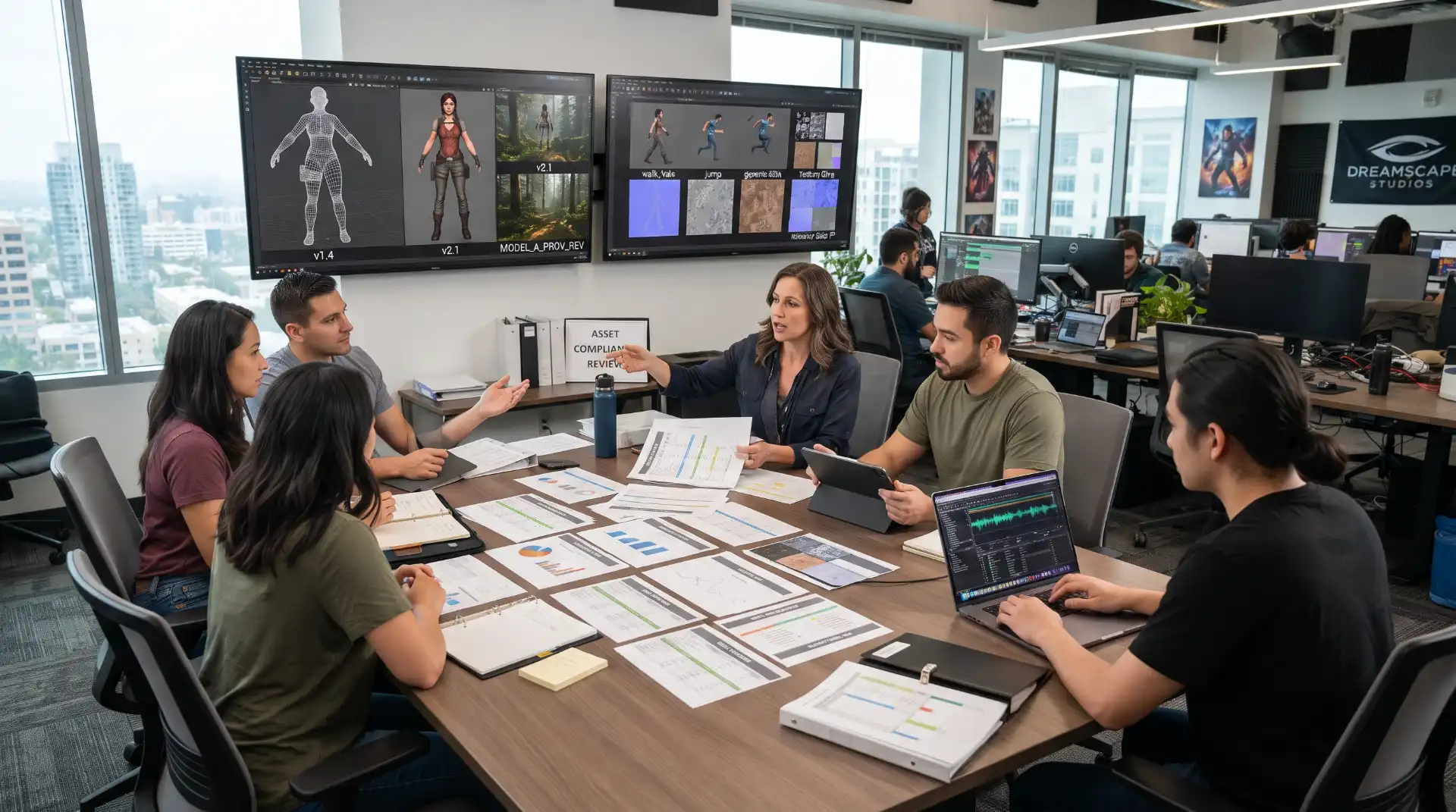
The studio might retain the initial concept, intermediate drawings, layer files, modeling stages, sculpt files, texture files, design notes, and final version.
Those materials help demonstrate what the human creator actually contributed.
Source-control repositories can serve a similar function for code.
Version histories can show whether a programmer simply copied generated material or substantially rewrote and integrated it.
Creative documentation can include concept sketches, Photoshop or illustration layers, 3D model histories, design briefs, revision notes, animation files, Git commits, production tickets, and final asset comparisons.
These records are not an automatic guarantee of copyright protection.
But they can help identify the human-authored elements when ownership or registration questions arise.
Registration of Games Containing AI-Generated Assets
The Copyright Office has issued specific guidance for works containing AI-generated material.
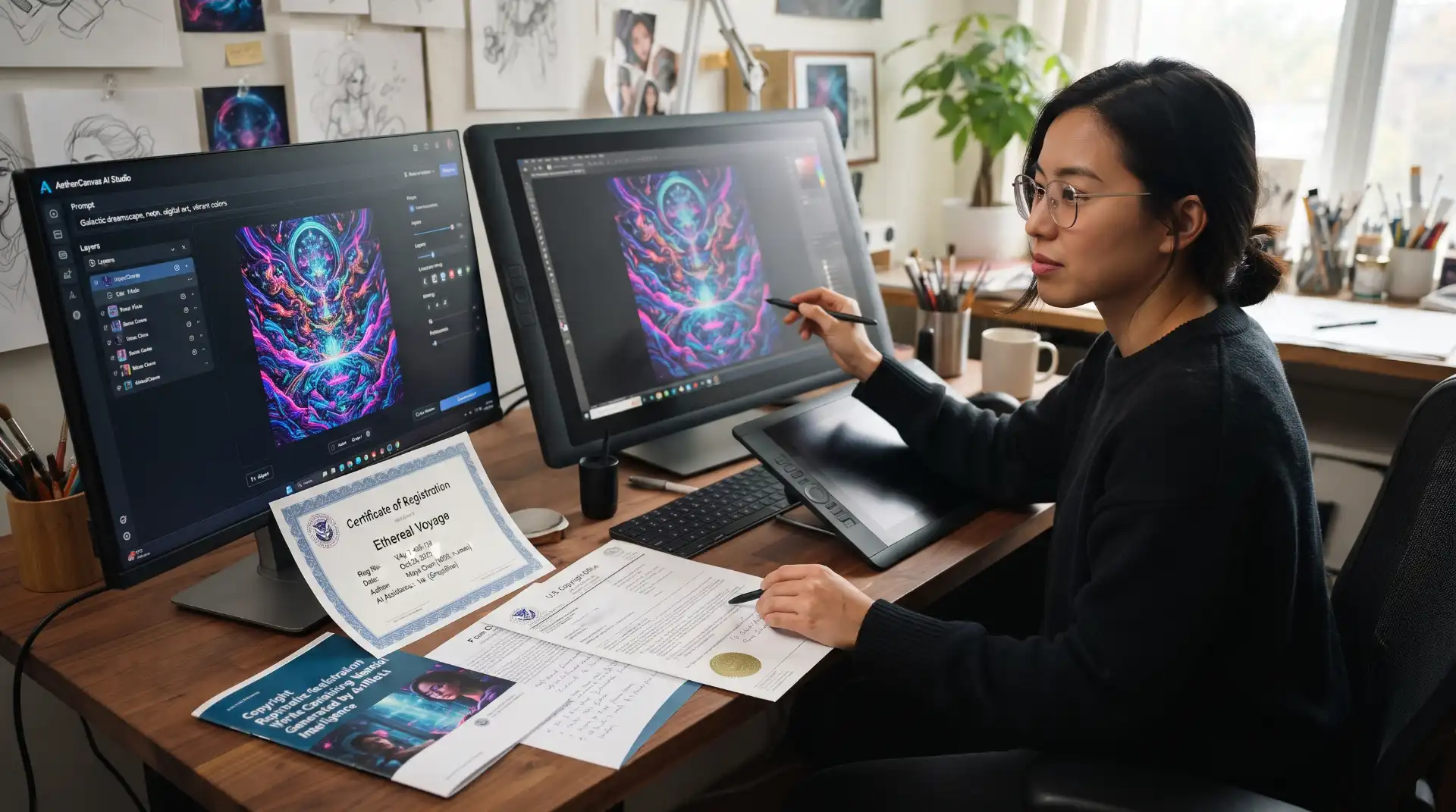
Applicants have a duty to disclose AI-generated content when appropriate and identify the human authorship being claimed.
This can matter considerably for games.
A completed game may contain human-authored software, dialogue, music, animation, illustrations, cinematics, and audiovisual arrangement while also containing AI-generated textures or backgrounds.
A copyright registration claim should accurately describe the protectable human authorship and appropriately address material that is not being claimed.
The Copyright Office specifically lists video games among the types of digital and audiovisual content that can be registered.
Studios preparing valuable games for commercial distribution should therefore avoid assuming that registration is simply a matter of uploading the completed product and claiming everything within it.
The presence of AI-generated assets may require a more careful description of authorship.
AI-Generated Music and Voice Assets Add More Complexity
Visual art is not the only concern.
Generative systems can now produce music, sound effects, speech, and synthetic voices for games.
A developer may generate background tracks for an open-world environment, create dialogue for non-player characters, or synthesize fictional voices.
These materials raise human-authorship questions similar to AI-generated visual art.
They can also introduce additional legal issues.
Synthetic voices may raise rights of publicity or digital-replica concerns if they imitate identifiable individuals.
Music can raise infringement concerns if a generated track reproduces protectable aspects of existing compositions or recordings.
Contractual issues may arise where actors, musicians, or performers have agreed to certain uses of their performances but not AI-generated replicas.
Developers should therefore resist treating “AI assets” as one uniform category.
Character artwork, music, voice, code, environmental design, and animation may involve different legal rights and factual questions.
Trademark Rights May Protect Some Game Assets
Copyright is not the only form of intellectual-property protection available to game developers.
A distinctive game title, studio name, logo, or character used as a source identifier may raise trademark issues.
Trademark law focuses on identifying and distinguishing the source of goods and services rather than rewarding creative authorship.
As a result, an asset that has limited copyright protection could potentially raise separate trademark considerations when used commercially as a brand identifier.
This does not mean trademark law is a substitute for copyright.
The standards, rights, and purposes are different.
But studios developing valuable franchises should consider their intellectual property as a portfolio rather than relying on a single legal doctrine.
Copyright may protect artwork, code, music, writing, and audiovisual expression.
Trademark rights may protect brands and source-identifying elements.
Patents may apply in more limited circumstances to qualifying technological inventions.
Contracts and trade secret protections may protect confidential development assets and proprietary processes.
What Happens When AI Assets Become Central to a Franchise?
The stakes increase dramatically when an AI-assisted asset becomes commercially valuable.
Imagine a small developer launches a game containing a character initially generated through AI.
The game becomes a major success.
The studio then plans sequels, merchandise, animated adaptations, action figures, promotional partnerships, and licensing deals centered on the character.
At that point, uncertainty about authorship can become much more significant.
A prospective licensee may want to know what rights the studio actually owns.
An investor may ask whether key game assets are protectable.
A buyer acquiring the developer may conduct intellectual-property due diligence.
A merchandising company may want assurances that the developer can grant exclusive rights.
This is why copyright questions are better addressed during production rather than after a game becomes successful.
Studios can structure workflows so that strategically important characters, environments, artwork, narratives, and other assets contain substantial identifiable human authorship.
AI can still accelerate ideation.
But high-value assets may benefit from deliberate human design and documentation.
Developers Should Think Beyond “Can I Use This?”
Generative AI encourages an immediate question:
Can I use this output?
For commercial game development, that question is too narrow.
Developers should also consider whether they can protect it, whether another party may have rights in similar material, what the AI platform’s terms require, whether generated material must be disclosed during copyright registration, whether contractors used approved systems, and whether the studio can demonstrate human authorship in its most important assets.
These questions become more important as AI usage scales.
A solo developer manually reviewing twenty generated textures faces a different operational challenge from a studio generating tens of thousands of assets across multiple development teams.
Larger studios may therefore need formal AI governance policies.
Those policies can address approved platforms, confidential data, copyright review, asset provenance, contractor disclosure, recordkeeping, and human approval requirements.
Human Creativity Still Matters in AI-Assisted Game Development
Generative AI is unlikely to disappear from video game production.
The technology can help smaller teams experiment faster, accelerate prototyping, expand visual ideation, and automate routine aspects of development.
Copyright law does not prevent those uses.
The U.S. Copyright Office’s position instead draws a distinction between using artificial intelligence as a creative tool and allowing a machine to supply the expressive authorship itself.
For developers, that distinction has practical consequences.
A generated texture may not have the same copyright status as a texture substantially repainted by a human artist.
A prompted character concept may differ from a character independently redesigned and modeled by an artist.
AI-generated code copied directly into a project raises different authorship questions from code heavily designed and rewritten by a programmer.
And an entire game assembled by human developers can contain significant copyrightable expression even if certain individual AI-generated components fall outside copyright protection.
The future of AI-assisted game development will therefore involve more than finding faster generation tools.
Successful studios will increasingly need to understand where their human authorship begins, what rights they actually control, and how those rights can be documented and protected.
For authoritative federal information, developers can review the U.S. Copyright Office’s Copyright and Artificial Intelligence initiative, which includes its copyrightability report and current AI policy materials.
Developers interested in the closely related issue of AI-assisted programming can also read Legal Journal’s Who Owns Software Created With Generative AI?, while studios relying heavily on generated visual assets may find Can U.S. Artists Copyright Works Made With Generative AI? useful for understanding the broader human-authorship framework.
This article provides general information about U.S. copyright and intellectual-property law and does not constitute legal advice. Copyrightability, ownership, infringement, licensing, registration, and contractual rights depend on the facts of a particular project and may change as courts, Congress, and federal agencies continue addressing generative AI.