AI Hiring Tools and Discrimination Claims: Emerging U.S. Legal Risks
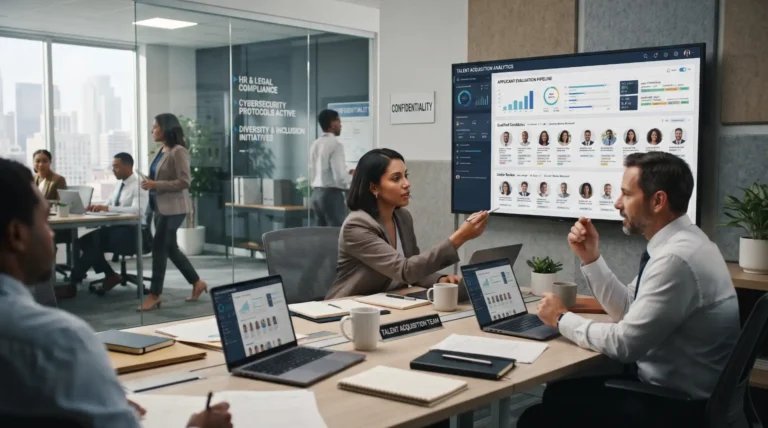
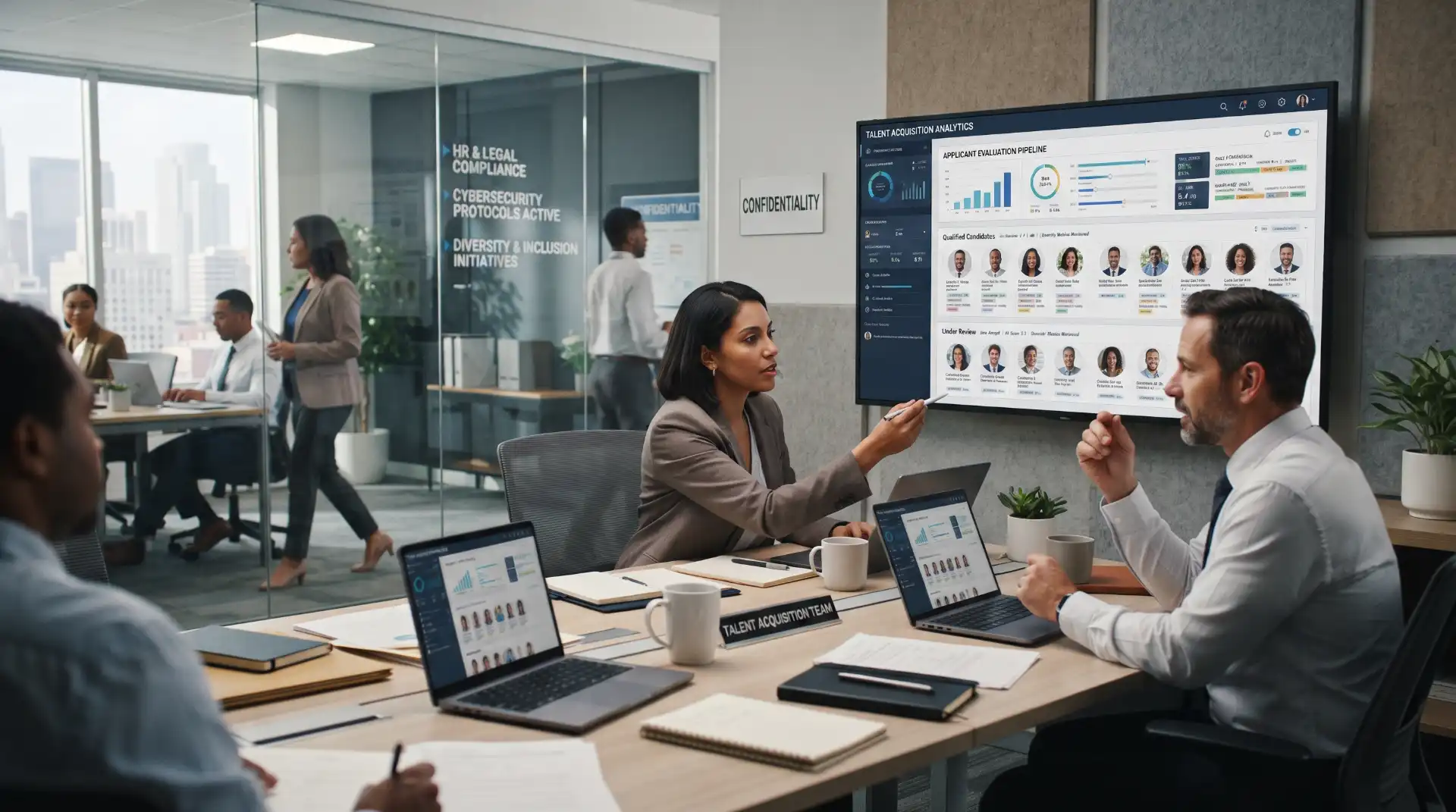
Artificial intelligence is becoming an increasingly important part of the hiring process in the United States. Employers and recruiting companies now use software to sort resumes, identify candidates, rank applicants, analyze assessments, schedule interviews, evaluate job-related information, and support other employment decisions. For businesses, these tools can reduce administrative work and help recruiters manage large applicant pools. For job seekers, however, an automated system can sometimes determine whether a person advances in the hiring process without the applicant fully understanding how that decision was made.
The increasing use of artificial intelligence in employment has created a growing area of U.S. legal risk. An employer generally cannot avoid responsibility for an unlawful employment decision simply because a computer system or AI vendor made the recommendation. Federal employment discrimination laws continue to apply when employers use automated tools, and federal agencies have specifically warned about the possibility that algorithmic systems can disadvantage applicants with disabilities or create other discriminatory outcomes.
The legal landscape is also becoming more complicated because federal employment laws exist alongside state and local requirements. New York City, for example, has specific requirements governing certain automated employment decision tools, including bias audits and notices to candidates and employees.
For U.S. employers, the central issue is not simply whether AI is being used in recruiting. The more important question is whether the technology is being used in a way that complies with applicable employment discrimination, disability accommodation, privacy, transparency, and state or local requirements.
What Are AI Hiring Tools?
AI hiring tools cover a broad range of technologies. Some systems use artificial intelligence or machine learning to analyze resumes and identify applicants whose qualifications appear to match a particular job description. Other tools evaluate assessments, rank candidates, analyze written responses, assist with interviews, or make recommendations to recruiters.
The technology does not necessarily have to make the final hiring decision to create legal concerns. A system that substantially influences who gets an interview can affect employment opportunities even if a human recruiter technically makes the final decision.
Automated employment decision tools can use statistical models, machine learning, data analytics, artificial intelligence, or combinations of these technologies. New York City’s automated employment decision tool law, for example, defines covered technology broadly and focuses on tools that substantially assist or replace discretionary decision-making in employment decisions.
This distinction matters because employers sometimes assume that a system is legally insignificant simply because a human remains involved. In reality, the legal analysis can depend on what the technology does, how much influence it has, what information it uses, and whether its operation creates discriminatory effects.

Why AI Hiring Systems Can Create Discrimination Risks
AI systems learn or operate based on data, rules, models, or criteria established by humans. If the underlying data reflects historical patterns of inequality, an automated system can potentially reproduce or amplify those patterns.
For example, suppose a company historically hired employees from a narrow group of universities. A hiring model trained using the company’s historical hiring data could learn that applicants from those schools were more likely to receive positive hiring outcomes. The system might then rank applicants from other schools lower even when those applicants possess relevant qualifications.
Another system might place excessive emphasis on characteristics that are only indirectly related to job performance. A resume-ranking tool could identify particular career paths, employment histories, geographic patterns, or educational credentials as signals of success without adequately considering whether those factors are actually necessary for the position.
The legal problem is not necessarily that an algorithm intentionally discriminates. Employment discrimination law can also address neutral practices that have discriminatory effects in circumstances where the applicable legal requirements are satisfied.
The U.S. Equal Employment Opportunity Commission explains that federal employment discrimination laws prohibit certain neutral employment policies and practices that disproportionately disadvantage protected groups when the applicable legal standards are met.
Federal Employment Discrimination Laws Still Apply
Using artificial intelligence does not create an exemption from federal employment law.
The EEOC enforces federal laws prohibiting employment discrimination based on characteristics including race, color, religion, sex, national origin, age for individuals age 40 or older, disability, and genetic information, subject to the specific coverage and requirements of each law. These protections can apply throughout employment, including recruitment and hiring.
This means an employer using an AI recruitment system must still evaluate whether its hiring practices comply with applicable federal requirements.
For example, if an automated screening system systematically excludes qualified applicants based on a protected characteristic, the employer could face legal exposure depending on the facts and applicable law.
Employers also need to consider whether the system is relying on information that indirectly acts as a proxy for protected characteristics. A model does not necessarily need to be programmed to ask about race, sex, age, or disability for its results to create potential discrimination concerns.
Disparate Impact and Automated Hiring
One of the most important concepts for employers using AI hiring technology is disparate impact.
Disparate impact generally concerns employment practices that appear neutral on their face but disproportionately affect a protected group. The legal analysis can be complex, and not every statistical disparity automatically establishes unlawful discrimination.
The EEOC explains that some neutral hiring practices may have a particularly negative effect on applicants within a protected group. Whether such a practice is unlawful depends on the applicable legal framework and circumstances, including whether the practice is sufficiently related to the job and justified under the law.
AI can make this issue more complicated because employers may not immediately understand why a model produces a particular result.
A traditional hiring rule might be relatively easy to identify and explain. An AI model may use hundreds or thousands of variables or interactions between variables. Even if the employer did not intend to discriminate, the output could potentially produce a legally significant disparity.
That is why employers should not assume that a vendor’s statement that its software is “AI-powered” or “bias-tested” automatically eliminates legal risk.

Disability Discrimination Is a Major Concern
Disability discrimination presents particularly important challenges for automated hiring systems.
AI assessments may evaluate candidates through online tests, video interviews, voice analysis, timed exercises, personality assessments, or other methods. A candidate with a disability may interact with the technology differently from a candidate without a disability even when the candidate is fully capable of performing the actual job.
The EEOC has specifically addressed this issue. Its guidance explains that algorithmic and AI decision-making tools can unintentionally or intentionally screen out individuals with disabilities during application or employment processes. The agency also recognizes that reasonable accommodation may be necessary when technology inaccurately evaluates an applicant because of a disability.
For example, an AI-based assessment could evaluate speech patterns as part of a candidate’s performance. An applicant with a speech-related disability could potentially receive a lower score even though the disability has no meaningful relationship to the person’s ability to perform the essential functions of the job.
Another example could involve a timed digital assessment that disadvantages an applicant who needs additional time as a reasonable accommodation.
These situations illustrate why employers should evaluate whether the technology measures actual job-related qualifications rather than characteristics that merely correlate with a particular way of interacting with the software.
Reasonable Accommodations and AI Hiring Systems
The Americans with Disabilities Act can require covered employers to provide reasonable accommodations to qualified applicants with disabilities, subject to the law’s requirements and limitations.
The use of an automated hiring system does not eliminate this obligation.
The EEOC recommends that employers consider whether their algorithmic tools could screen out individuals with disabilities and establish mechanisms through which applicants can request reasonable accommodations. The agency also gives alternative testing formats as an example of an accommodation that could potentially address problems created by an AI-based assessment.
Employers should therefore make sure that job applicants can identify how to request an accommodation and that recruiters know how to respond appropriately.
Simply placing an AI assessment online and allowing the software to determine the outcome without a meaningful accommodation process can create unnecessary legal risk.
New York City’s Automated Hiring Rules
New York City is one of the most prominent U.S. jurisdictions to impose specific requirements on automated employment decision tools.
Local Law 144 generally restricts employers and employment agencies from using covered automated employment decision tools unless certain requirements are satisfied. These include conducting a bias audit within the required period, making information about the audit publicly available, and providing specified notices to affected employees or candidates.
The city’s Department of Consumer and Worker Protection explains that employers and employment agencies using covered AEDTs must ensure a bias audit has been conducted and provide required notices. The city also provides a process through which workers and applicants can report certain violations.
The law demonstrates an important development in U.S. employment technology regulation: some jurisdictions are moving beyond traditional anti-discrimination principles and imposing specific transparency or testing requirements on automated hiring systems.
Employers operating across multiple states should therefore avoid assuming that compliance with federal law alone will address every requirement applicable to their recruiting technology.
What Is a Bias Audit?
A bias audit is intended to evaluate whether an automated employment decision tool produces discriminatory effects or other problematic outcomes.
Under New York City’s framework, the audit requirements are tied to the city’s definition of an automated employment decision tool and include analysis related to certain protected categories. The city’s law requires covered tools to undergo the required audit before use and establishes additional disclosure and notice obligations.
A responsible employer should understand that a single audit is not necessarily the end of the compliance process.
AI systems can change. Data can change. Hiring practices can change. Job descriptions can change. Vendors can update their models.
A system that performs appropriately under one set of circumstances could produce different results after a significant change in data or configuration.
Employers should therefore consider ongoing monitoring rather than treating bias testing as a one-time formality.
Vendor Promises Do Not Eliminate Employer Responsibility
Many employers purchase AI hiring technology from outside vendors.
The vendor may provide documentation stating that the system has been validated, tested, or designed to reduce bias. Those representations can be useful, but employers should not assume that a vendor’s contract or marketing materials automatically protect the employer from liability.
Employers remain responsible for their employment practices.
The question of responsibility can become particularly important when an employer cannot explain how a vendor’s system evaluates applicants.
Before purchasing an AI hiring tool, an employer may want to understand what information the system uses, what type of recommendation it produces, how the vendor evaluates performance, what testing has been performed, what limitations are known, and how the system can accommodate applicants with disabilities.
Contract terms should also address appropriate data handling, security, confidentiality, audit cooperation, incident reporting, and responsibilities if regulators or applicants raise concerns.
Black-Box AI Creates Transparency Problems
Some AI systems are difficult for users to interpret.
A recruiter may see that an applicant received a low score without understanding exactly why.
This creates an obvious problem when the applicant asks questions about the hiring decision.
It can also create challenges for the employer itself. If a company cannot explain the factors influencing an automated recommendation, it may have difficulty identifying whether the tool relies on inappropriate variables or produces unexpected disparities.
Explainability does not necessarily require revealing every detail of a proprietary algorithm. However, employers should have enough understanding of the system to evaluate its legal and operational impact.
Companies should also consider maintaining records explaining how the tool is used and where human review occurs.
AI Hiring Tools and Age Discrimination
Age discrimination is another potential area of concern.
Federal law generally protects workers and applicants age 40 and older from certain forms of age discrimination.
An AI hiring system could potentially create age-related disparities if it favors characteristics associated with younger workers or evaluates applicants using data that indirectly correlates with age.
For example, an automated system could place excessive weight on a particular type of recent technology experience, social-media activity, graduation date, or employment pattern without adequately considering whether the factor is actually relevant to the position.
The legal analysis depends on the specific hiring practice and applicable law. But employers should be cautious about assuming that a seemingly neutral algorithm cannot create age-related concerns.
AI Hiring and Race or National Origin
Race and national origin can also become relevant when AI systems evaluate resumes, names, addresses, language patterns, education histories, or other applicant information.
An algorithm does not necessarily need to receive a field labeled “race” to produce racially disparate results.
Other variables can correlate with protected characteristics. Geographic information, educational history, language patterns, and other data can sometimes function as indirect indicators.
Employers should therefore focus on the practical effect of the system rather than only reviewing the labels of the data fields it uses.
The EEOC states that federal employment discrimination laws apply to recruitment and hiring and prohibit discrimination based on race, color, national origin, and other protected characteristics.
AI Hiring and Gender Discrimination
Sex discrimination can present similar challenges.
Historical hiring data can reflect workplace patterns that were influenced by past discrimination or unequal access to opportunities. If those historical patterns are incorporated into an automated model without appropriate safeguards, the model may learn associations that are not appropriate measures of future job performance.
For example, a system trained primarily on successful employees from one gender could potentially identify characteristics disproportionately associated with that group as indicators of success.
This does not mean that every difference in AI hiring results constitutes unlawful discrimination. Statistical differences require careful analysis, and the applicable legal standard depends on the facts.
But employers should recognize that automated systems can reproduce patterns that would be concerning if a human recruiter created them manually.
Resume Screening and Hidden Bias
Resume screening is one of the most common areas for AI hiring technology.
A system may scan thousands of resumes and assign scores based on education, experience, job titles, skills, employment history, and other characteristics.
This can save recruiters considerable time.
However, resume screening can also hide important decisions behind a numerical score.
An employer may never see qualified applicants because the system filtered them out before a recruiter reviewed their applications.
That means employers should understand the screening criteria and evaluate whether they are genuinely connected to the requirements of the job.
A useful approach is to compare the system’s criteria against the actual job description and essential qualifications. If the software considers characteristics that are not meaningfully connected to the position, the employer should investigate why those characteristics are being used.
AI Video Interviews Create Additional Questions
Some employers use AI-assisted video interview platforms to analyze applicant responses.
Depending on the system, the technology may evaluate speech, timing, facial movements, written responses, or other characteristics.
These technologies can raise questions about disability accommodation, privacy, accuracy, and potential disparate impact.
An applicant may have a disability that affects speech, facial movement, eye contact, or other characteristics that a particular system interprets as indicators of performance.
Employers should therefore understand exactly what the system measures before relying on its recommendations.
The fact that a technology can measure a characteristic does not necessarily mean that the characteristic is a valid predictor of job performance.
Personality Testing and AI
AI-supported personality assessments can create similar concerns.
An employer may believe that certain personality characteristics correlate with success in a particular position. An automated assessment might attempt to identify those characteristics through questionnaires, written answers, games, or other exercises.
The employer should still consider whether the assessment is genuinely related to the job and whether it creates barriers for protected groups.
Employers should be particularly cautious when an assessment is presented as highly predictive but the company cannot explain how the results relate to actual job requirements.
Candidate Privacy and AI Hiring Data
Discrimination is not the only legal concern associated with AI hiring systems.
Candidate data can include resumes, employment histories, educational information, assessment results, interview recordings, biometric information, communications, and other personal data.
Employers should understand how this information is collected, stored, processed, shared, and retained.
AI vendors may process applicant information through cloud systems or third-party services. Depending on the information involved and the jurisdictions where applicants reside, privacy laws and contractual obligations may also apply.
Data protection should therefore be part of the vendor-selection process rather than an afterthought.
Human Oversight Still Matters
Human oversight is an important part of responsible AI hiring.
A recruiter should not automatically treat an algorithmic score as an objective determination of a candidate’s qualifications.
AI outputs should be understood as tools that can support decision-making rather than necessarily replacing professional judgment.
Human review can also provide an opportunity to identify obvious errors.
For example, a resume parser could misunderstand an applicant’s employment history. A candidate could be ranked incorrectly because of a formatting problem. A disability could affect an assessment result without affecting the person’s ability to perform the job.
Human review cannot guarantee compliance, but a thoughtful review process can reduce the risk that automated errors become automatic employment decisions.
Employers Should Test AI Before Deployment
Testing should occur before an AI hiring tool is placed into regular use.
Employers should evaluate whether the tool works as intended and whether its results raise concerns for protected groups.
The testing process should reflect the actual way the employer intends to use the technology.
A tool may perform differently depending on the job, applicant population, geographic region, language, assessment format, or other circumstances.
Testing should therefore be meaningful rather than simply relying on a generic statement from the vendor that the product has been “tested for bias.”
Employers Should Monitor AI After Deployment
Testing should not end on the day a hiring system goes live.
Employers should monitor results over time and investigate unusual changes.
If one applicant group suddenly experiences a substantial decline in interview invitations after a system update, the employer should determine why.
If an assessment generates different outcomes for applicants using accommodations, that issue should also receive attention.
Monitoring can help identify problems before they become widespread.
It can also help employers demonstrate that they take the performance and legality of their automated hiring systems seriously.
AI Hiring Policies Should Be Written Down
Businesses should consider developing written policies governing the use of AI in recruiting and hiring.
A policy can identify which tools are approved, who is responsible for oversight, what data can be entered into the system, how candidates are notified, how accommodations are handled, and how problems are reported.
The policy can also explain when human review is required.
Written procedures are particularly valuable for larger organizations where multiple departments may purchase or use different AI systems.
Without centralized oversight, a company may discover that individual departments are using AI tools that have never been reviewed by legal, HR, privacy, cybersecurity, or compliance teams.
Legal and HR Teams Should Work Together
AI hiring decisions should not be treated as an IT issue alone.
Human resources teams understand recruitment practices. Legal teams understand applicable employment laws. Information technology and security teams understand system architecture and data protection. Procurement teams manage vendor relationships.
Each group can identify different risks.
A cross-functional review process can help organizations evaluate AI hiring tools before they are deployed and when significant changes are made.
What Job Applicants Should Know
Applicants should also understand that automated hiring technology can be part of the recruitment process.
A candidate who receives an automated assessment should pay attention to instructions concerning accommodations and other applicant rights.
If a disability affects the candidate’s ability to complete an automated assessment, the applicant may need to request a reasonable accommodation through the employer’s established process.
In New York City, covered employers and employment agencies using automated employment decision tools have specific notice obligations, including information concerning the use of the tool and instructions relating to reasonable accommodation.
Applicants who believe an automated hiring process has unlawfully discriminated against them may wish to document the hiring process, retain communications, and seek advice regarding the laws applicable to their circumstances.
Potential Legal Claims Can Depend on the Facts
An applicant who believes an AI hiring system treated them unfairly does not automatically have a successful discrimination claim.
The legal analysis can depend on the employer, the job, the technology, the protected characteristic involved, the statistical evidence, the employer’s stated business justification, the applicant’s qualifications, the jurisdiction, and other circumstances.
Potential claims may arise under federal employment discrimination statutes, the Americans with Disabilities Act, state civil rights laws, local ordinances, or other applicable legal frameworks.
Privacy or consumer-protection issues may also become relevant depending on the technology and the information collected.
For that reason, an allegation that “AI rejected me” is only the beginning of a legal analysis.
Recordkeeping Can Help Employers Defend Their Hiring Practices
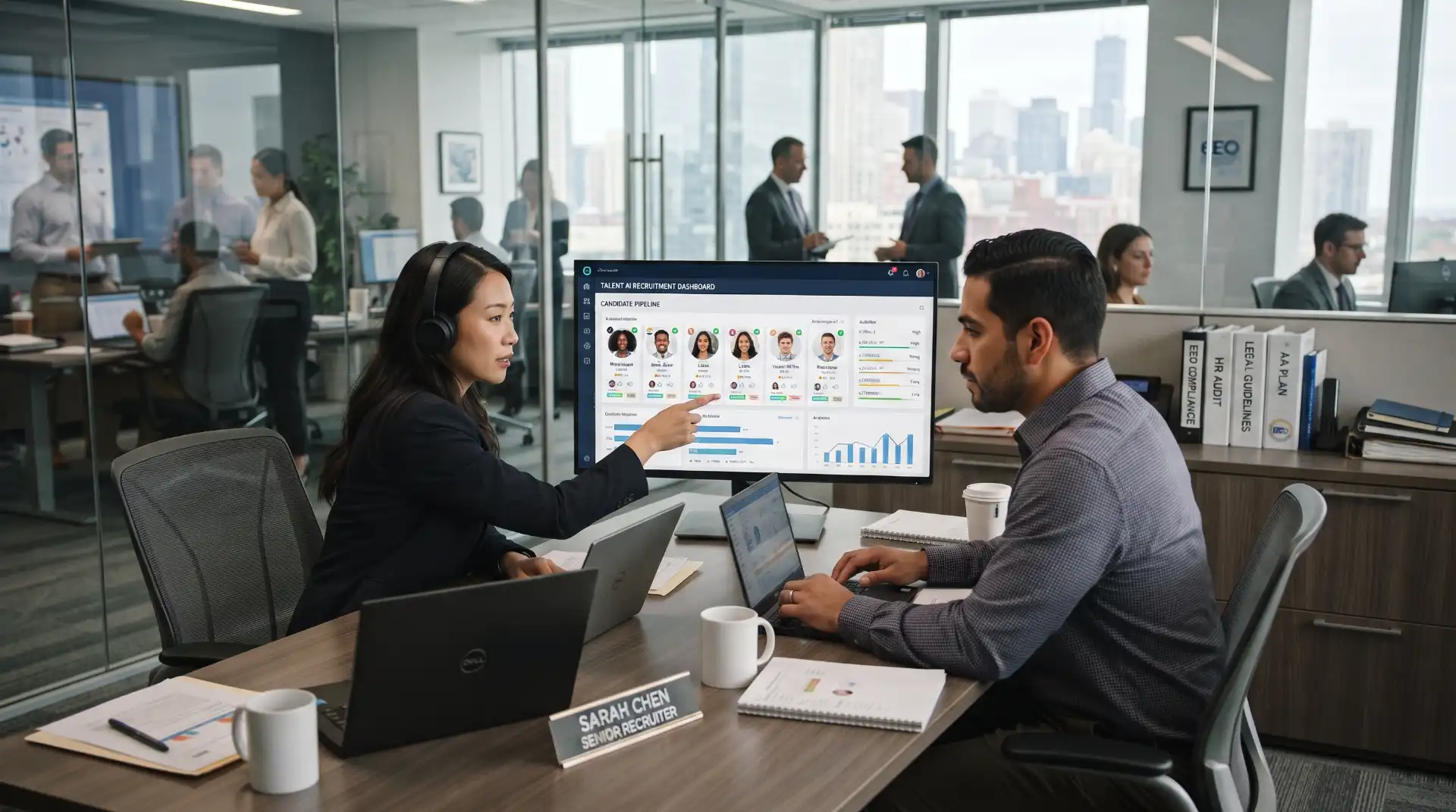
Employers should maintain appropriate records concerning their AI hiring systems.
Documentation can include vendor information, contracts, system descriptions, job criteria, testing results, audit materials, accommodation procedures, notices, training records, and records of significant system changes.
Organizations should also preserve information about how the tool was used for particular employment decisions when appropriate and consistent with applicable privacy and record-retention requirements.
Good documentation can help employers understand what happened when a candidate challenges an automated decision.
Contracts With AI Vendors Matter
AI vendor agreements should address more than price and software access.
Employers should consider whether contracts clearly describe the vendor’s responsibilities concerning data security, confidentiality, system changes, testing, audits, incident notification, compliance cooperation, and applicant information.
The agreement should also make clear what happens when the vendor modifies the algorithm or releases a new model.
A significant software update could potentially change the system’s outputs.
Employers should know when material changes occur and whether additional testing is appropriate.
AI Hiring Regulation Is Developing Across the United States
New York City’s automated employment decision tool requirements illustrate how state and local governments can approach AI employment technology differently from federal law.
The city requires specific measures concerning bias audits and candidate or employee notices for covered tools.
At the same time, federal employment discrimination laws continue to provide a broader legal framework governing hiring decisions.
This creates a compliance environment in which employers operating nationally may need to consider several layers of law.
A company hiring employees in multiple states should not assume that a single nationwide AI policy will always satisfy every jurisdiction’s requirements.
The Role of the EEOC
The U.S. Equal Employment Opportunity Commission remains an important federal source of information for employers and workers dealing with employment discrimination.
The EEOC’s materials make clear that employment discrimination protections apply to recruitment and hiring and that employers must consider their obligations when using hiring practices that may disadvantage protected groups.
The agency has also specifically addressed algorithmic and AI tools in the disability context, emphasizing that employers may need to provide reasonable accommodations when technology creates barriers for applicants with disabilities.
Employers using AI hiring technology should therefore monitor EEOC guidance and other authoritative federal resources as the technology and legal landscape develop.
What a Responsible AI Hiring Process Can Look Like
A responsible AI hiring process starts with the job itself.
The employer should clearly identify the qualifications and skills genuinely required for the position.
The technology should then be evaluated against those requirements.
Before deployment, the employer can assess the system’s accuracy, limitations, accessibility, potential disparate effects, data practices, and vendor representations.
Once deployed, the system should be monitored and periodically reviewed.
Applicants should receive required notices and have an appropriate way to request accommodations where applicable.
Recruiters should remain involved and understand the limitations of automated recommendations.
Finally, the company should maintain documentation showing how the system was selected, tested, implemented, and monitored.
AI Should Support Hiring Decisions, Not Hide Them
The central legal challenge with AI hiring technology is not necessarily the existence of automation itself.
The greater concern is whether an employer uses automation without understanding its consequences.
A hiring algorithm can process thousands of applications quickly, but speed does not make the result legally correct.
A sophisticated model can produce a numerical score, but a score does not automatically establish that an applicant is qualified or unqualified.
An AI system can identify patterns, but the employer remains responsible for understanding whether those patterns are appropriate for employment decisions.
This is particularly important because employment decisions affect people’s careers and economic opportunities.
Conclusion
AI hiring tools are becoming an important part of the U.S. employment landscape. Resume screening, automated assessments, interview technologies, candidate ranking, and other AI-supported systems can provide significant benefits to employers, but they also introduce legal risks that businesses cannot ignore.
Federal employment discrimination laws continue to apply when employers use artificial intelligence. A computer system does not receive a legal exemption simply because a human employee ultimately approves the decision. Employers must consider whether their hiring practices discriminate against applicants based on protected characteristics and whether automated systems create unlawful barriers.
Disability accommodation is particularly important. The EEOC has warned that algorithmic and AI-based systems can screen out people with disabilities and has emphasized the importance of reasonable accommodation when technology creates barriers to applicants who can otherwise perform the job.
New York City’s automated employment decision tool requirements demonstrate another important development. Covered employers and employment agencies must satisfy specific requirements involving bias audits, public information, and notices when using covered AEDTs.
For U.S. businesses, the safest approach is to treat AI hiring technology as part of the company’s overall legal and compliance program. Employers should understand how their systems work, evaluate vendor claims, test tools before deployment, monitor results, maintain appropriate human oversight, provide accommodation processes, and keep adequate records.
AI can make hiring faster and more efficient, but employment decisions still carry legal responsibilities. As automated hiring technology becomes more sophisticated, employers that combine technological innovation with careful compliance practices will be better positioned to identify and address potential problems before they become costly disputes.
Legal disclaimer: This article is for educational and informational purposes only and does not constitute legal advice. U.S. employment laws vary by jurisdiction and can change over time. Employers, job applicants, and businesses dealing with AI-related employment disputes should consult a qualified attorney regarding their specific circumstances.