The Legal Risks of AI-Generated Celebrity Endorsements
AI can now reproduce a public figure’s face, voice, and mannerisms with striking realism. Using those digital replicas in advertising without authorization may create risks involving publicity rights, trademark law, consumer protection, privacy, contracts, fraud, and copyright. U.S. businesses therefore need to examine much more than whether an AI-generated advertisement looks convincing.
Celebrity endorsements have always carried commercial value. A familiar face can attract attention, create trust, and associate a product with a recognizable personality.
Generative artificial intelligence has changed the economics of producing that type of advertising.
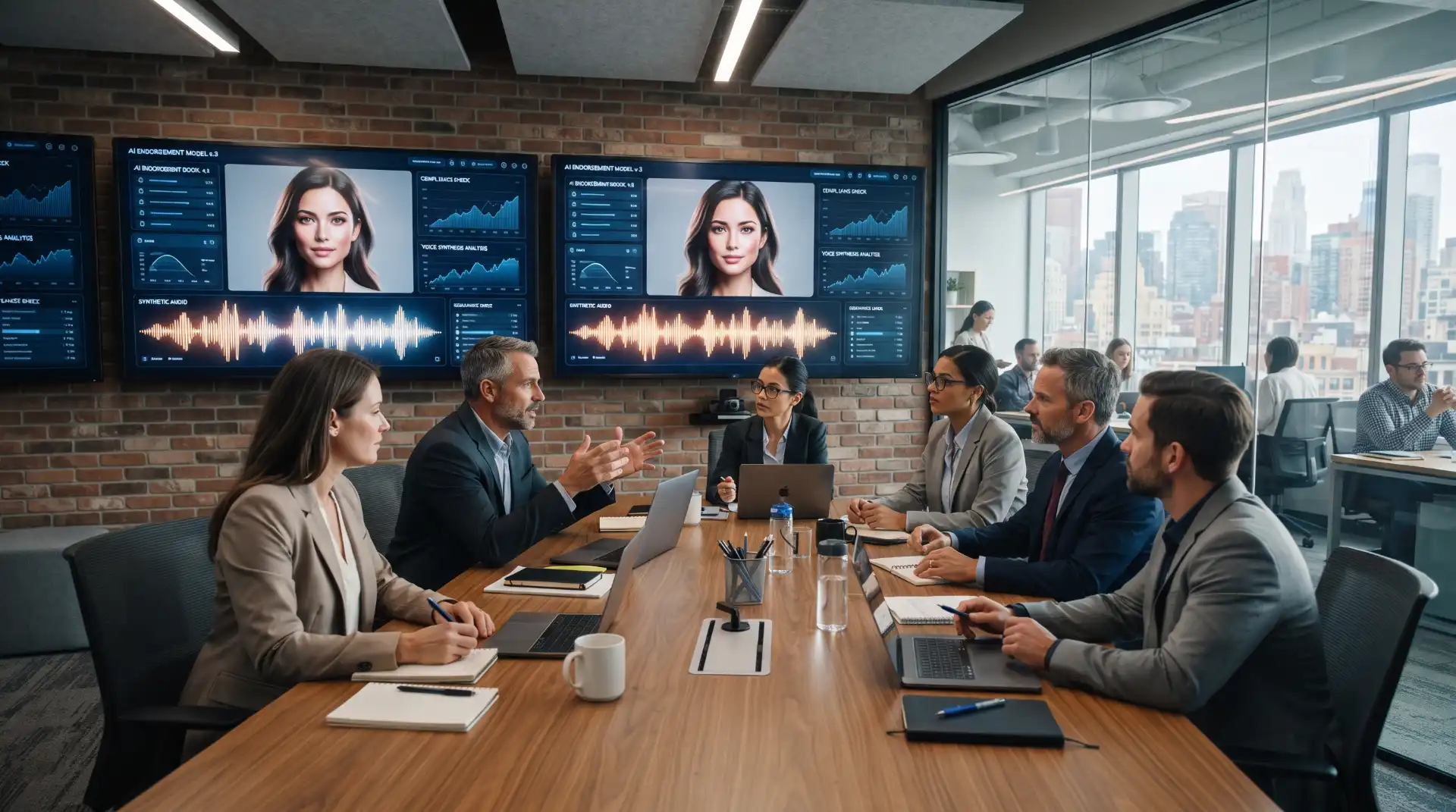
Businesses no longer need a film crew, recording studio, or traditional editing team to create a realistic synthetic spokesperson. Modern AI tools can generate voices, faces, gestures, photographs, and videos that resemble real people.
That capability presents an obvious temptation. A company might generate an advertisement that appears to feature an actor, athlete, musician, influencer, or other public figure without arranging a traditional endorsement agreement.
The result can create significant legal problems.
The Federal Trade Commission has warned consumers that scammers are already using doctored video and audio to create fake celebrity and influencer endorsements. These materials can appear authentic even though the featured person never promoted the product.
For advertisers, agencies, technology companies, and online platforms, the issue involves several overlapping areas of U.S. law.
What Is an AI-Generated Celebrity Endorsement?
An AI-generated celebrity endorsement generally refers to promotional content that artificially depicts a recognizable public figure endorsing, discussing, using, or recommending a product or service.
The content may use an AI-generated image, cloned voice, synthetic video, altered photograph, or a combination of techniques.
A video might appear to show an actor discussing a financial product.
An advertisement might reproduce a singer’s voice to promote an online service.
A synthetic social media post might place an athlete beside a product they never used.
The technology behind these materials is often described as deepfake or digital replica technology.
The U.S. Copyright Office defines a digital replica as digitally created or manipulated video, images, or audio that realistically but falsely depict an individual. The Office notes that such replicas can be authorized or unauthorized.
Not every digital replica is unlawful.
A performer may authorize a company to create a synthetic version of their voice for a campaign. An actor might license a digital likeness for advertising or entertainment.
The legal problem becomes much greater when a person’s identity is reproduced without permission.
Right of Publicity Is a Major Legal Concern
One of the most important legal issues surrounding unauthorized celebrity endorsements is the right of publicity.
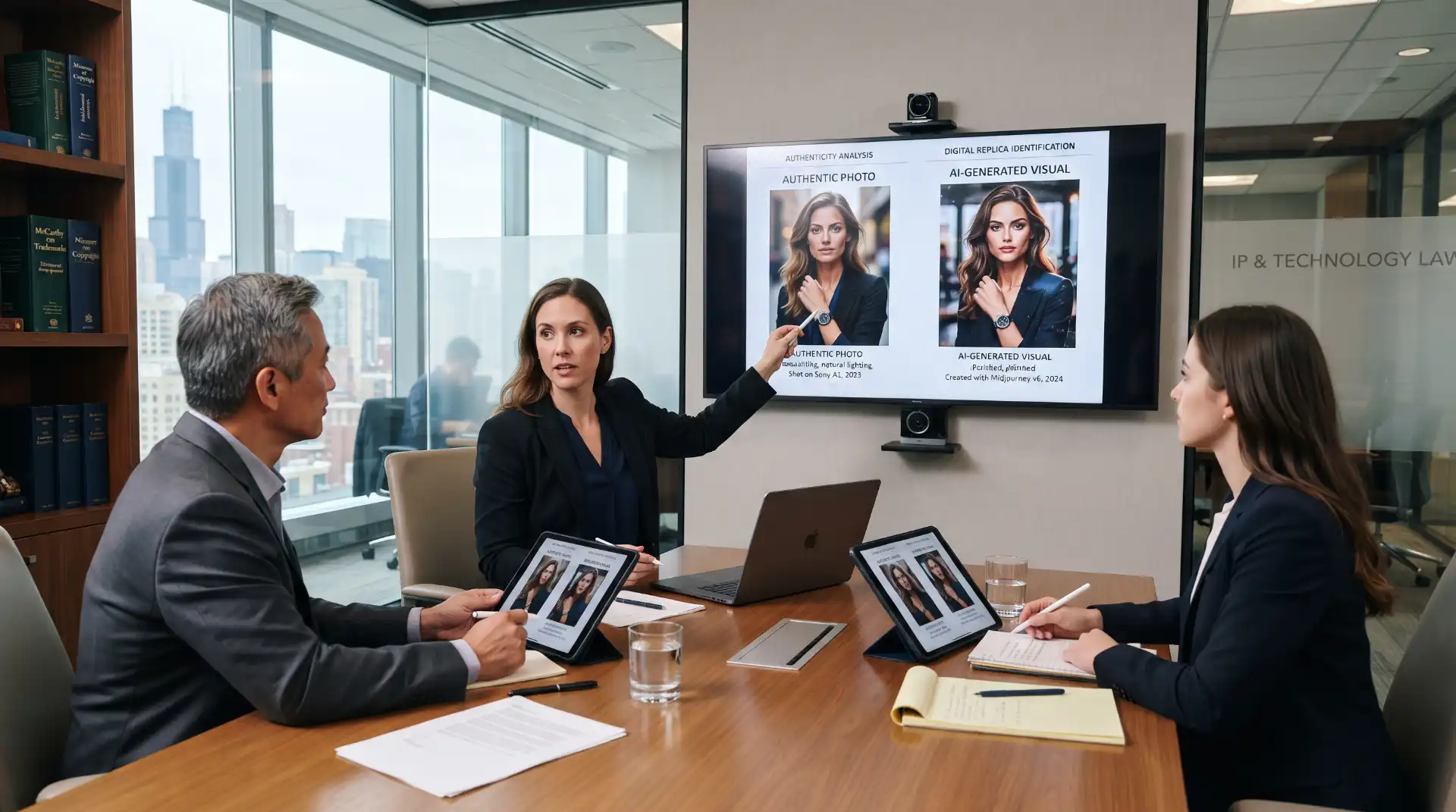
Publicity rights generally protect an individual’s commercial interest in identifying characteristics such as their name, image, likeness, and sometimes their voice.
These protections mainly arise under state law.
That matters because publicity rights are not identical across the country. Different states recognize different rights, exceptions, limitations, and remedies.
The U.S. Copyright Office concluded that existing state publicity and privacy laws provide meaningful protection in some situations. However, it also found significant differences among states and gaps affecting unauthorized digital replicas.
An advertisement does not necessarily need to display a celebrity’s legal name to raise publicity issues.
A sufficiently recognizable voice, face, appearance, or other identifying characteristic may create a dispute depending on applicable state law.
For example, an AI advertisement might feature a synthetic individual whose appearance strongly resembles a famous performer.
Another might recreate a recognizable speaking voice without using the person’s photograph.
The question often centers on whether the content appropriates a person’s identity for a commercial purpose.
Publicity Rights Can Extend Beyond Traditional Photographs
Generative AI makes publicity law especially significant because identity is no longer limited to photographs.
AI tools can reproduce speech patterns, facial expressions, body movements, and other characteristics that people associate with a particular individual.
These techniques make imitation much more convincing.
Historically, advertisers sometimes used celebrity impersonators or sound-alike performers. Courts have already confronted disputes involving imitations of recognizable voices and identities.
Generative AI can make such imitations faster, cheaper, and more realistic.
That means businesses should not assume a synthetic advertisement avoids publicity concerns simply because it does not use an original celebrity photograph.
The legal analysis can focus on the identity being invoked rather than the technical method used to create the advertisement.
False Endorsement Claims May Arise Under Trademark Law
Trademark law provides another potential source of liability.
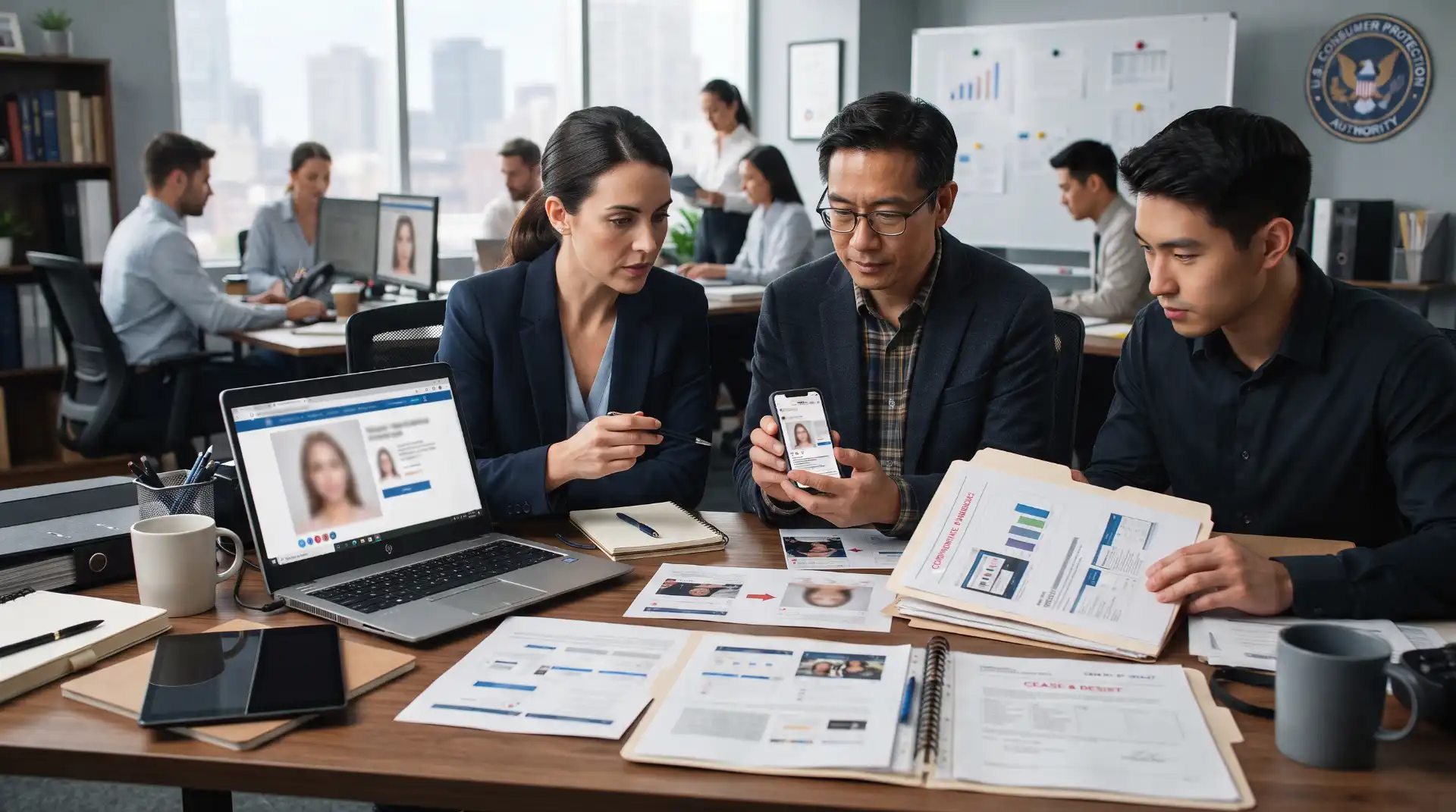
Section 43(a) of the Lanham Act can address false or misleading representations concerning association, sponsorship, or approval.
An unauthorized AI-generated celebrity advertisement could create the impression that a public figure sponsors or approves a product.
That perceived connection may matter even when the advertisement does not explicitly state that an endorsement agreement exists.
The U.S. Copyright Office identified the Lanham Act as one of the federal legal frameworks relevant to unauthorized digital replicas.
Consider an online advertisement featuring a synthetic version of a famous athlete praising a new sports product.
Consumers might reasonably believe the athlete participated in the campaign.
If that association is false, the advertisement could create questions involving false endorsement and consumer confusion.
This legal issue is separate from copyright.
The advertisement may involve a newly generated image with no direct copy of a protected photograph. It could still raise false endorsement concerns because of the commercial association created with the public figure.
Consumer Protection Law Also Matters
Fake celebrity endorsements do not only affect celebrities.
They can also mislead consumers.
An endorsement can influence purchasing decisions because consumers may trust the person appearing in the advertisement.
Using AI to fabricate that endorsement may therefore raise issues under laws regulating deceptive advertising and unfair commercial practices.
The FTC has specifically warned about fake celebrity and influencer testimonials created through manipulated audio and video.
The agency has also discussed broader concerns involving generative AI, creative professionals, voice cloning, likeness imitation, and false endorsements. FTC staff reported that creative professionals had raised concerns about AI-generated depictions falsely showing artists selling products they never endorsed.
Businesses should therefore view disclosure and accuracy as core advertising concerns.
A synthetic spokesperson should not be presented in a way that falsely tells consumers a real individual approved a product.
FTC Endorsement Principles Still Apply in the AI Era
Artificial intelligence does not create a separate exemption from ordinary advertising rules.
The FTC can address unfair or deceptive acts or practices under existing consumer protection authority.
That principle matters when AI is used to fabricate testimonials, reviews, spokespersons, or endorsements.
The underlying legal question is often straightforward.
Would the advertisement mislead a reasonable consumer about a material fact?
A false claim that a recognizable public figure supports a product may be material because endorsements can influence consumer decisions.
AI makes the deception technologically different, but the underlying advertising concern remains familiar.
Businesses using synthetic media should therefore assess what ordinary viewers are likely to believe when they see or hear the advertisement.
Disclosure May Help, but It Does Not Solve Every Problem
An advertiser might attempt to reduce confusion by labeling content as AI-generated.
Clear disclosure can help consumers understand that a video or voice is synthetic.
However, disclosure does not automatically eliminate every legal issue.
Suppose a company creates a highly accurate synthetic copy of a famous actor and places a small notice saying the advertisement uses AI.
Consumers may understand that the footage is artificial while still believing the actor authorized the campaign.
That distinction matters.
The relevant question is not only whether consumers know AI created the media. It can also involve whether consumers believe the person approved the commercial use of their identity.
Permission and disclosure are separate concepts.
A disclosure describing content as synthetic does not necessarily provide authorization to use someone’s likeness.
Copyright and Digital Replicas Are Different Issues
Copyright law can become relevant, but it does not provide a complete legal framework for celebrity identity.
A person’s face or voice is not automatically protected through copyright merely because it is recognizable.
Copyright generally protects original works of authorship rather than identity itself.
However, copyrighted material may be involved in creating the digital replica.
For example, a company might use protected photographs, movie footage, music recordings, interviews, or other creative works while building promotional content.
Those materials can create separate copyright questions.
The U.S. Copyright Office has emphasized that unauthorized digital replicas cross several areas of law rather than fitting neatly within copyright alone.
Legal Journal has also examined the human authorship questions surrounding generative content in Can U.S. Artists Copyright Works Made With Generative AI?.
That distinction is useful.
Copyright ownership in an advertisement and permission to imitate a celebrity are separate legal questions.
AI Voice Cloning Creates Its Own Risks
Voice cloning deserves particular attention.
Modern generative models can reproduce a person’s speaking voice using relatively small amounts of recorded material.
The resulting audio may sound authentic enough that listeners assume the real person participated.
For celebrities whose voices carry significant commercial value, unauthorized cloning can create serious conflicts.
A synthetic voice could promote a product, narrate an advertisement, deliver a fake testimonial, or appear in a customer service system.
Voice disputes may involve publicity rights, false endorsement, fraud, consumer protection, contracts, and other state-law claims.
The Copyright Office’s digital replica report specifically includes realistic reproductions of voices within its analysis of digital replicas.
Brands therefore should not treat audio as less legally significant than photographs or video.
Deepfake Advertising Can Also Create Fraud Risks
Some AI celebrity endorsements go beyond aggressive advertising and enter the territory of fraud.
Scammers have used fake public figures to promote financial opportunities, products, giveaways, investment schemes, and other offers.
The apparent celebrity endorsement can provide credibility.
A consumer may think a familiar person has reviewed or approved the offer.
The FTC’s consumer guidance specifically warns about fake endorsements created through doctored video and audio.
Fraudulent celebrity replicas create risks for several parties.
Consumers may lose money.
Celebrities may suffer reputational damage.
Brands may become associated with deceptive campaigns.
Platforms may face pressure to identify and remove fraudulent content.
AI therefore changes not only how deceptive advertising is created but also how quickly it can be distributed.
Reputation Damage Can Exist Even Without Consumer Purchases
The potential harm to a celebrity is not limited to lost endorsement fees.
A synthetic advertisement may associate someone with a controversial business, questionable product, political message, or financial service.
That association can affect reputation.
Imagine a fake advertisement showing a famous athlete promoting an untested product.
Even if few consumers make purchases, the public figure could still object to being associated with the company.
An AI-generated endorsement could also conflict with a celebrity’s legitimate sponsorship agreements.
A performer who has an exclusive contract with one brand may suddenly appear in synthetic advertisements promoting a competitor.
Such circumstances can create contractual and commercial complications beyond publicity rights.
Existing Endorsement Agreements Need AI Provisions
Artificial intelligence also affects legitimate celebrity endorsement contracts.
A company may have permission to use a person’s image in traditional advertising but lack permission to create digital replicas.
That difference can become significant.
Contracts drafted before modern generative AI may not clearly address synthetic voices, generated video, virtual avatars, machine learning, or future reuse.
Businesses and representatives increasingly need to consider exactly what rights an agreement grants.
Questions may include whether the company can clone a voice, alter recorded performances, create new dialogue, generate new scenes, or reuse a digital likeness after the campaign ends.
Another issue involves geography.
A licensing agreement may authorize a campaign in the United States while digital advertising reaches consumers worldwide.
Duration also matters.
An AI replica can remain technically usable long after a traditional advertising shoot ends.
Precise contractual language can reduce uncertainty over these issues.
A Celebrity’s Approval Should Not Be Assumed From Existing Content
Public availability does not equal commercial permission.
A celebrity may have thousands of photographs, interviews, videos, podcasts, and recordings available online.
That does not necessarily mean a business can use those materials to construct a synthetic endorsement.
The same principle applies when an AI model can easily imitate a public figure.
Technical capability does not establish legal authorization.
Businesses should distinguish between what software allows them to create and what applicable law or contractual permission allows them to publish.
This distinction is especially important in commercial advertising because the content directly associates identity with a product or service.
Parody and Commentary Present Different Questions
Not every synthetic depiction of a celebrity functions as an endorsement.
Satire, parody, news reporting, commentary, artistic expression, and other expressive uses may present different legal considerations.
The First Amendment can become important when evaluating restrictions involving public figures and expressive works.
Commercial advertising generally receives different constitutional treatment than core political or artistic expression.
Context therefore matters.
A comedic AI video commenting on a celebrity may present different issues from a paid advertisement that falsely appears to show the same person endorsing a product.
Labels, presentation, surrounding text, platform placement, and commercial purpose can all affect the analysis.
Businesses should avoid assuming every AI depiction falls under the same legal framework.
State Laws Create a Complicated Compliance Landscape
Publicity rights remain heavily state based.
This creates challenges for digital advertising campaigns distributed nationally.
A campaign created in one state may reach consumers and affect individuals connected to several others.
Different states may provide different protections for name, image, likeness, voice, and other aspects of identity.
Some states have also updated laws to address digital replicas more directly.
The Copyright Office has described this state-by-state framework as fragmented and concluded that existing protections contain gaps.
National advertisers therefore may need to consider more than the law of the state where their marketing team operates.
The location of the individual, advertiser, audience, and alleged harm may become relevant depending on the claim.
Federal Digital Replica Regulation Remains an Important Policy Issue
The rapid growth of AI-generated voices and likenesses has prompted calls for stronger federal protection.
The Copyright Office’s digital replica report examined whether existing law adequately addresses unauthorized replicas.
It concluded that a new federal law should address certain unauthorized digital replicas because current protections may not provide consistent remedies nationwide.
This issue remains especially significant for entertainers, athletes, musicians, performers, and other individuals whose identity has commercial value.
Federal developments should therefore remain part of compliance monitoring for businesses using synthetic media.
The TAKE IT DOWN Act Has a Narrower Focus
AI deepfake regulation also expanded through the federal TAKE IT DOWN Act.
However, businesses should not confuse that law with a general federal celebrity endorsement statute.
The law focuses primarily on nonconsensual intimate imagery, including qualifying AI-generated content.
Its subject matter differs from ordinary commercial advertisements depicting celebrities.
Legal Journal has covered that distinction in its article on the TAKE IT DOWN Act and deepfakes.
The broader lesson is that U.S. deepfake regulation is developing through several different legal channels rather than one universal statute.
Brands Face Risks Even When Third Parties Create the Content
A company may not personally generate a synthetic celebrity advertisement.
An advertising agency, affiliate marketer, contractor, influencer, or outside vendor might create it instead.
That does not mean the brand can ignore the issue.
Companies should know what promotional materials are being distributed on their behalf.
A vendor’s unauthorized use of a celebrity’s likeness can still create commercial, contractual, and reputational problems for the business associated with the campaign.
Vendor agreements can address AI usage, intellectual property permissions, approval procedures, and responsibility for advertising claims.
Internal review processes can also identify questionable synthetic media before publication.
Platforms Are Part of the Enforcement Picture
Fake endorsements often spread through social media, video platforms, advertisements, and online marketplaces.
Rights holders may therefore pursue platform reporting systems in addition to legal claims against the creator.
Platform policies may prohibit impersonation, fraud, misleading advertisements, or unauthorized synthetic media.
However, private platform policies are not substitutes for applicable law.
Content removal may stop an advertisement from continuing to spread, but separate claims could still exist against parties responsible for creating or distributing it.
Businesses should also recognize that repeated violations can lead to account restrictions or advertising consequences under platform rules.
Internal Approval Processes Matter More With Generative AI
Generative AI makes it possible for employees to create sophisticated advertising materials with very little technical training.
That convenience creates compliance challenges.
A marketing employee may generate a celebrity look-alike image without understanding publicity law.
A contractor might clone a voice because an AI platform technically permits it.
A social media manager could publish synthetic content before legal review.
Businesses using generative media can reduce these problems by defining clear approval processes.
High-risk content involving recognizable individuals deserves particular scrutiny.
Marketing teams should know when permission exists, what an endorsement agreement allows, and whether AI-generated modifications fall within those rights.
Records of Permission Can Become Valuable
Documentation is important when legitimate synthetic endorsements are created.
Businesses may benefit from keeping records describing the rights granted by a spokesperson.
Those records can address approved media formats, duration, territory, products, platforms, AI uses, and modifications.
Maintaining source records also helps establish whether promotional content originated from authorized materials.
This becomes more valuable as synthetic and authentic media become harder to distinguish visually.
AI Companies Also Face Questions About Their Tools
Advertisers are not the only businesses affected.
Developers of generative AI systems may face questions about how their products handle requests to imitate real individuals.
Different platforms impose different technical and contractual restrictions.
Some may restrict impersonation or require permission for certain uses.
Regulators have already shown interest in how AI products can facilitate deceptive content.
FTC staff has highlighted concerns about voice and likeness imitation and fake endorsements, while emphasizing the agency’s existing authority over unfair or deceptive practices.
AI developers therefore have incentives to consider safeguards alongside advertisers.
What Businesses Should Examine Before Using a Digital Replica
The most useful first question is not whether an AI-generated celebrity advertisement looks realistic.
It is whether the business has permission to create and use it.
Companies should identify whose identity appears in the content, whether the person authorized commercial use, and whether existing contracts cover AI-generated material.
They should also examine what consumers are likely to understand from the advertisement.
Does the presentation imply that the person genuinely endorses the product?
Could a reasonable viewer believe the celebrity participated?
Does the campaign contain a clear disclosure, and does that disclosure accurately describe what happened?
Businesses should also consider copyright ownership in underlying photographs, recordings, music, footage, and other assets.
These issues overlap, but they remain legally distinct.
AI Celebrity Endorsements and Deepfake Law Are Closely Connected
Celebrity endorsement disputes form part of the broader legal debate surrounding deepfakes.
Deepfakes can affect privacy, fraud, elections, reputation, harassment, and identity.
Commercial endorsements add another dimension because the replica is being used to influence consumer behavior.
Legal Journal’s guide to Deepfake Laws and Legal Rights in the United States examines many of these broader issues.
That article provides useful additional context for readers interested in the wider legal treatment of synthetic media.
What Consumers Can Do With Suspicious Celebrity Advertisements
Consumers also have reasons to approach unexpected celebrity endorsements carefully.
The FTC advises people to independently verify questionable endorsements instead of assuming realistic video or audio is authentic.
An advertisement featuring a familiar person should not automatically be treated as proof that the person approved the product.
This matters particularly when the advertisement promotes investments, health products, giveaways, or unfamiliar online businesses.
Synthetic media can create credibility that the advertiser did not legitimately earn.
The Future of Celebrity Endorsements Is Becoming More Contractual
AI does not make celebrity endorsements obsolete.
It may make authorization more important.
A legitimate endorsement arrangement can specifically address whether synthetic media is permitted.
A performer might authorize a digital replica for one campaign while prohibiting reuse in another.
An athlete might license their likeness but retain approval rights over generated dialogue.
A musician could permit a cloned voice for a specific advertisement while restricting future uses.
These arrangements could make endorsement contracts increasingly detailed.
They also demonstrate that AI replicas are not inherently unlawful.
The central concerns often involve consent, scope, consumer understanding, and commercial use.
AI Does Not Eliminate Traditional Legal Principles
Artificial intelligence may change the technology behind an advertisement, but many legal questions remain familiar.
Did the public figure authorize the use?
Does the advertisement falsely imply sponsorship?
Could consumers be misled?
Were copyrighted materials used without permission?
Did the campaign violate an existing agreement?
Which state’s publicity laws apply?
These questions existed before generative AI.
AI simply makes unauthorized imitation much easier to produce and distribute.
The U.S. Copyright Office’s examination of digital replicas reflects this overlap. It identifies publicity, privacy, unfair competition, consumer protection, fraud, copyright, and federal trademark law as parts of the existing legal landscape.
Final Thoughts
AI-generated celebrity endorsements represent one of the clearest examples of technology moving faster than traditional advertising practices.
A realistic synthetic face or cloned voice can create a powerful commercial impression even when the real person had no involvement.
That creates risks for advertisers, agencies, technology companies, platforms, public figures, and consumers.
Businesses using AI-generated advertising should treat recognizable identities as a rights issue rather than simply a creative asset.
Permission, accurate presentation, contractual scope, and consumer understanding remain central considerations.
As digital replica technology becomes more convincing, the difference between authentic and synthetic endorsements may become harder for consumers to identify. Legal scrutiny of these practices is likely to remain an important part of U.S. advertising, intellectual property, and artificial intelligence law.
For additional federal background, the U.S. Copyright Office’s Copyright and Artificial Intelligence initiative provides authoritative information about digital replicas, copyright, and generative artificial intelligence.
This article provides general information about U.S. law and does not constitute legal advice. Laws governing publicity rights, advertising, artificial intelligence, and digital replicas vary by jurisdiction and may continue to change.