
How Quantum Computing Could Reshape Patent Law
Quantum computing is rapidly evolving from an experimental scientific concept into one of the most promising technologies of the twenty-first century. Governments, research universities, technology companies, and venture-backed startups are investing billions of dollars to develop quantum systems capable of solving computational problems that conventional computers cannot efficiently address. While the engineering challenges receive much of the public’s attention, the legal implications of quantum innovation are becoming equally significant. Among the areas expected to experience profound change is patent law.
Throughout American history, patent law has continually adapted to technological progress. The introduction of electricity, aviation, biotechnology, software, and artificial intelligence each required courts, lawmakers, and the United States Patent and Trademark Office (USPTO) to interpret existing legal principles within entirely new technological contexts. Quantum computing represents another major milestone in that evolution. Its unique scientific foundations and unprecedented computational capabilities introduce legal questions that extend beyond traditional patent practice.
As quantum technologies become increasingly commercialized, businesses and inventors will seek stronger intellectual property protection for hardware, software, manufacturing techniques, communication systems, and specialized algorithms. At the same time, patent examiners, courts, and policymakers will face new challenges in determining how existing patent laws apply to inventions built upon principles of quantum mechanics. The decisions made over the coming years could influence not only the quantum industry but also the future direction of intellectual property law in the United States.
Understanding the Technology Behind Quantum Computing
To appreciate how quantum computing may reshape patent law, it is important to understand why the technology differs so dramatically from traditional computing.
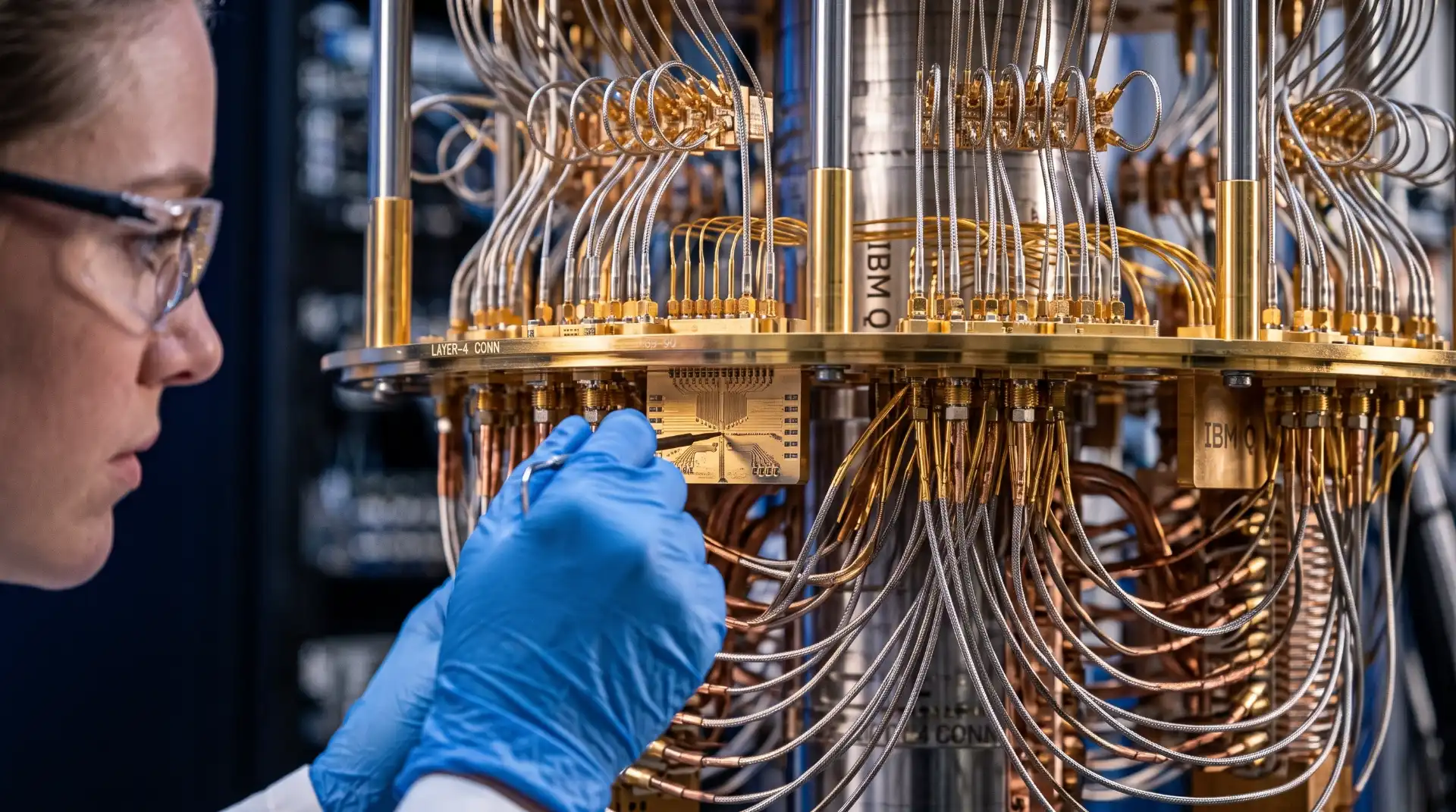
Conventional computers process information using binary bits, which exist as either zero or one. Every application, website, and software program ultimately relies on combinations of these binary values. Quantum computers, by contrast, use quantum bits, or qubits, that take advantage of quantum mechanical properties such as superposition and entanglement. These characteristics allow qubits to represent multiple computational states simultaneously and interact in ways that have no equivalent in classical computing.
Although today’s quantum computers remain limited by hardware constraints, they have already demonstrated potential advantages in specialized applications involving optimization, cryptography, materials science, molecular simulation, financial modeling, and artificial intelligence. As researchers continue improving stability, reducing error rates, and increasing the number of functional qubits, commercial applications are expected to expand significantly.
This rapid pace of innovation naturally leads to increased patent activity. Organizations investing substantial financial resources into quantum research want legal protection that secures their competitive advantage while encouraging continued investment.
Why Patents Are Critical for Quantum Innovation
Developing practical quantum computers requires years of scientific research and considerable financial commitment. Building reliable quantum processors often demands sophisticated manufacturing techniques, highly specialized equipment, advanced materials, and interdisciplinary collaboration among physicists, engineers, computer scientists, and mathematicians.
Patent protection plays a central role in supporting these investments. By granting inventors exclusive rights for a limited period, patents provide an opportunity to commercialize new technologies without immediate competition from copycat products. This exclusivity can encourage additional investment in product development, manufacturing, testing, and commercialization.
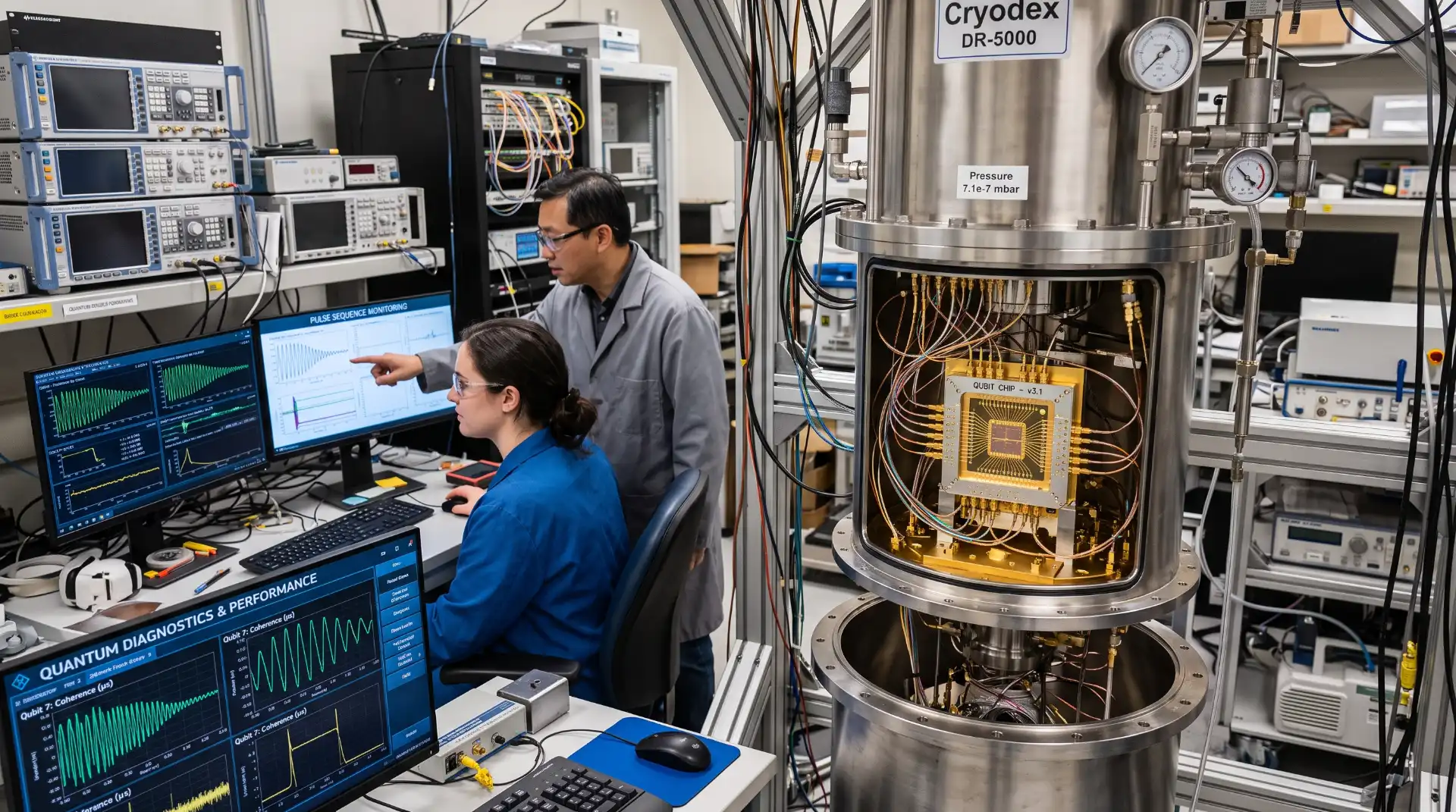
In the quantum industry, patents may protect innovations involving processor architecture, qubit control systems, error correction methods, cryogenic cooling technologies, quantum networking infrastructure, specialized semiconductor fabrication processes, software frameworks, and application-specific algorithms. Rather than filing a single patent, many organizations pursue comprehensive patent portfolios that protect multiple aspects of the same technology. This broader strategy helps create stronger barriers to entry while increasing the overall value of the intellectual property.
The race to secure these patents has intensified considerably. Technology companies such as IBM, Google, Microsoft, Intel, Amazon, and numerous emerging startups continue expanding their quantum patent portfolios. At the same time, leading American universities remain major contributors through federally funded research programs and technology transfer initiatives.
The Growing Challenge of Patent Eligibility
One area where quantum computing may significantly influence patent law involves patent eligibility.
Under current U.S. law, inventions generally must satisfy several requirements before receiving patent protection. They must be novel, useful, and non-obvious, and they must fall within one of the categories of patent-eligible subject matter established under federal law. Over the past decade, however, software-related inventions have faced increasing scrutiny following several important court decisions involving abstract ideas and mathematical concepts.
Quantum computing introduces additional complexity because many innovations combine physical hardware with sophisticated mathematical operations. Some inventions involve entirely new processor designs, while others rely primarily on quantum algorithms that manipulate information in ways fundamentally different from conventional software.
As quantum applications become more sophisticated, courts may need to determine where the boundary lies between an unpatentable mathematical principle and a patent-eligible technological innovation. Future judicial decisions involving quantum inventions could establish new legal standards that influence not only quantum technologies but also other emerging fields relying heavily on advanced computational methods.
Patent practitioners are already responding by drafting applications that emphasize practical technical implementation rather than abstract theoretical concepts. This approach may become increasingly important as quantum-related patent applications continue growing in both complexity and volume.
Prior Art Searches Will Become More Complex
Patent examination depends on identifying prior art to determine whether an invention is truly novel. For decades, patent examiners have relied on existing patents, scientific journals, conference proceedings, technical publications, and public disclosures to evaluate new applications. Quantum computing, however, introduces an additional layer of complexity because the field draws upon several highly specialized disciplines simultaneously.
A single quantum invention may involve concepts from physics, electrical engineering, computer science, materials science, mathematics, and semiconductor manufacturing. Relevant prior art may therefore exist across multiple technical fields rather than within a single body of literature. Patent examiners and attorneys must analyze publications from academic journals, government-funded research, international patent databases, and conference presentations to determine whether an invention satisfies the novelty requirement.
This growing volume of technical information increases both the cost and complexity of patent prosecution. As quantum research accelerates, intellectual property professionals are expected to rely more heavily on advanced search technologies and artificial intelligence tools capable of reviewing enormous collections of technical documents. These systems can identify relationships between inventions that might otherwise remain unnoticed, improving both patent examination and portfolio management.
Universities Continue Driving Quantum Innovation
American universities have become some of the most influential contributors to quantum computing research. Institutions including the Massachusetts Institute of Technology, Stanford University, the University of Chicago, Harvard University, the California Institute of Technology, and numerous public research universities continue receiving significant federal funding to explore quantum materials, quantum communication, superconducting processors, and quantum algorithms.
Most universities manage these discoveries through technology transfer offices that evaluate inventions, coordinate patent filings, and negotiate licensing agreements with commercial partners. Rather than allowing valuable discoveries to remain within academic journals, these offices help researchers secure patent protection before publication whenever appropriate.
This commercialization process benefits both researchers and the public. Companies gain access to groundbreaking technologies developed within university laboratories, while universities receive licensing revenue that can support additional scientific research. Startup companies founded on university-developed quantum technologies have also become increasingly common, contributing to regional innovation ecosystems throughout the United States.
As quantum computing matures, university patent portfolios are expected to become even more valuable, particularly in areas involving quantum networking, quantum sensing, cryptography, and advanced semiconductor technologies.
International Competition Is Expanding Rapidly
Quantum computing has become a strategic priority for many governments. The United States continues to invest heavily in quantum research through agencies such as the National Science Foundation, the Department of Energy, the National Institute of Standards and Technology, and the Department of Defense. At the same time, countries including China, Germany, Canada, Japan, the United Kingdom, Australia, and South Korea have launched ambitious national quantum initiatives.
This international competition has created an increasingly competitive patent landscape. Companies seeking global commercialization must consider intellectual property protection in multiple jurisdictions rather than relying solely on U.S. patents.
Many organizations begin this process through the Patent Cooperation Treaty (PCT), administered by the World Intellectual Property Organization (WIPO). Filing a PCT application allows inventors to preserve the possibility of obtaining patent protection in numerous participating countries while delaying the substantial costs associated with individual national filings.
International patent strategies have become particularly important because quantum technologies are expected to influence industries ranging from pharmaceuticals and finance to aerospace, telecommunications, energy, and national security. Companies that secure broad international patent protection may enjoy significant competitive advantages as commercial markets continue to develop.

Patent Litigation Could Become Increasingly Technical
As quantum computing enters commercial markets, patent disputes are likely to become more frequent. Like previous technology revolutions involving smartphones, biotechnology, and artificial intelligence, valuable quantum patents will almost certainly become the subject of licensing negotiations, infringement claims, and validity challenges.
Quantum patent litigation presents unique difficulties because the underlying technologies are extraordinarily complex. Judges and juries may be asked to evaluate inventions involving superconducting qubits, trapped ions, photonic processors, quantum annealing, or sophisticated error-correction systems. Explaining these concepts in understandable terms will require extensive expert testimony from scientists, engineers, and technical specialists.
Patent claim interpretation may also become more challenging. Courts will need to determine how specialized quantum terminology should be understood within the context of patent claims, particularly when inventions combine hardware, software, and mathematical principles in highly integrated ways.
For intellectual property attorneys, quantum litigation is likely to require greater scientific expertise than many traditional patent disputes. Law firms may increasingly build multidisciplinary teams combining patent lawyers with physicists, engineers, and computer scientists to effectively represent clients involved in quantum-related litigation.
Quantum Computing Could Influence Patent Examination Itself
Ironically, one of quantum computing’s most significant impacts on patent law may come through improving the patent system itself.
Patent offices around the world process hundreds of thousands of applications every year. Conducting prior art searches, evaluating technical disclosures, and identifying overlapping inventions require enormous computational resources. As quantum computing becomes more practical, patent offices may eventually incorporate quantum-powered analytical tools to accelerate portions of the examination process.
Although this possibility remains several years away, researchers have already begun exploring how advanced computing technologies might improve document classification, semantic searching, and large-scale patent analysis. Combined with artificial intelligence, quantum computing could eventually help patent examiners identify relevant prior art with greater speed and accuracy than current systems allow.
Such improvements could reduce examination times while increasing consistency across complex technical fields.
New Industries Will Generate New Patent Questions
The commercial applications of quantum computing extend far beyond the computers themselves. Entire industries are expected to emerge around quantum-enabled technologies.
Healthcare researchers anticipate using quantum simulations to accelerate drug discovery and personalized medicine. Financial institutions may employ quantum optimization to improve portfolio management and risk analysis. Manufacturers could use quantum algorithms to optimize supply chains and industrial design, while logistics companies may develop more efficient transportation networks through quantum optimization techniques.
Each new commercial application introduces additional intellectual property questions. Patent applications may involve hybrid technologies combining classical software, artificial intelligence, cloud computing, advanced sensors, and quantum processors. Determining the scope of patent protection for these integrated systems may become increasingly complicated as technological boundaries continue to blur.
The growing convergence between quantum computing and artificial intelligence represents one particularly important area of future patent activity. Innovations that combine these technologies could create entirely new categories of intellectual property requiring careful legal analysis.

Preparing Businesses for the Quantum Era
Although practical large-scale quantum computing remains under active development, businesses should not wait until the technology becomes widespread before considering intellectual property strategies.
Organizations investing in quantum research should establish procedures for identifying patentable inventions early in the development process. Careful documentation of research activities, timely invention disclosures, and coordination between engineers and patent counsel can help preserve valuable intellectual property rights.
Companies should also monitor competitor patent filings to understand emerging technology trends and identify potential licensing opportunities or infringement risks. Strategic portfolio development may prove particularly valuable as standards begin to emerge within the quantum industry.
Businesses that proactively develop comprehensive patent strategies today may be better positioned to compete as quantum technologies transition from research laboratories into mainstream commercial markets.
The Future of Patent Law in a Quantum World
Patent law has consistently adapted to technological revolutions throughout American history. The rise of electricity, aviation, telecommunications, biotechnology, semiconductors, software, and artificial intelligence each introduced legal questions that ultimately reshaped intellectual property practice.
Quantum computing appears poised to become the next transformative technology.
Its influence will likely extend well beyond patent eligibility. It may reshape patent drafting practices, examination procedures, licensing strategies, litigation, international intellectual property coordination, portfolio management, and technology commercialization. Universities, startups, multinational corporations, and government agencies will all play important roles in shaping this evolving legal landscape.
While many legal questions remain unresolved, one conclusion is already becoming clear: organizations that understand both quantum technology and intellectual property law will be better equipped to protect innovation in the decades ahead.
Conclusion
Quantum computing represents one of the most significant technological developments of the modern era, and its impact will extend far beyond scientific research. As quantum technologies mature, they are expected to influence nearly every aspect of patent law, from how inventions are drafted and examined to how patents are licensed, enforced, and valued. The unique characteristics of quantum innovation challenge traditional legal frameworks while creating opportunities for new approaches to intellectual property protection.
For inventors, research institutions, startups, and established technology companies, strong patent strategies will remain essential. Organizations that build thoughtful patent portfolios, monitor emerging legal developments, and adapt to changing regulatory standards will be better positioned to protect their innovations in an increasingly competitive global marketplace.
Although many questions surrounding quantum computing and patent law remain unanswered, the evolution has already begun. The legal decisions made today will help determine how future generations of innovators develop, protect, and commercialize one of the most transformative technologies of the twenty-first century.