
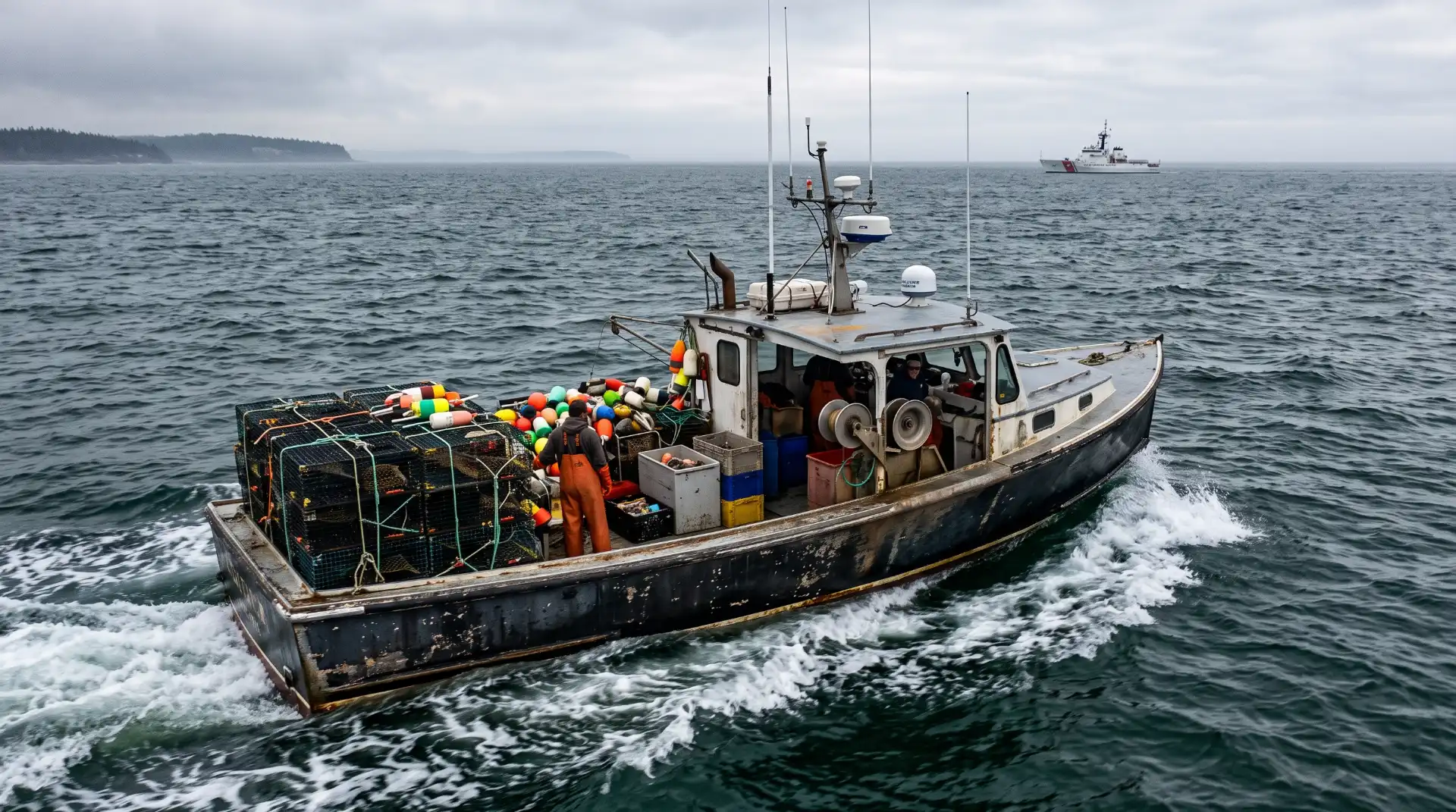
Commercial fishing is one of the most heavily regulated activities connected to America’s coastal economy. Fishermen must navigate licensing requirements, seasonal restrictions, catch limits, protected marine areas, and reporting obligations designed to preserve fish populations and maintain sustainable harvesting practices. Increasingly, these responsibilities also involve digital technology that allows government agencies to monitor the location and activities of commercial vessels.
GPS-enabled vessel monitoring systems have become an important tool for fisheries management. By transmitting position information through satellite communications, these systems allow regulators to determine where certain commercial fishing vessels travel and whether their movements comply with applicable restrictions. Supporters argue that tracking technology helps prevent illegal fishing, protect marine ecosystems, and improve enforcement. Critics, however, question whether continuous monitoring can intrude on constitutional privacy rights, particularly when tracking continues outside active fishing operations.
These concerns became especially prominent in Maine, where commercial lobstermen challenged a requirement to install tracking equipment on certain federally permitted vessels. The dispute reached the U.S. Supreme Court, bringing renewed attention to the Fourth Amendment and the government’s authority to monitor privately owned boats. On October 5, 2026, the Supreme Court declined to hear the challenge, leaving the lower court ruling in place.
The development is significant, but it does not mean that every American fishing vessel must carry a GPS tracker. Federal monitoring requirements differ by fishery, permit, vessel characteristics, fishing gear, and geographic location. Nor does the Supreme Court’s refusal to review one case establish a universal constitutional rule approving every government tracking program.
For fishermen, maritime businesses, attorneys, and policymakers, the central question is whether a particular tracking requirement has a lawful basis, applies to the vessel in question, and complies with applicable constitutional and statutory protections.
What Is Digital Surveillance at Sea?
Digital surveillance at sea refers to the collection, transmission, analysis, and use of information about vessel movements and activities through electronic systems. Depending on the program, that information may include geographic coordinates, timestamps, vessel identification, fishing declarations, and other records used to evaluate compliance with maritime regulations.
Unlike traditional enforcement methods, electronic monitoring can provide information without requiring an enforcement officer to observe the vessel directly. A patrol boat cannot remain near every commercial fishing operation, especially across the enormous geographic areas covered by American fisheries. Electronic tracking gives regulators another way to identify activity that may warrant further investigation.
The technology is particularly useful where fishing regulations depend on location. Authorities may establish closed fishing areas, restrict particular gear near sensitive habitats, impose seasonal limits, or prohibit certain vessels from operating in designated waters. Position reports can help investigators determine whether a vessel entered a restricted zone or operated in a location inconsistent with its permit.
However, a vessel’s location does not automatically prove that a violation occurred. Investigators may need to consider the applicable regulations, the vessel’s authorization, the timing of the reported position, the reliability of the equipment, and any exceptions that applied.
Digital surveillance therefore serves two connected purposes. It helps agencies manage marine resources, and it creates records that may become relevant in administrative proceedings, permit disputes, or enforcement cases.
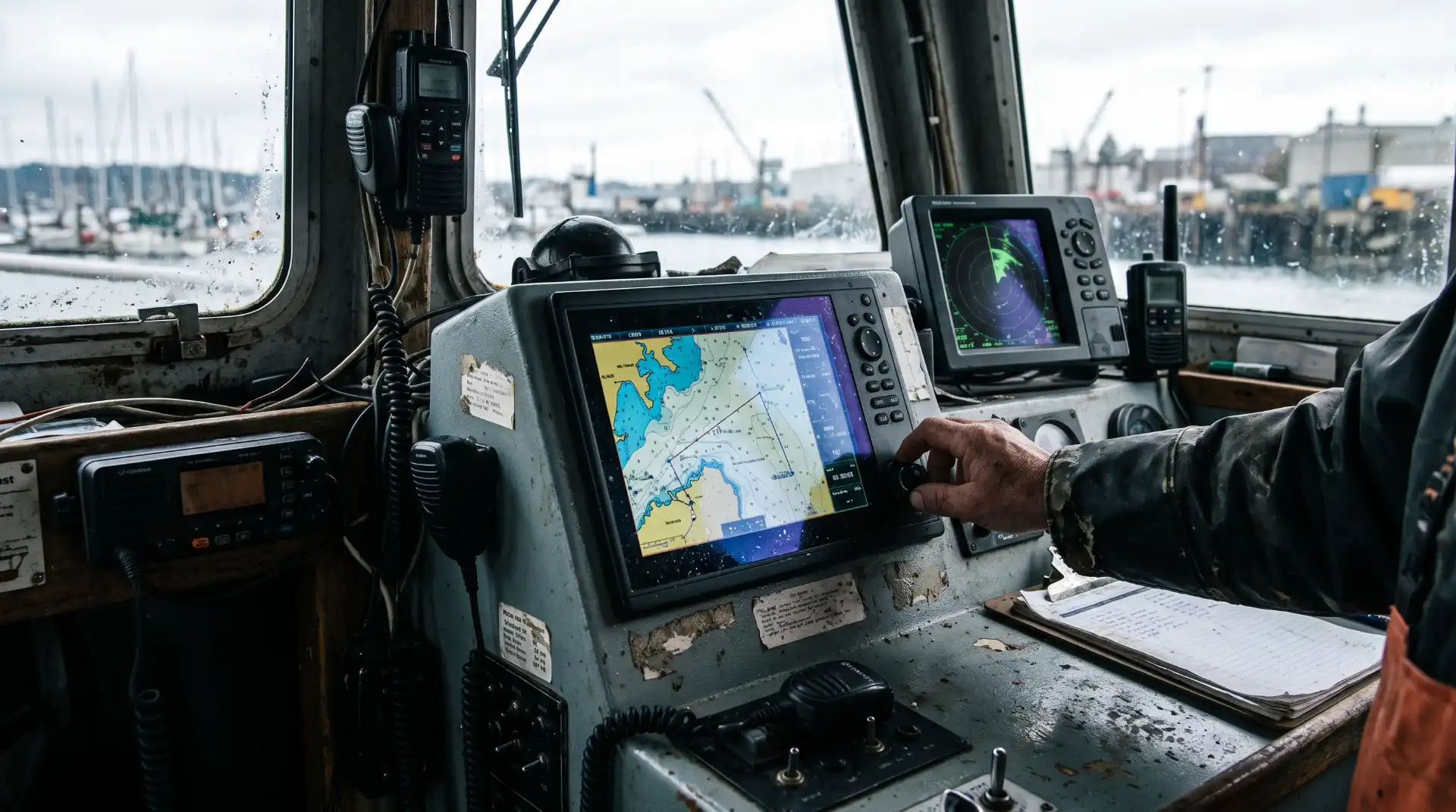
Why Fisheries Regulators Want More Accurate Location Data
Commercial fishing regulations depend on information about where fishing takes place and how fishing effort affects marine populations. Without reliable information, regulators may struggle to assess whether restrictions are working or whether additional conservation measures are necessary.
Electronic monitoring can help authorities identify patterns that would be difficult to establish through occasional inspections alone. It can also help focus enforcement resources on specific areas and periods when violations are suspected.
For example, a fishing area may close temporarily to protect a vulnerable species during an important part of its life cycle. A vessel monitoring system can provide location records that help investigators determine whether a vessel entered the area during the closure.
Similarly, tracking information may help agencies understand fishing effort across a broader geographic region. That information can contribute to management decisions, although its usefulness depends on data quality and how accurately the records reflect actual fishing activity.
For an overview of regional monitoring obligations, vessel owners can consult NOAA Fisheries’ official Regional Vessel Monitoring Information. The resource explains that VMS requirements differ among regions and fisheries rather than applying uniformly to every commercial boat.
GPS, AIS, and Vessel Monitoring Systems Are Not the Same
Discussions about digital surveillance often use GPS, vessel monitoring systems, and automatic identification systems as if they were interchangeable. They are not.
Understanding the difference is important because each technology has a distinct purpose and may be subject to different legal requirements.
Global Positioning System (GPS)
GPS is a satellite-based positioning technology that allows a receiver to calculate its geographic location. Commercial fishing boats may use GPS for navigation, route planning, and safety.
A GPS receiver does not necessarily transmit location information to the government. It may simply display the vessel’s position to the captain.
A regulatory tracking system, by contrast, uses positioning technology together with communications equipment to send information to a designated recipient.
Automatic Identification System (AIS)
AIS transmits information about a vessel, including its identity, position, course, and speed, to other equipped vessels and shore-based receivers. It is widely associated with maritime safety and navigation.
AIS carriage requirements depend on the vessel’s characteristics and the applicable regulations. It should not be assumed that every small commercial fishing boat must continuously broadcast AIS information.
AIS also differs from a dedicated fisheries monitoring program. The fact that a boat uses AIS does not automatically establish compliance with a separate VMS requirement.
Vessel Monitoring System (VMS)
A vessel monitoring system is designed to report position information under a particular regulatory program. Approved equipment typically uses satellite communications to transmit information to authorized monitoring systems.
The governing program may specify how frequently the vessel must report its position, when the system must be operational, and what the operator must do if equipment fails.
Some programs also require fishing-trip declarations, landing notifications, or other reports that supplement location data.
For vessel owners, the distinction is practical as well as legal. Having ordinary navigation equipment does not necessarily satisfy a permit condition requiring an approved VMS unit.
Can the U.S. Government Legally Require Commercial Fishing Boats to Use GPS Trackers?
In many circumstances, yes. Federal and state authorities can impose monitoring requirements on commercial fishing vessels when those requirements are authorized by law and apply to the relevant fishery.
The federal government has extensive authority to regulate commercial fishing in federal waters. The Magnuson-Stevens Fishery Conservation and Management Act provides a central framework for managing fisheries in federal waters, including measures intended to prevent overfishing and promote sustainable resource management.
Regulations adopted under applicable statutes may require particular vessels to carry approved tracking equipment as a condition of participating in a regulated fishery.
However, there is no single GPS mandate that automatically applies to every commercial fishing boat in the United States.
Requirements depend on the particular regulatory program, the vessel’s permits, the species being harvested, the fishing gear involved, and the waters in which the vessel operates.
How Fishing Permits Affect Tracking Obligations
Federal fishing permits frequently establish conditions governing a vessel’s participation in a particular fishery. Those conditions may address equipment, reporting, fishing locations, and compliance with conservation measures.
Where an applicable regulation requires an approved monitoring unit, a vessel operator generally cannot disregard that obligation simply because the vessel is privately owned or the owner disagrees with the policy.
At the same time, government agencies do not possess unlimited authority. A tracking requirement must fall within the agency’s lawful authority and remain subject to applicable constitutional protections and judicial review.
A vessel owner who believes a requirement exceeds statutory authority or violates constitutional rights may have grounds to challenge it. Whether such a challenge succeeds depends on the governing law, the precise facts, and the applicable legal standards.
Regional Differences Matter
NOAA Fisheries identifies monitoring requirements for numerous fisheries across Alaska, the Northeast, the Pacific Islands, the Southeast, and the West Coast.
In the Northeast, certain scallop, multispecies, monkfish, herring, surfclam, and ocean quahog permit categories are among those associated with VMS obligations under applicable rules.
In Alaska, monitoring requirements apply to specified fisheries and operations involving particular species, permits, and gear types.
In the Southeast, certain Gulf reef fish and highly migratory species operations have their own requirements. Some programs require approved tracking equipment to remain operational even when the vessel is not actively fishing.
On the West Coast, VMS requirements apply to designated groundfish and other fisheries, with rules addressing declarations and monitoring in relation to conservation areas.
These examples demonstrate why a general internet article cannot determine whether a specific vessel must carry a tracker. Owners should consult the applicable federal regulations, permit conditions, and regional guidance before operating.
The Maine Lobster Tracking Dispute
The legal debate over vessel surveillance gained national attention through a challenge brought by Maine lobsterman Frank Thompson.
The dispute concerned a requirement for certain federally permitted lobster boats to carry tracking equipment and transmit location information. Thompson argued that continuous monitoring of his vessels amounted to an unconstitutional search under the Fourth Amendment.
His challenge raised a difficult question: Can the government require a commercial fishing business to install equipment that continuously reports the movements of privately owned vessels as a condition of participating in a regulated industry?
The controversy became particularly important because the monitoring could extend beyond active fishing trips. Tracking a boat during regulated fishing activity is closely connected to fisheries enforcement. Monitoring its movements when it is not fishing raises additional questions about how much information the government needs and whether the scope of collection is justified.
Supporters of the requirement argue that consistent location data can help authorities assess lobster populations, enforce fishing rules, and protect marine resources. Opponents worry that continuous surveillance can expose movements unrelated to commercial fishing and create a precedent for broader government monitoring.
What Happened in October 2026?
On October 5, 2026, the U.S. Supreme Court declined to hear Thompson’s challenge. The decision left the lower court ruling in place and did not invalidate the challenged tracking requirement.
The practical result is important for the fishermen covered by the applicable mandate. They cannot assume that the requirement has disappeared because the Supreme Court declined review.
However, the decision must be interpreted carefully. When the Supreme Court refuses to hear an appeal, it does not necessarily endorse every aspect of the lower court’s reasoning. A denial of review is not the same as a new Supreme Court opinion resolving every constitutional issue raised by the case.
The decision also does not impose a universal tracking requirement on all commercial fishing vessels nationwide. The scope of the underlying mandate remains governed by the relevant laws and regulations.
For background on the Supreme Court development, see the Associated Press report on the Court’s decision in the Maine lobster-tracking dispute.
Why the Case Matters Beyond Maine
The Maine dispute is relevant to a broader debate over digital surveillance in regulated industries.
Governments increasingly rely on technology to collect information about vehicles, equipment, businesses, and individuals. These systems can make enforcement more efficient, but they also raise questions about how long information should be collected, who may access it, and whether data can be used for purposes beyond those originally intended.
The legal issues will not necessarily be identical in every industry. Fishing permits, transportation rules, environmental statutes, and other regulatory frameworks operate under different legal standards.
Nevertheless, the Maine dispute illustrates that a legitimate regulatory purpose does not automatically resolve every question about the scope of government surveillance.
Does GPS Tracking Violate the Fourth Amendment?
The Fourth Amendment protects against unreasonable searches and seizures by the government. Whether a particular vessel tracking requirement violates that protection depends on the nature of the monitoring, the authority under which it operates, and the circumstances involved.
It is inaccurate to assume that all government collection of location data is unconstitutional. Government surveillance may be lawful when it is properly authorized and conducted within applicable constitutional limits.
It is equally inaccurate to assume that operating a regulated business eliminates every constitutional protection.
Courts may examine the extent of monitoring, the legal basis for collecting information, the type of data obtained, the expectations of privacy involved, and whether the program operates within a valid regulatory framework.
United States v. Jones and GPS Tracking
In United States v. Jones (2012), the Supreme Court considered a case involving a GPS device that law enforcement officers attached to a vehicle and used to monitor its movements.
The Court held that the government’s physical installation and use of the device constituted a search under the Fourth Amendment.
The decision is relevant to vessel tracking because it demonstrates that technological surveillance can raise constitutional concerns when government agents physically intrude on private property to obtain information.
However, Jones did not establish that every GPS monitoring program is unconstitutional. The case involved a particular law enforcement investigation and a physical installation, whereas a regulatory tracking requirement may operate under a different legal framework.
The authority for the monitoring, the purpose of the data collection, and the obligations imposed on the vessel operator may all affect the analysis.
Regulatory Searches and Commercial Fishing
Government agencies routinely inspect regulated businesses to determine whether they comply with applicable laws. Courts recognize that some closely regulated industries may be subject to inspection schemes that differ from ordinary criminal investigations.
Commercial fishing is regulated because it involves finite natural resources and activities that can affect ecosystems and other fishing businesses. These interests can support monitoring requirements, but they do not create unlimited government authority.
The legality of a particular program may depend on the regulatory history of the industry, the scope of the inspection or monitoring, the notice provided to operators, and the safeguards governing the collection and use of information.
A tracking mandate may therefore require a different analysis from a warrantless GPS device installed during a criminal investigation.
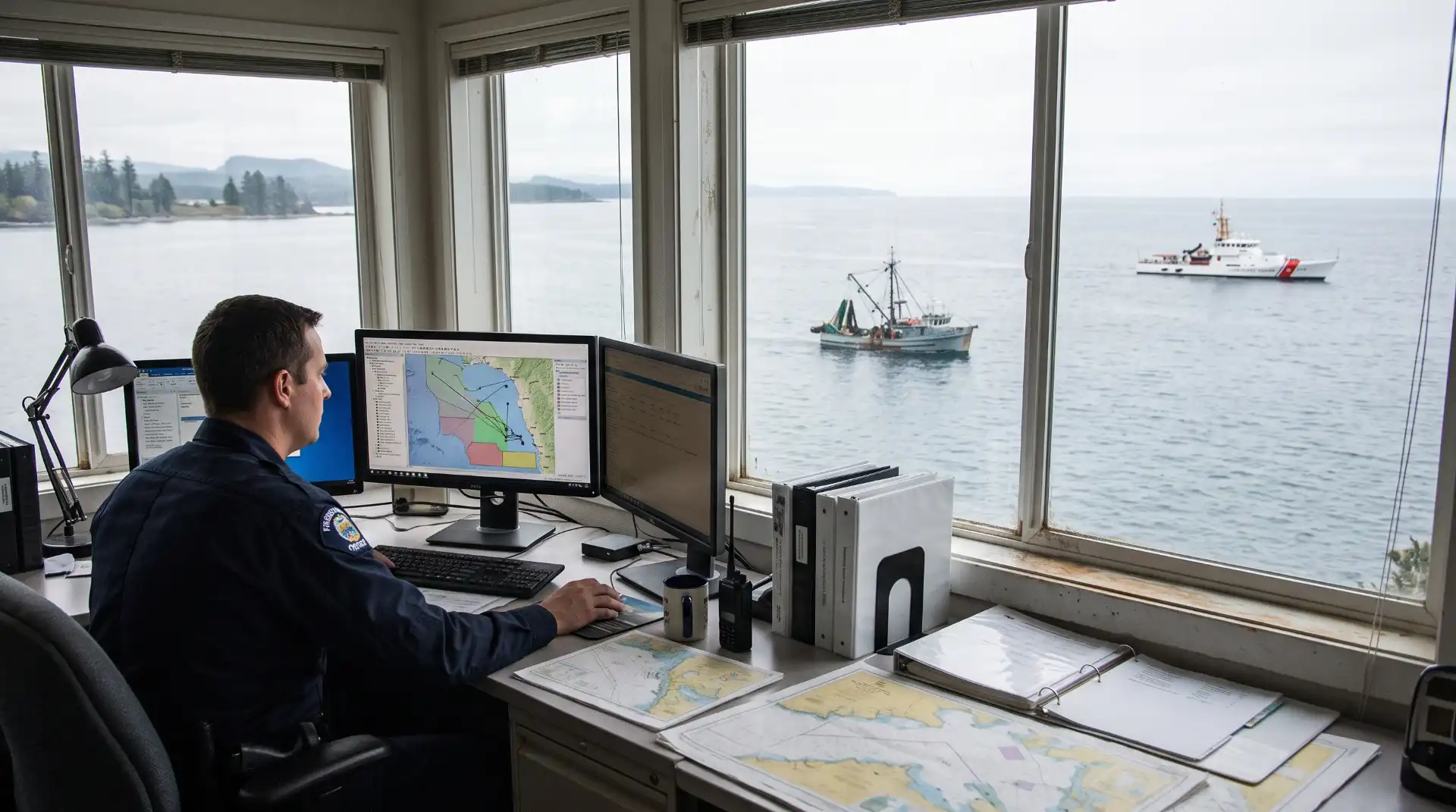
Why Continuous Tracking Raises Additional Concerns
Continuous monitoring can reveal far more than a vessel’s location during a single fishing trip.
Over time, location records may reveal travel patterns, visits to particular ports, operational schedules, maintenance activity, and movements unrelated to fishing.
The amount of information collected matters because the government may acquire a detailed record of a vessel’s movements even when no suspected violation exists.
This does not automatically make continuous monitoring unconstitutional. It does explain why courts, policymakers, and privacy advocates focus on whether a tracking system collects more information than is necessary to achieve its regulatory objective.
A program that limits tracking to relevant periods may raise different concerns from one that collects information continuously, regardless of whether the vessel is engaged in regulated activity.
What Privacy Rights Do Commercial Fishermen Have?
Commercial fishermen retain legal rights even when their businesses are subject to extensive regulation. The difficult question is how those rights apply when a vessel’s location is collected through a monitoring system required by a permit.
Location data can reveal more than fishing grounds. It may disclose travel patterns, business relationships, operational routines, and movements unrelated to fishing.
These concerns make confidentiality, access restrictions, and data retention important parts of any monitoring program.
Who Can Access Vessel Tracking Data?
Access depends on the applicable program and legal authority. NOAA Fisheries uses VMS information for enforcement and fisheries-management purposes, and relevant rules govern how the information may be accessed and used.
Government collection does not automatically mean that all information becomes publicly available. Nor does it mean that every official can search the records for any purpose.
Vessel owners should review the applicable program’s confidentiality rules and data-use policies. If a business believes its records have been accessed or disclosed improperly, it should document the issue and consult counsel about available remedies.
Location data can also contain commercially sensitive information. Knowledge of a vessel’s movements and fishing locations may provide competitors with information about operating patterns or commercially valuable areas.
Can Vessel Owners Challenge the Use of Their Data?
Potentially, although the available remedies depend on the circumstances.
A challenge to the tracking mandate itself differs from a complaint about unauthorized access, improper disclosure, or use of the information for an unrelated purpose.
The vessel owner may need to identify the agency responsible, the governing regulation, the nature of the alleged misuse, and the applicable administrative procedures. Constitutional claims may involve different legal questions from claims based on statutory confidentiality requirements.
Not every questionable use of tracking data automatically creates a successful lawsuit. The legal basis, evidence, procedural requirements, and available remedies must be evaluated individually.
Environmental Protection Versus Government Surveillance
The strongest argument for electronic tracking is that fisheries management depends on reliable information. Regulators must make decisions about seasons, catch limits, protected areas, and conservation measures that affect marine ecosystems and coastal economies.
Tracking can help investigators identify vessels operating in restricted areas and support analysis of fishing activity across large geographic regions.
However, a legitimate environmental purpose does not eliminate every concern about surveillance. The key issue is how to design a system that achieves conservation goals without collecting or retaining unnecessary information.
How Monitoring Can Benefit Responsible Fishermen
Electronic tracking can provide additional evidence about vessel movements. If a dispute arises over whether a boat entered a closed area, reliable position records may help establish what happened.
Tracking can also contribute to fisheries research by helping authorities understand patterns of fishing effort. Better information may improve management decisions and help preserve fishing opportunities over the long term.
For compliant operators, these systems may provide a useful record that clarifies disputed facts and supports consistent enforcement.
Why Tracking Can Burden Small Fishing Businesses
Monitoring requirements can impose financial and operational costs. Depending on the program, vessel owners may need to purchase approved equipment, pay installation fees, maintain communications services, replace faulty hardware, and spend time completing required reports.
Those costs can be significant for small family-operated businesses with limited margins.
Equipment failures can also create uncertainty. A vessel may need to delay a trip, return to port, contact regulators, or follow an approved alternative reporting procedure.
Regulators should therefore provide clear instructions, accessible technical assistance, and practical procedures for malfunctions. Reasonable compliance processes can reduce unnecessary disruption without undermining conservation objectives.
How GPS Tracking Rules Differ Across U.S. Fisheries
There is no universal checklist that determines the obligations of every American commercial fishing vessel. Requirements depend on the relevant fishery and may change when a vessel operates under multiple permits.
Alaska Fisheries
Alaska’s commercial fisheries include programs with distinct monitoring requirements based on species, gear, fishing areas, and permit status. Some vessels participating in specified groundfish, crab, and other regulated fisheries must carry approved VMS equipment.
Operators should consult current regional guidance and the regulations applicable to their particular fishery. A vessel participating in multiple programs may have obligations that are not obvious from its primary permit alone.
Northeast Fisheries
In the Northeast, monitoring requirements apply to several regulated fisheries and permit categories, including certain scallop, multispecies, monkfish, herring, surfclam, and ocean quahog operations.
The Maine lobster-tracking dispute is especially relevant to this region because it highlights the constitutional questions that arise when a tracking mandate extends beyond active fishing trips.
However, the rules for one lobster fishery should not be assumed to apply to every vessel operating in the Northeast.
West Coast Fisheries
Federal VMS requirements apply to specified West Coast fisheries, including designated groundfish operations. Depending on the program, vessels may need to submit trip declarations and transmit location information through approved systems.
The requirements can relate to conservation areas, gear types, permit categories, and other program-specific conditions.
Southeast and Gulf Fisheries
In the Southeast, certain federally permitted reef-fish and highly migratory species operations are subject to VMS requirements. Rules may address equipment, operating status, fishing-trip declarations, and landing notifications.
These regional differences demonstrate why vessel owners should consult official guidance rather than assume that a rule described for another fishery applies to their operation.
What Happens if a Fishing Boat Refuses to Use a Required Tracker?
A vessel operator who refuses to comply with a valid tracking requirement may face consequences under the governing regulations and permit conditions.
Depending on the program and circumstances, potential consequences can include enforcement proceedings, civil penalties, or restrictions on fishing privileges. The exact outcome depends on the applicable law and the nature of the alleged violation.
A deliberate decision to disable required equipment may be treated differently from an accidental equipment failure. Operators should not assume that switching off a tracker is a legally protected response to a requirement they disagree with.
What if the Equipment Stops Working?
If a required VMS unit fails, the operator should follow the official malfunction-reporting procedure for the relevant fishery.
Depending on the applicable rules, this may involve notifying the monitoring authority, arranging repairs, providing position reports through an approved alternative method, or following instructions about whether fishing may continue.
Owners should document the malfunction, the time it occurred, their communications with regulators, and the steps taken to resolve the problem.
These records can help demonstrate that the operator responded appropriately rather than deliberately avoiding monitoring requirements.

Can a Fisherman Challenge a Requirement Instead of Complying?
A vessel owner who believes a tracking requirement is unlawful may be able to pursue an administrative appeal, request an exemption where one is available, or challenge the rule in court.
The available procedure depends on the regulation and the legal grounds involved.
However, a legal challenge and a compliance violation are not the same thing. An operator should seek qualified legal advice before deciding to disregard a requirement, especially where noncompliance could jeopardize a permit or expose the business to penalties.
What Policymakers Should Consider When Designing Tracking Rules
The debate over vessel monitoring is not limited to whether the technology works. It also concerns how information is collected, stored, accessed, and used.
A well-designed system should identify the regulatory purpose of collecting location data and explain who is authorized to access it. Agencies should establish appropriate retention rules and consider whether the reporting frequency is necessary for the particular fishery.
Data security is another important issue. Unauthorized access or disclosure can expose sensitive business information and undermine public confidence in the monitoring program.
Where practical, regulators should distinguish between information needed for fisheries enforcement and information with little relevance to the regulated activity. Policies should also explain when data may be shared with other agencies and what authority is required for additional uses.
Clear compliance guidance is equally important. Vessel owners need to know which devices are approved, how frequently reports must be transmitted, what to do when equipment fails, and how to request an exemption when legally available.
These measures can help regulators pursue legitimate conservation goals while improving transparency and accountability.
The Future of Digital Surveillance at Sea
Electronic monitoring is likely to remain an important part of American fisheries management. Satellite communications and automated reporting allow regulators to collect information across large ocean areas without relying entirely on physical patrols and inspections.
As monitoring systems become more sophisticated, legal questions will increasingly involve not only the collection of location information but also its retention, analysis, sharing, and use in enforcement proceedings.
Future disputes may focus on whether a tracking mandate extends beyond what its regulatory purpose requires, whether confidentiality restrictions have been followed, and whether the agency has sufficient legal authority for a particular program.
The Maine lobster-tracking dispute is an important example, but it does not settle every constitutional question involving digital surveillance. Courts will continue to assess monitoring requirements within the framework of applicable statutes, constitutional doctrine, and the facts of individual cases.
For fishing businesses, the practical challenge is to comply with valid conservation requirements while understanding the legal protections that remain available. For regulators, the challenge is to use technology effectively without imposing unnecessary burdens or collecting information beyond what the law permits.
As digital surveillance expands across the maritime industry, the balance between effective fisheries management and individual privacy will remain an important legal issue.
Frequently Asked Questions
Can the U.S. government require all commercial fishing boats to use GPS trackers?
No single nationwide rule automatically covers every commercial fishing vessel. Federal and state regulations impose tracking requirements on particular fisheries, permits, vessel categories, and activities. Operators must check the requirements that apply to their own vessels.
Is mandatory GPS tracking unconstitutional?
Not automatically. The constitutionality of a particular requirement depends on its legal authority, scope, and circumstances. The Maine lobster-tracking dispute illustrates the issue, but the Supreme Court’s refusal to hear that challenge did not establish that every tracking mandate is constitutional.
Can a fisherman turn off a required tracking device when not fishing?
That depends on the applicable regulations and any authorized exemption. Some programs require continuous operation, while others provide specific procedures for powering down equipment. Operators should obtain authorization before disabling a required device.
Who can see a commercial fishing boat’s GPS data?
Access depends on the monitoring program and applicable confidentiality rules. Authorized government officials and other legally permitted users may access certain information, but government collection does not automatically make all tracking records public.
Can GPS records be used as evidence against a fishing vessel?
Potentially. Position reports may support an investigation or enforcement proceeding, but their significance depends on the applicable rules, the reliability of the records, and the other evidence available. A location report does not necessarily establish every element of a violation by itself.
What should a fisherman do if a required tracker fails?
The operator should follow the official malfunction-reporting procedure for the relevant fishery. This may involve notifying the monitoring authority, supplying position reports through an approved alternative method, arranging repairs, or following instructions about whether fishing may continue.
Conclusion
Digital surveillance at sea sits at the intersection of fisheries management, commercial regulation, privacy, and constitutional law. GPS-enabled vessel monitoring can help protect marine resources, verify compliance with fishing restrictions, and improve the information available to regulators. At the same time, continuous monitoring raises legitimate questions about government authority, the collection of information unrelated to active fishing, and the safeguards protecting sensitive data.
The Maine lobster-tracking dispute demonstrates that these questions are not merely theoretical. The Supreme Court’s October 2026 decision to decline review left the challenged lower-court ruling in place, but it did not establish a universal GPS requirement for every commercial fishing boat or resolve every possible constitutional challenge.
For fishing businesses, the best approach is to identify the exact rules governing each permit, maintain required equipment, document compliance, and seek qualified legal advice when a monitoring requirement appears questionable. For regulators, the long-term challenge is to balance effective conservation and enforcement with clear legal authority, appropriate data protections, and transparent procedures.
As electronic monitoring becomes more sophisticated, that balance will remain central to the future of commercial fishing in the United States.
Related Reading on Legal-Journal.com
For additional context on digital surveillance, location information, and constitutional privacy, read these related articles:
1. License Plate Reader Surveillance and the Fourth Amendment: How New Technology Is Changing Privacy Rights
Read the related article: https://www.legal-journal.com/constitutional-law/license-plate-reader-surveillance-and-the-fourth-amendment-how-new-technology-is-changing-privacy-rights/
This article explores how law enforcement agencies use location-related data and how courts are evaluating the constitutional implications of modern surveillance systems.
2. Data Broker Laws in the U.S.: New Privacy Rights Consumers Should Know
Read the related article: https://www.legal-journal.com/data-privacy/data-broker-laws-in-the-u-s-new-privacy-rights-consumers-should-know/
This article examines the legal treatment of sensitive location data, consumer privacy rights, and restrictions on the handling of personal information.
3. Your Rights During a Police Stop: What You Can Say or Refuse Legally
Read the related article: https://www.legal-journal.com/criminal-law/your-rights-during-a-police-stop-what-you-can-legally-say-or-refuse/
This guide provides additional context about constitutional protections during law enforcement encounters and the distinction between lawful government activity and potentially unlawful searches.