
The Future of Section 230 and Tech Liability
Section 230 of the Communications Decency Act, passed in 1996, has long been considered the cornerstone of U.S. internet law. It shields online platforms from liability for content posted by third parties, allowing the internet to flourish while limiting the legal risk for tech companies. This provision has enabled social media networks, forums, and online marketplaces to operate at scale without the constant threat of lawsuits over user-generated content. However, in recent years, the legal landscape surrounding Section 230 has begun to shift, as courts, lawmakers, and public opinion increasingly question the scope of protections afforded to tech companies.
In 2026, the debate over Section 230 is more intense than ever. Major lawsuits in California, New York, and other states have challenged the provision, claiming that social media platforms contributed to user harm through addictive designs, misinformation, or algorithmic amplification. These cases are forcing courts to reconsider how Section 230 interacts with liability claims in the modern digital environment.
The Historical Role of Section 230
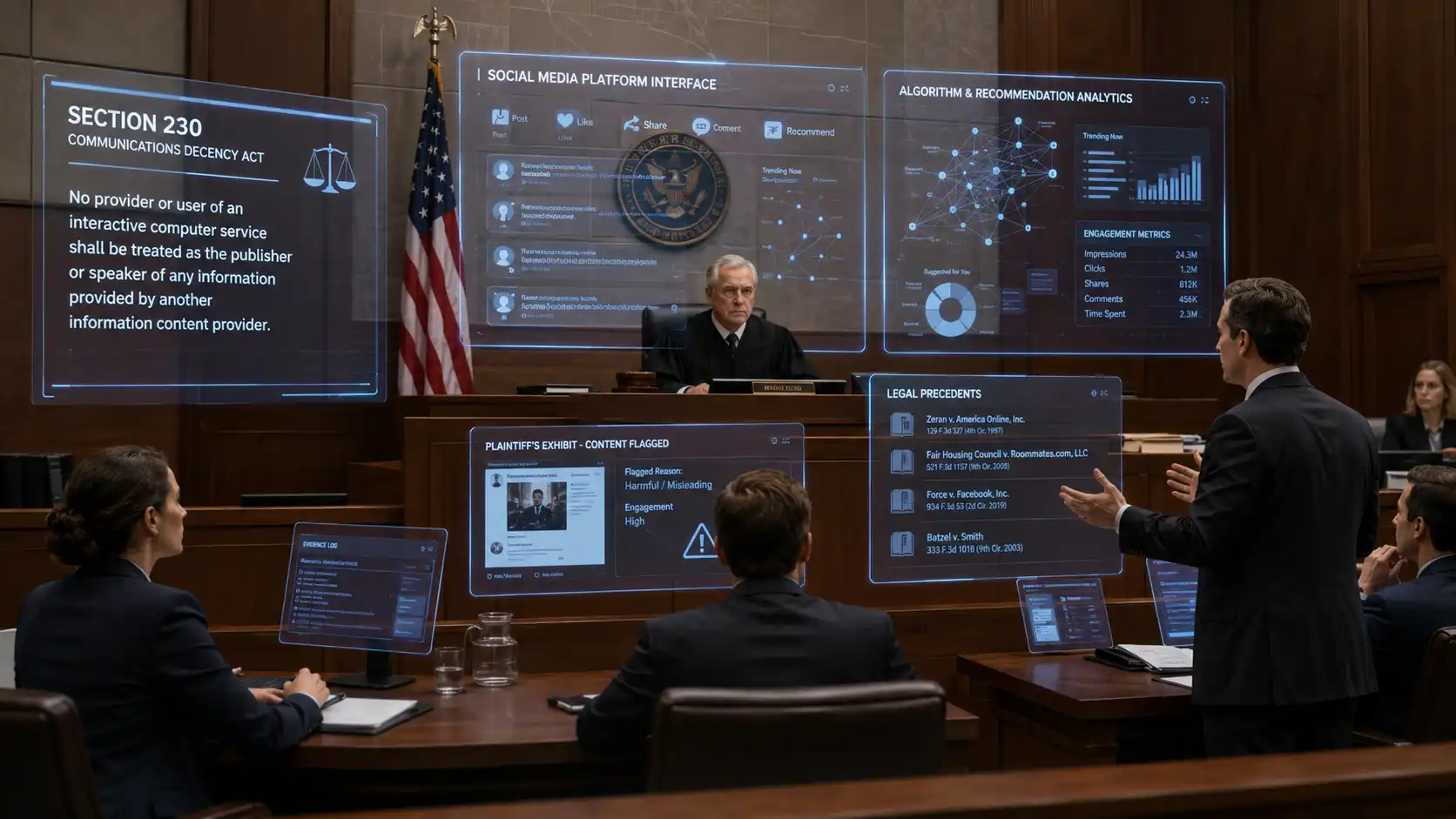
Section 230 was designed to encourage the growth of the internet by protecting platforms from liability for content created by users. It states that online platforms cannot be treated as the publisher or speaker of user-generated content. This legal protection allowed platforms to moderate content without being held liable for everything users posted.
Historically, Section 230 enabled the rise of platforms like Facebook, YouTube, and Twitter by providing a legal safe harbor. These companies could host billions of posts, videos, and comments without facing lawsuits for each piece of content. Courts generally interpreted Section 230 broadly, reinforcing the principle that platforms were intermediaries rather than publishers.
However, as online content increasingly influences public opinion, political discourse, and even personal safety, lawmakers and advocates have begun questioning whether the law still adequately addresses the realities of modern internet use.
Current Legal Challenges
Recent legal challenges to Section 230 focus on several areas: misinformation, harmful content, algorithmic amplification, and the role of design in user engagement. Plaintiffs in California have argued that platforms contributed to mental health harms among minors through algorithmic features that encourage addictive behaviors. Similarly, lawsuits in other states have claimed that platforms failed to adequately remove harmful content despite having the ability to do so.
These cases raise complex legal questions: should Section 230 protections extend to content that is algorithmically promoted by a platform? Can platforms be held accountable for foreseeable harm that results from design decisions? Courts have begun to address these questions, but rulings vary widely depending on the jurisdiction and the nature of the claims.
The uncertainty surrounding Section 230 has broad implications for tech companies. Legal scholars warn that a narrowing of protections could increase liability risks, discourage innovation, and fundamentally alter how platforms operate. Companies may need to invest heavily in moderation, compliance, and legal defense, potentially reducing the open, interactive nature of the internet.
Legislative Considerations
In addition to litigation, Congress has debated reforms to Section 230. Proposals include conditioning protections on proactive content moderation, limiting immunity for certain types of harmful content, and clarifying the role of algorithms in liability. While some lawmakers seek to hold platforms accountable for misinformation or harmful content, others emphasize the importance of protecting free speech and innovation.
The political and public debate surrounding Section 230 reflects a broader tension between regulation, corporate responsibility, and digital freedoms. Any legislative changes could significantly impact not only U.S. tech companies but also international platforms operating in the United States. Companies that rely on user-generated content must closely monitor proposed reforms to anticipate compliance requirements and potential liabilities.
Tech Industry Response
Tech companies have responded to legal and legislative pressures in a variety of ways. Some platforms have increased transparency in content moderation policies, developed more robust reporting tools, and engaged with independent audits to assess algorithmic impact. Others have invested in AI-driven systems to flag potentially harmful content and reduce human oversight bottlenecks.
Despite these measures, companies face challenges in balancing moderation, user engagement, and liability protection. Overly aggressive moderation could alienate users or raise free speech concerns, while insufficient moderation could invite lawsuits or regulatory scrutiny. The tension between these priorities underscores the need for clear legal guidance on Section 230’s scope and limitations.
Implications for Platform Liability
If courts or lawmakers narrow Section 230 protections, platforms may face greater exposure to civil claims. This could include liability for harmful or misleading content, privacy violations, and product design-related injuries. Platforms may also confront higher insurance premiums, increased compliance costs, and reduced investor confidence.
The potential expansion of platform liability could prompt companies to redesign user experiences, limit interactive features, or increase moderation efforts. Smaller platforms and startups may be disproportionately affected, as they often lack the resources to navigate complex legal obligations. As a result, the digital ecosystem could become more centralized, favoring larger, established platforms capable of absorbing legal and compliance costs.
Case Studies
Several high-profile cases illustrate the challenges surrounding Section 230 and tech liability.
In California, a lawsuit against a major social media platform alleged that algorithmic promotion of certain types of content contributed to mental health harms among minors. Plaintiffs argued that the company’s design choices made harmful content more likely to reach vulnerable users. The case raised questions about whether Section 230 immunity extends to content that is algorithmically amplified rather than merely hosted.
In another case, a misinformation claim involving financial scams argued that the platform facilitated fraudulent activity by allowing misleading posts to appear in trending feeds. While the platform claimed immunity under Section 230, courts began to scrutinize whether the platform’s algorithmic features transformed it from a neutral host into an active publisher.
These cases illustrate the nuanced legal landscape and highlight the uncertainty for companies relying on Section 230 protections.
Future Directions
Experts predict that the future of Section 230 will involve continued judicial and legislative attention. Courts are likely to refine interpretations regarding algorithmic promotion, foreseeability of harm, and moderation responsibilities. Meanwhile, Congress may pursue targeted reforms that clarify platform obligations while preserving core free speech protections.
Tech companies must prepare for a future in which Section 230 protections are more limited or conditional. This includes investing in legal strategy, compliance infrastructure, and moderation technology, as well as closely monitoring evolving case law and proposed legislation.
In parallel, advocacy groups and policy organizations continue to weigh in, emphasizing the societal impact of platform decisions. The debate over Section 230 highlights the broader challenge of balancing innovation, free expression, and public safety in the digital age.

Practical Recommendations for Companies
For platforms and technology companies, navigating Section 230 in 2026 requires proactive legal and operational strategies. These include:
- Conducting regular legal audits of platform policies and content moderation practices.
- Implementing transparent reporting mechanisms for user complaints and harmful content.
- Evaluating the design and algorithmic promotion of content to identify potential liability risks.
- Engaging with regulators, policymakers, and legal experts to anticipate changes in liability standards.
- Educating staff on legal obligations, user safety, and ethical responsibilities related to content and design.
While these strategies may not eliminate risk, they help companies demonstrate good faith efforts to comply with evolving legal standards. Documented compliance may also mitigate reputational damage in the event of litigation.
Broader Implications for Digital Policy
Section 230’s future will shape the broader digital ecosystem. Decisions made in courts and Congress will influence:
- Online content moderation policies and transparency.
- Platform design choices, particularly algorithmic recommendations.
- Investment and startup innovation, as liability exposure could affect funding.
- User experience, including freedom of expression, safety, and engagement.
Ultimately, Section 230 sits at the intersection of law, technology, and society. The evolution of this legal provision will determine how platforms balance the interests of users, regulators, and shareholders in an increasingly digital world.
Conclusion
The legal and policy landscape for Section 230 is evolving rapidly. Courts, lawmakers, and advocacy groups are all scrutinizing the protections afforded to online platforms, raising important questions about liability, design responsibility, and content moderation. Tech companies must adapt to this changing environment, balancing compliance, innovation, and public expectations.
As Section 230 continues to face legal and legislative challenges, its future will have profound implications for the internet, user safety, and digital innovation in the United States. Companies, policymakers, and legal professionals must work together to ensure that protections are updated appropriately, maintaining a balance between platform immunity, user rights, and societal responsibilities.