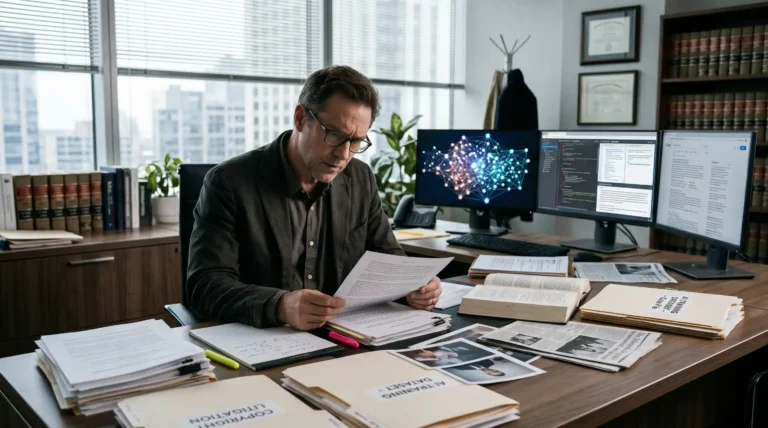
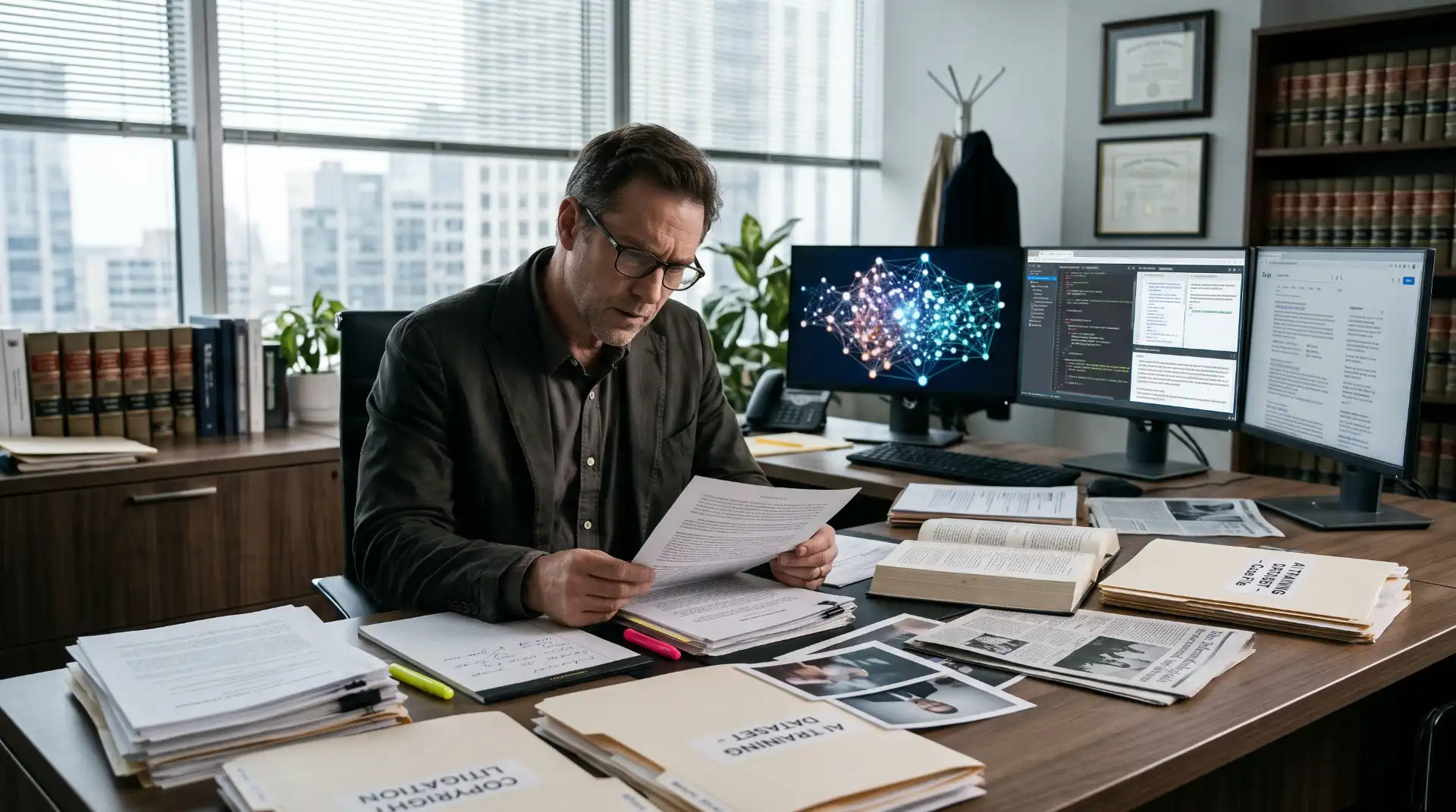
The Growing Legal Conflict Over AI Training Data
Artificial intelligence has become one of the most influential technologies in the modern American economy. Generative AI systems can produce written articles, summarize research, generate images, compose music, assist with software development, and answer complicated questions in seconds. Businesses increasingly use these tools to improve productivity, while consumers rely on AI-powered applications for education, entertainment, research, and everyday communication.
Behind these capabilities is an enormous collection of information known as training data. Artificial intelligence developers use large datasets containing text, images, photographs, books, news articles, software code, audio recordings, and other digital materials to train their systems to recognize patterns and generate responses.
However, the collection and use of this information have created one of the most important intellectual property disputes in the United States.
Authors, journalists, publishers, photographers, musicians, software developers, and other copyright owners have challenged the use of their work in AI training datasets. Many argue that technology companies copied protected materials without obtaining permission, purchasing licenses, or providing compensation. They also contend that AI-generated responses can reproduce or closely imitate their original work, potentially competing with the websites, publications, and products that depend on copyrighted content.
Artificial intelligence companies have generally argued that training models on publicly accessible material can qualify as fair use under U.S. copyright law. They maintain that analyzing existing information to develop systems capable of generating new responses is different from simply republishing the original material. Some developers also argue that the law should accommodate technological innovation and that requiring permission for every training example could create substantial barriers to research and development.
These competing positions have led to an expanding wave of litigation involving some of the largest technology companies and publishing organizations in the world.
The disputes involve several distinct legal questions. Can an AI developer copy an entire copyrighted book to train a language model? Does downloading publicly accessible news articles automatically authorize their use in commercial AI systems? Can search engines use copyrighted material to create AI-generated summaries? What happens when an AI chatbot reproduces passages that closely resemble a newspaper article? Can copyright owners demand compensation when their work contributes to the commercial value of an AI model?
As of November 2026, American courts have not established a single universal rule governing every form of AI training. Several important decisions have reached different conclusions based on the specific materials, acquisition methods, business purposes, and evidence presented.
The outcome of these lawsuits could influence the future of journalism, book publishing, photography, music, software development, online search, and the commercial artificial intelligence industry.
Understanding these disputes is increasingly important for businesses that develop AI systems, publishers that own valuable digital content, and creators seeking to protect their intellectual property in an increasingly automated economy.
1. What Is AI Training Data and Why Is Copyright Becoming an Issue?
AI training data refers to the information used to teach an artificial intelligence system how to identify patterns, understand language, recognize images, generate content, or perform other tasks.
Large language models, for example, are trained using extensive collections of written material. These collections may include books, articles, websites, academic publications, technical documentation, and other text-based resources.
Image-generation systems may use photographs, illustrations, paintings, digital artwork, and other visual materials. Music-generation systems may analyze sound recordings, musical compositions, and audio characteristics.
The purpose of training is generally to help a model learn statistical relationships and patterns that allow it to generate responses when users provide instructions or questions.
How AI Developers Collect Training Material
AI developers can obtain training information through several different methods. Some use licensed databases, commercially purchased publications, public datasets, research collections, or materials supplied through partnerships.
Other developers may collect information from publicly accessible websites through automated programs commonly known as web crawlers.
These programs visit websites, retrieve available information, and organize it for indexing, research, or other technical purposes.
The legal difficulty arises when the collected material includes copyrighted works.
For example, a technology company might operate a crawler that downloads thousands of newspaper articles. Those articles may be protected by copyright even when readers can access them without paying a subscription.
The company may then incorporate copies into a dataset used to develop a commercial language model.
Copyright owners may argue that the copying violates their exclusive rights under federal copyright law. The developer may respond that the use is transformative, necessary for technological analysis, or otherwise protected by fair use.
The answer depends on the facts and applicable law.
Why Public Availability Does Not Automatically Mean Free Use
One of the most common misunderstandings about AI training is the assumption that anything available on the internet can be freely copied and used for commercial purposes.
That is not how U.S. copyright law works.
A newspaper article does not lose copyright protection simply because it can be read through a web browser. A photograph does not become public domain because it appears in search results. Similarly, an author’s book does not become freely available for unrestricted commercial reproduction merely because a digital copy can be downloaded.
Copyright protection generally exists automatically when an original qualifying work is fixed in a tangible medium of expression.
Under the Copyright Act, copyright owners receive exclusive rights that include reproduction, distribution, public performance, public display, and preparation of derivative works, depending on the type of work involved.
AI training disputes frequently focus on the reproduction right because creating a training dataset may require making digital copies of copyrighted material.
However, copying a work does not automatically establish infringement in every circumstance. Fair use and other applicable limitations may provide legal defenses.
The important question is whether the particular copying and subsequent use are legally authorized.
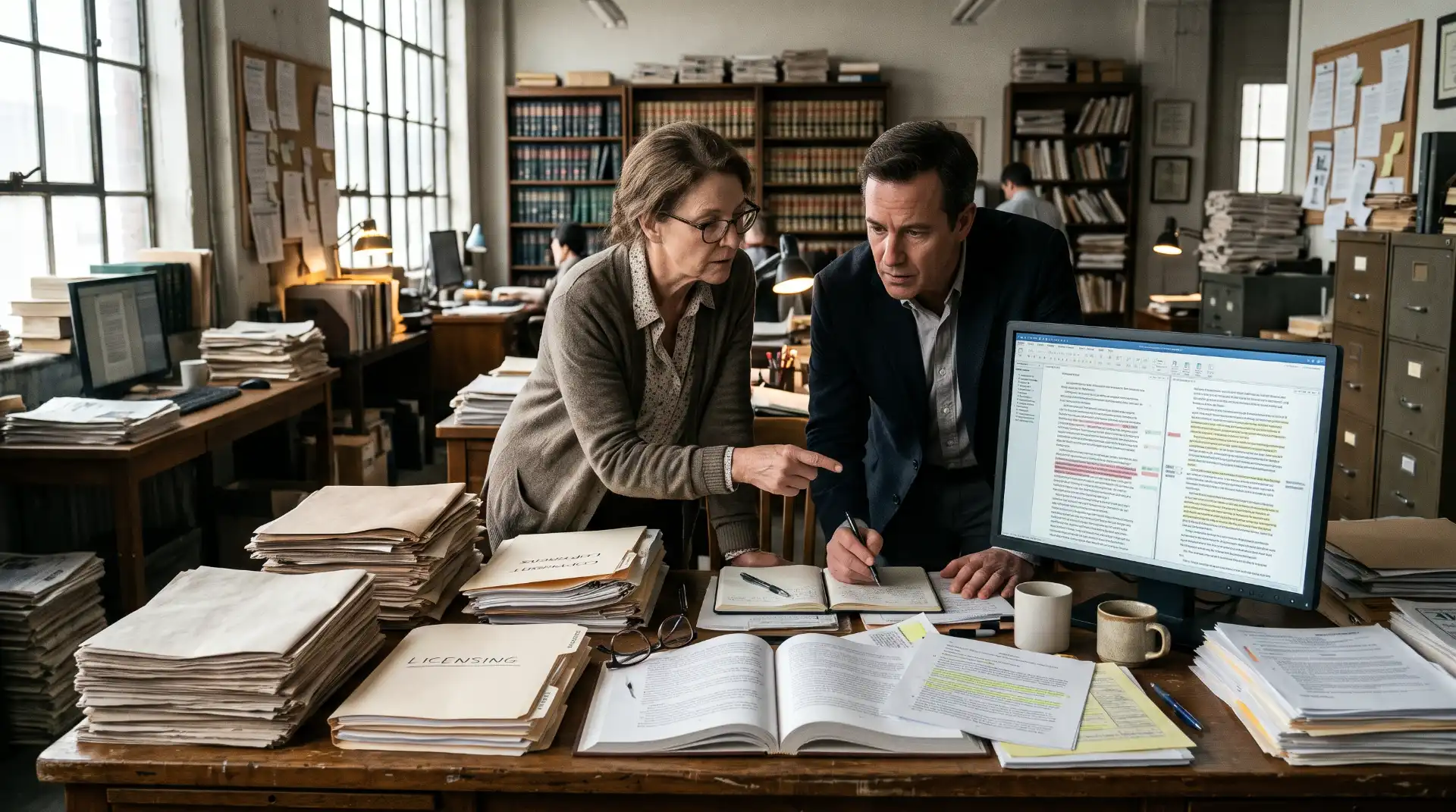
2. The Legal Foundation: How U.S. Copyright Law Applies to AI Training
The central federal statute governing copyright protection in the United States is Title 17 of the United States Code.
The law was written long before modern generative AI systems became commercially widespread. Nevertheless, its existing provisions are now being applied to disputes involving machine learning, automated content collection, and large-scale digital reproduction.
Section 106 and the Exclusive Rights of Copyright Owners
Section 106 of the Copyright Act identifies several exclusive rights belonging to copyright owners.
These include the rights to reproduce copyrighted works, prepare derivative works, distribute copies, and authorize certain public performances and displays.
For AI developers, the reproduction right is particularly important.
If a company downloads and stores copyrighted books, photographs, or news articles in a training dataset, copyright owners may argue that those actions involve unauthorized reproduction.
The argument becomes more complicated when developers claim that the copies are necessary for computational analysis rather than ordinary consumption.
A technology company might explain that it does not intend to sell copies of the original books. Instead, it uses the material to train a system capable of generating responses to new questions.
That distinction may be relevant to fair use, but it does not automatically resolve the infringement question.
Courts must examine the actual use, the purpose of copying, the nature of the work, the amount taken, and the economic effects.
Section 107 and the Fair Use Doctrine
Fair use is one of the most important legal issues in AI training litigation.
Section 107 of the Copyright Act identifies four factors that courts consider when determining whether an otherwise unauthorized use of copyrighted material may be lawful.
The factors include:
The purpose and character of the use, including whether it is commercial or nonprofit educational.
The nature of the copyrighted work.
The amount and substantiality of the portion used in relation to the copyrighted work as a whole.
The effect of the use upon the potential market for or value of the copyrighted work.
These factors are evaluated together. No single factor automatically determines the outcome.
Transformative Use and AI Training
One of the main arguments advanced by AI developers is that training represents a transformative use of copyrighted material.
A transformative use generally involves a purpose or character that differs meaningfully from the original work.
For example, a company might argue that a model uses books to learn language patterns and generate new responses rather than to provide readers with replacement copies of the original books.
The developer may claim that this process serves a different purpose from the original publication.
However, copyright owners may respond that commercial AI systems can compete directly with the markets for books, articles, photographs, and other creative works.
They may also argue that using entire copyrighted works without permission should not automatically become fair use simply because the material is processed by a computer.
Courts must examine these arguments within the four statutory factors.
Importantly, transformative purpose does not automatically establish fair use. Commercial purpose, market effects, the nature of the original material, and the amount copied remain relevant.
Why the Market-Effect Factor Matters
The fourth fair use factor examines the effect of the challenged use on the potential market for or value of copyrighted material.
This has become especially important in disputes involving publishers and professional content creators.
Imagine a newspaper that invests millions of dollars each year in investigative journalism. Its business depends on subscriptions, advertising, licensing arrangements, and reader engagement.
If an AI-powered answer engine provides users with detailed summaries that substitute for visiting the newspaper’s website, the publisher may argue that the technology affects its commercial market.
An AI company might respond that its product provides new functionality and does not replace the original publication.
The court must examine the evidence rather than assume that every AI summary causes legally recognizable market harm.
This issue is likely to remain central to litigation because publishers and developers disagree about how to measure economic injury from AI-generated content.
3. The Major Copyright Lawsuits Against Artificial Intelligence Companies
The growing number of AI copyright disputes demonstrates that the issue affects nearly every major content industry.
Authors, publishers, artists, photographers, music companies, and other rights holders have challenged the use of their work in commercial AI development.
Some cases focus on the initial acquisition and copying of training material. Others involve allegations that AI-generated outputs reproduce protected expression or remove identifying copyright information.
The legal claims can overlap, but they should not be treated as identical.
Bartz v. Anthropic: The Importance of How Training Books Were Obtained
One of the most closely watched disputes involved authors who challenged Anthropic’s use of copyrighted books to train its Claude AI systems.
In June 2025, a federal district court in California issued an important fair use ruling.
The court concluded that certain uses of books for AI training qualified as fair use. It also distinguished between books purchased in print and subsequently digitized, and digital copies obtained from unauthorized sources.
AI-generated material can create copyright concerns even after the underlying model has been developed. Businesses using generative systems must consider whether their outputs reproduce protected creative expression and whether their commercial products contain material that belongs to third parties. Learn more in AI-Generated Game Assets: Copyright Rules for Developers.
The court did not treat every method of obtaining copyrighted books as legally equivalent.
It found that using purchased books to create digital training copies could qualify as fair use under the circumstances. However, downloading pirated books and retaining them in a central library for potential future uses was not excused by the training fair-use analysis.
This distinction is important because the legality of AI training cannot always be separated from the method used to acquire the underlying material.
A developer may have a fair use argument concerning a particular technical use while still facing liability for independently unlawful copying or acquisition practices.
In July 2026, the court approved a $1.5 billion class-action settlement involving the authors’ claims. The settlement represented a major development in the commercial relationship between AI developers and copyright owners.
However, it should not be interpreted as a universal legal ruling requiring every AI company to pay a fixed amount for every copyrighted work used in training.
The settlement resolved the claims covered by that particular proceeding.
Other lawsuits involving different parties, datasets, and training methods remain subject to separate legal analysis.
Kadrey v. Meta: A Different Fair Use Analysis
Another important dispute involved authors who challenged Meta’s use of copyrighted books to train its Llama AI models.
In June 2025, the district court granted summary judgment to Meta on the training fair-use claim based on the record presented.
The court emphasized that the plaintiffs had not adequately developed their evidence concerning market harm.
This was an important distinction from the Anthropic litigation.
Although both cases involved copyrighted books and AI training, the courts evaluated different evidentiary records.
The Meta ruling does not establish that every use of copyrighted books for generative AI training is automatically lawful.
It demonstrates that fair use litigation can depend heavily on the evidence presented concerning purpose, acquisition, market effects, and the actual operation of the AI system.
The market-effect analysis is especially important because copyright owners must establish more than a general concern that AI could affect their industry.
They need evidence connecting the challenged use to legally relevant economic harm.
The New York Times v. OpenAI and Microsoft
The lawsuit brought by The New York Times against OpenAI and Microsoft is among the most prominent disputes involving publishers and AI developers.
The newspaper alleges that its copyrighted articles were copied and used in the development and operation of AI systems without authorization.
The case raises questions about the relationship between traditional search, generative AI, commercial content licensing, and the reproduction of news material.
The newspaper has argued that AI products can generate responses that reproduce or closely resemble its journalism and may compete with its subscription and advertising businesses.
OpenAI and Microsoft have disputed the infringement allegations and have relied on fair use arguments.
The litigation is particularly important because it involves the economic value of professionally produced journalism.
News publishers invest in reporters, editors, photographers, researchers, fact-checkers, and digital infrastructure. Their ability to recover those investments depends on maintaining sustainable distribution and licensing arrangements.
If AI companies can use large amounts of journalism without permission, publishers argue that the economics of original reporting could be affected.
The defendants, on the other hand, maintain that AI systems use information to provide new capabilities and that copyright law should not prevent the development of transformative technology.
As of November 25, 2026, the consolidated federal litigation remains unresolved on the central fair use questions. Summary judgment proceedings are underway, and no final nationwide rule has emerged from the case.
The outcome could have major consequences for how news organizations license content to AI developers.
Google and the Copyright Disputes Over Gemini Training
Google has also faced significant copyright challenges involving generative AI development.
Publishers and authors have alleged that copyrighted books and other written materials were used without authorization to develop Google’s AI systems.
In July 2026, Hachette Book Group, Cengage Learning, Elsevier, and author Scott Turow filed a separate lawsuit alleging that Google infringed millions of copyrighted works in connection with the development of Gemini models.
The claims involve different categories of published material, including fiction, nonfiction, educational books, and scholarly works.
These disputes illustrate why the AI training debate extends beyond newspapers and online articles.
Textbooks, reference materials, scientific publications, and professional books also represent valuable intellectual property.
For educational publishers, the issue is especially important because their businesses depend on developing and licensing specialized learning materials.
A company that uses such content to train an AI tutor or research assistant may face questions concerning licensing, market substitution, and fair use.
The Google litigation will help demonstrate how courts evaluate training claims involving different types of copyrighted works.
4. Search Engines, Web Crawlers, and the Legal Problem of Automated Content Collection
Search engines have relied on automated web crawling for decades. These systems visit websites, discover pages, collect information, and organize material so that users can find relevant results through search queries.
Traditional search engines generally use crawlers to identify and index publicly accessible information. When someone searches for a particular subject, the engine displays links, titles, snippets, and other information that help the user locate relevant websites.
Generative AI has introduced a different commercial model.
Instead of simply directing users to existing websites, AI-powered search products can produce detailed answers, summaries, comparisons, and explanations based on information collected from multiple sources.
This change has created new questions about the relationship between search indexing, copyright reproduction, and commercial AI training.
Traditional Search Indexing Versus AI Model Training
Traditional search indexing and AI training should not automatically be treated as the same activity.
A search engine might temporarily copy a webpage to analyze its contents and create an index that helps users locate the original page.
A generative AI developer may collect and process large quantities of copyrighted material to train a model that generates new text or other outputs.
Both activities can involve technical copying, but their purposes, methods, and potential economic effects may differ.
Courts have previously considered copyright questions involving search engines and automated indexing.
The important lesson from those disputes is that technical copying, transformative purpose, and the relationship between a service and the original copyrighted work must be examined within the applicable legal framework.
A company cannot simply assume that because traditional search engines have operated for years, every form of automated AI data collection is automatically lawful.
AI-Powered Search Results and Publisher Traffic
One of the biggest concerns for publishers involves AI-generated search summaries.
Traditional search results often encourage users to visit the original website to obtain additional information.
AI-generated answers can provide more extensive explanations directly within the search interface.
For example, a person researching a legal issue might previously have clicked several law firm articles, government publications, and newspaper reports.
An AI-powered search engine might instead produce a consolidated response using information gathered from those sources.
The user may receive a useful answer without visiting the original websites.
Companies developing AI-powered products should also understand the intellectual property risks associated with using confidential business information and proprietary datasets. Employee access, ownership agreements, and unauthorized use of company materials can create additional legal disputes. Read Legal Journal’s analysis of Who Owns AI Models Trained on Company Data by Employees?.
This creates a potential economic problem for publishers whose revenue depends on website visits, subscriptions, advertising impressions, and licensing arrangements.
Publishers may argue that search products are using their copyrighted content to create competing commercial services.
Technology companies may respond that providing information and answering questions are legitimate functions of modern search engines.
The legal outcome depends on the specific content used, the nature of the copying, the product’s functionality, and the available evidence of market harm.
The Perplexity Litigation and AI Answer Engines
AI answer engines have also become part of the copyright debate.
Publishers and other information providers have raised concerns about services that retrieve, summarize, and reproduce material from online sources.
One closely watched dispute involves Dow Jones and the New York Post against Perplexity.
The publishers have alleged that Perplexity used their copyrighted reporting without authorization in connection with its AI-powered answer service.
These allegations involve questions about copying, presentation, attribution, and the commercial use of news content.
An important distinction is that claims involving AI answer generation do not necessarily establish that the same material was used to train a model.
A service may retrieve and summarize information at the time a user asks a question, while another process may involve copying material into a dataset used for model training.
These are technically and legally different activities.
Courts must examine the actual conduct rather than assume that every AI search dispute involves identical training practices.
Why Website Owners Are Reviewing Crawler Access
Website owners are increasingly paying attention to how automated systems access their content.
Some publishers use technical instructions, including robots.txt files, to communicate which parts of their websites automated crawlers should or should not access.
Others rely on authentication requirements, contractual terms, access restrictions, and licensing arrangements.
However, robots.txt should not be treated as a complete copyright enforcement mechanism. It is a technical instruction, not a substitute for a copyright license, court order, or comprehensive legal agreement.
Website operators should understand the difference between controlling technical access and establishing legal rights.
Publishers may also consider monitoring crawler traffic, reviewing website terms of use, documenting unauthorized access, and negotiating licensing agreements with AI companies.
5. News Publishers and the Fight to Protect Original Journalism
News publishers are among the most active participants in AI copyright litigation.
Newspapers and digital media companies produce original reporting that often requires substantial financial investment.
Investigative journalism may involve months of research, interviews, document analysis, travel, legal review, and editorial oversight.
When an AI system uses this material to generate summaries or answers, publishers may question whether the technology is benefiting from their work without supporting the business that produced it.
The Economic Value of Journalism
Professional journalism is not simply information that appears online.
A news article may represent the work of several people, including reporters, editors, photographers, researchers, and fact-checkers.
Publishers invest in infrastructure to gather information, verify sources, correct errors, and distribute accurate reporting.
Their business models may include subscriptions, advertising, sponsorships, syndicated content, and commercial licensing.
If AI services provide detailed answers using the same reporting without directing users to the original publications, publishers may argue that the services are reducing the commercial value of their work.
The economic question is especially important for local newspapers.
Smaller publishers may not have the resources to negotiate individual licensing agreements with large technology companies or participate in lengthy federal litigation.
They may also depend more heavily on website traffic and advertising revenue.
Copyright Management Information and Attribution
Another legal issue involves copyright management information.
Copyright management information, or CMI, can include identifying information such as the title of a work, the name of the author, the copyright owner, and certain terms or conditions associated with the work.
Section 1202 of the Digital Millennium Copyright Act addresses the removal or alteration of certain copyright management information and the distribution of works with removed or altered information under specified circumstances.
Some publishers have alleged that AI companies removed or omitted identifying information when copying articles into training datasets.
These claims can be particularly significant when the alleged conduct involves deliberate removal of author credits, copyright notices, or other identifying details.
However, not every missing byline or absent copyright notice automatically establishes a violation of Section 1202.
The statute has specific requirements, including knowledge and intent elements that courts must evaluate.
This is a separate legal issue from whether the underlying copying qualifies as fair use.
For publishers, maintaining accurate copyright metadata and documenting the handling of original content can therefore be important parts of intellectual property protection.
Local News and Smaller Publishing Organizations
The AI training debate is not limited to national newspapers and major publishing companies.
Local news organizations also produce original reporting that may appear in online datasets.
Regional publishers often cover city government, education, transportation, business, public safety, community events, and local economic developments.
These stories can contain information that is difficult to obtain elsewhere.
Smaller publishers may be particularly concerned about AI-generated summaries that provide answers based on their reporting without generating meaningful referrals to their websites.
As more regional publishers pursue licensing agreements or participate in litigation, courts may have additional opportunities to examine how AI systems affect different categories of journalism.

6. Can Artificial Intelligence Companies Use Copyrighted Books and Articles Under Fair Use?
Fair use remains one of the most disputed issues in AI copyright litigation.
AI developers often argue that training requires analyzing large quantities of information and that the resulting models do not function as ordinary databases containing readable copies of every source.
Copyright owners may respond that the development process requires unauthorized reproduction of complete creative works and can undermine existing licensing markets.
Both arguments raise important questions.
Why AI Developers Support a Broad Fair Use Interpretation
AI companies argue that machine learning requires access to large and diverse collections of information.
A language model needs examples of grammar, vocabulary, writing styles, factual relationships, and contextual patterns.
An image-generation system needs examples of visual compositions, objects, lighting, textures, and other image characteristics.
Developers contend that analyzing these materials is fundamentally different from selling or distributing the original works.
They may also argue that requiring individual permission for every training example would make the development of large-scale AI systems impractical.
The number of works involved can be enormous, and identifying every copyright owner may be difficult.
A broad fair use interpretation, according to this position, could support research, competition, innovation, and the development of useful technologies.
Why Copyright Owners Oppose Unrestricted Training
Copyright owners argue that technological innovation does not automatically eliminate their statutory rights.
A publisher may spend years developing a valuable book collection. A photographer may license images for commercial use. A software developer may invest substantial resources in creating original code.
If an AI company can copy these materials without permission, rights holders may lose opportunities to negotiate licenses or participate in emerging markets for their work.
Some creators also argue that AI systems can generate outputs that compete with the original material.
For example, a commercial AI writing tool may generate material that substitutes for certain informational publications.
A stock-image generator may produce images that compete with some photography licensing markets.
A music-generation platform may create songs that compete for attention with human-created music.
Whether these effects qualify as legally relevant market harm is a matter that courts must examine using evidence and the statutory fair use factors.
Why There Is No Universal Fair Use Answer
One important lesson from the existing litigation is that courts should not treat AI training as a single legal activity with one automatic outcome.
Different cases may involve:
Books purchased from legitimate retailers.
Digital books downloaded from unauthorized sources.
Publicly accessible newspaper articles.
Licensed research databases.
Photographs collected through automated crawling.
Software code copied from public repositories.
Music recordings used in training systems.
Copyrighted works reproduced in AI-generated outputs.
Each category can raise different legal and factual questions.
The method of acquisition, purpose of use, amount copied, commercial context, and market effects may all influence the outcome.
The fact that a court found one particular training use to be fair use does not automatically resolve a separate lawsuit involving different materials or methods.
7. Thomson Reuters v. ROSS Intelligence: Why Not All AI Training Receives Fair Use Protection
An important development in 2026 came from litigation involving Thomson Reuters and ROSS Intelligence.
The dispute concerned the use of copyrighted legal research materials in the development of an AI-powered legal research product.
Thomson Reuters alleged that ROSS used protected Westlaw headnotes to help develop its competing legal research system.
Headnotes are editorial summaries prepared by legal editors to help users understand the issues addressed in judicial opinions.
The case raised questions about whether copying such material to develop a competing research tool qualified as fair use.
The Third Circuit’s September 2026 Decision
On September 29, 2026, the U.S. Court of Appeals for the Third Circuit ruled that ROSS’s use of the Westlaw headnotes was not fair use.
The court considered the nature of the copied material, the purpose of the copying, and the competitive relationship between the products.
The decision is particularly significant because it involved a form of AI that was not a generative language model.
ROSS developed technology intended to help legal professionals find relevant authorities and conduct legal research.
The appellate court concluded that the challenged copying was not sufficiently transformative to qualify as fair use under the circumstances.
This distinction is important for businesses that assume every machine-learning application automatically qualifies for broad fair use protection.
The legal analysis depends on the actual purpose of the technology and the relationship between the copyrighted material and the resulting product.
Why the Decision Matters for Commercial AI Developers
The Third Circuit ruling demonstrates that courts may distinguish between different forms of machine learning.
A generative AI model designed to produce new text may present different fair use arguments from a system that uses copyrighted editorial material to create a directly competing commercial research service.
This does not mean that every non-generative AI product will infringe copyright.
It means that developers should evaluate the specific purpose and commercial function of their systems rather than rely on a general argument that machine learning is transformative.
The decision may become relevant to businesses developing:
Legal research software.
Medical research databases.
Financial analysis systems.
Academic search platforms.
Commercial information retrieval tools.
Specialized professional AI applications.
Companies using copyrighted databases to build competing commercial products should pay particular attention to licensing and fair use issues.
8. The Difference Between AI Training, Retrieval, and Generated Outputs
A major source of confusion in AI copyright litigation is the tendency to treat training, retrieval, and output generation as one activity.
Companies developing AI-powered products should also understand the intellectual property risks associated with using confidential business information and proprietary datasets. Employee access, ownership agreements, and unauthorized use of company materials can create additional legal disputes. Read Legal Journal’s analysis of Who Owns AI Models Trained on Company Data by Employees?.
In reality, these processes can involve different technical systems and different legal questions.
Training Data
Training involves using information to develop or adjust a model’s parameters.
The process may require copying and processing large collections of material.
A copyright lawsuit involving training may focus on whether the initial copying and subsequent technical use were authorized or protected by fair use.
Retrieval-Augmented Generation
Some AI applications use retrieval-augmented generation, commonly called RAG.
A RAG system retrieves relevant information from an external database when a user asks a question.
It then provides that information to a language model to help generate a response.
For example, a legal research platform may retrieve relevant court opinions, statutes, or licensed commentary from a database.
The AI model then uses that information to generate a summary.
This process may involve separate questions about database access, licensing, copying, storage, and output presentation.
A company may have permission to access a particular database but still need to examine whether its specific use complies with the applicable license.
Similarly, a company that lacks permission may face legal questions even if it does not use the material to train the underlying model.
Generated Outputs
Generated outputs are the responses produced by an AI system.
These can include text, images, music, videos, summaries, and computer code.
A copyright dispute involving an output may focus on whether the generated material reproduces protected expression from an existing work.
For example, a user might request a summary of a particular article and receive several paragraphs that closely reproduce the original text.
The copyright analysis may differ from a claim involving unauthorized copying of the article into a training dataset.
A model could potentially be trained through a process that raises one legal question while producing an output that raises another.
This distinction is important for both developers and copyright owners because enforcement strategies should identify the specific activity that allegedly violates the law.
9. The Role of Search Engine Companies in AI Copyright Disputes
Search engine companies have a complicated position in the AI copyright debate.
For years, search engines have collected information from websites and provided users with links to relevant sources.
Generative AI has expanded these services into products that can interpret questions, summarize documents, and produce direct answers.
This creates additional questions about whether search companies are using copyrighted content to improve search functions, train models, or generate answers.
Search Crawlers and Website Permissions
Search engines commonly rely on automated crawlers to discover and process website content.
Website owners may use robots.txt instructions and other technical restrictions to communicate preferences concerning automated access.
However, the existence of a crawler instruction does not automatically determine the copyright status of every subsequent use.
A company may need to examine copyright law, contractual restrictions, access controls, and other applicable rules.
For publishers, the challenge is determining whether the use of their content goes beyond traditional search indexing.
AI Overviews and Commercial Substitution
Search engines increasingly provide AI-generated summaries and explanations directly in search results.
These features can make searching more convenient, but they may also affect how users interact with original websites.
A user searching for a complex topic might receive a detailed answer without visiting the publishers whose content helped inform the response.
Publishers may argue that this reduces referral traffic and weakens the economic value of their content.
Search companies may argue that AI summaries improve the search experience and provide useful information while continuing to link to original sources.
The economic consequences are likely to vary between industries and types of searches.
A quick factual question may not significantly affect a publisher’s subscription business. A detailed summary of a premium investigative report could raise different concerns.
The legal analysis must therefore consider the nature of the content, the way it is reproduced, and the effect on the relevant market.
Why Licensing Agreements Are Becoming More Important
As AI search products expand, publishers and search companies may increasingly negotiate content licensing arrangements.
These agreements can establish which materials may be accessed, how they may be used, whether attribution is required, and what compensation may be paid.
Licensing can also help reduce uncertainty surrounding large-scale content collection.
However, negotiating with thousands of individual publishers and creators can be difficult.
Some companies may therefore explore collective licensing models or partnerships with publishing organizations.
The development of these arrangements could influence the commercial structure of future AI search products.
10. Copyright Management Information and the DMCA Section 1202 Disputes
Copyright infringement claims are not limited to the reproduction of protected works.
Some lawsuits also involve allegations that technology companies removed or altered identifying information associated with copyrighted material.
Section 1202 of the Digital Millennium Copyright Act addresses copyright management information.
This information can include author names, copyright notices, identifying numbers, ownership details, and certain terms or conditions associated with a copyrighted work.
Why Copyright Metadata Matters
Consider a newspaper article containing the author’s name, publication information, copyright notice, and licensing details.
When the article is copied into a dataset, those identifying details may be preserved, altered, or removed.
Copyright owners may argue that deliberately removing this information makes it more difficult to identify the source and ownership of the material.
It can also interfere with licensing and attribution arrangements.
Section 1202 includes restrictions on the intentional removal or alteration of copyright management information, as well as certain forms of distribution involving works from which such information has been removed or altered.
However, a plaintiff must establish the statutory requirements.
The mere absence of a byline or copyright notice does not automatically establish a violation.
Why AI Companies Should Preserve Source Information
Developers should consider retaining relevant metadata when collecting licensed or otherwise lawfully obtained material.
A responsible dataset management system can record the source of each work, the applicable license, the collection date, the copyright owner, and any restrictions on use.
This can help companies demonstrate how training material was obtained and whether it was subject to specific contractual conditions.
Preserving provenance information may also help developers respond to copyright complaints more efficiently.
For publishers, retaining records of original metadata can help document how content appeared before it was collected or processed.
These records may become important evidence if a dispute arises.
11. The Copyright Office and the Future of AI Training Regulations
The U.S. Copyright Office has been examining artificial intelligence and copyright since 2023.
Its work addresses several important questions, including whether AI-generated material can receive copyright protection and whether copyrighted works can be used to train generative AI systems.
The Office has published its analysis in multiple parts.
Part 1 addressed digital replicas, while Part 2 examined copyrightability of generative AI outputs.
Part 3 focuses on generative AI training.
The Copyright Office’s Position on AI Training
In May 2025, the Copyright Office released a pre-publication version of Part 3 of its AI report.
The analysis recognized that some uses of copyrighted material for generative AI training may qualify as fair use while others may not.
This is an important position because it avoids treating all AI training as automatically lawful or automatically infringing.
The Office examined several issues, including the purpose of training, the nature of copyrighted works, the amount used, and the potential effects on licensing markets.
It also considered the economic relationship between AI developers and creators.
The report provides useful guidance for understanding the policy issues, but it is not a judicial decision that resolves every pending lawsuit.
Courts remain responsible for deciding actual copyright disputes based on the facts and applicable legal principles.
Why Licensing Markets Matter
One major question is whether AI training creates a market for licensing copyrighted works.
Publishers and creators may argue that technology companies should negotiate permission before using protected material in commercial AI development.
AI developers may respond that creating a mandatory licensing requirement for every training example could be difficult to administer and may restrict technological innovation.
A licensing market could develop through direct agreements, collective arrangements, or standardized commercial terms.
However, the existence and legal significance of these markets may differ between industries.
A photograph may have an established licensing market. A specialized academic article may be distributed through institutional subscriptions. A novel may be licensed through publishing agreements.
The Copyright Office’s analysis highlights why these differences matter.
Should Congress Create New AI Copyright Rules?
Congress may eventually consider legislation addressing AI training data more directly.
Potential policy discussions could include disclosure requirements, licensing mechanisms, creator compensation, transparency obligations, and procedures for handling rights-holder objections.
However, any new federal legislation would need to consider the practical requirements of large-scale machine learning.
A system that requires individual permission for every item in a dataset could create substantial administrative difficulties.
A system that allows unrestricted commercial copying could undermine existing creative markets.
The policy challenge is finding an approach that supports technological development while preserving meaningful protection for creators.
As of November 2026, no single comprehensive federal AI training statute has replaced the existing copyright framework.
The current legal landscape continues to rely heavily on the Copyright Act, court decisions, licensing agreements, and developing industry practices.
12. International Copyright Issues and Cross-Border AI Training
Artificial intelligence companies operate in a global digital economy.
A company headquartered in the United States may collect information from websites located in Europe, Asia, Canada, and other regions. Its training infrastructure may be distributed across multiple countries, while its products are offered to customers worldwide.
This creates difficult questions about which country’s copyright laws apply.
U.S. Copyright Protection Does Not Automatically Apply Worldwide
Copyright protection is territorial.
A work protected under U.S. copyright law may also receive protection in other countries through international agreements and domestic legislation. However, the applicable legal rules and exceptions can differ.
For example, the United States applies its fair use doctrine, while the European Union generally relies on more specifically defined copyright exceptions.
European copyright law includes text-and-data-mining provisions that can apply to certain research and commercial activities, subject to statutory conditions and rights-holder reservations.
These rules are not identical to U.S. fair use.
An AI company that collects information from international websites may therefore need to evaluate more than one legal system.
European Text and Data Mining Rules
The European Union’s Copyright Directive includes provisions addressing text and data mining.
Certain research organizations and cultural heritage institutions receive protections for qualifying text-and-data-mining activities.
The directive also provides a broader exception for certain text-and-data-mining activities involving lawfully accessible works, subject to conditions that include the ability of rights holders to reserve their rights in an appropriate manner.
These provisions illustrate how governments are attempting to address the relationship between copyright protection and machine learning.
However, U.S. businesses should not assume that European exceptions automatically authorize the same activity under American law.
Why International AI Developers Need Legal Compliance Programs
Companies developing global AI products should evaluate their data collection practices in the jurisdictions where they operate.
This may involve reviewing copyright ownership, licensing agreements, website terms, data protection rules, technological access restrictions, and local text-and-data-mining exceptions.
A developer that obtains permission to use a dataset in one country may still need to examine whether its distribution and use in another country comply with local law.
International compliance is becoming an increasingly important part of AI development because training datasets frequently contain material originating from multiple legal jurisdictions.
13. Can Copyright Owners Demand Compensation for AI Training?
One of the most important economic questions in the current litigation is whether creators should receive compensation when their copyrighted works are used to develop commercial AI systems.
The answer depends on whether the use is licensed, legally authorized, or protected by an applicable exception such as fair use.
Copyright law does not automatically require payment for every use of a copyrighted work.
A use that qualifies as fair use may not require permission or compensation.
However, when a company copies protected material without authorization and cannot establish a valid defense, it may face legal remedies.
Direct Licensing Agreements
Direct licensing is one possible solution.
An AI developer may negotiate with a publisher, photographer, music company, or other rights holder to obtain permission to use specific content.
The agreement can define the types of material included, permitted uses, geographic scope, duration, payment arrangements, attribution requirements, and restrictions on redistribution.
For example, a publisher could authorize an AI company to use selected articles to improve a research assistant.
The parties might agree that the material can be used for model training but cannot be reproduced verbatim in customer-facing responses.
Another agreement might permit retrieval of licensed articles while prohibiting their use in training.
These distinctions allow businesses to negotiate arrangements that reflect the specific technical use of the content.
Collective Licensing
Collective licensing may provide another approach.
Publishing organizations, collecting societies, and industry associations can negotiate agreements covering larger groups of works.
This can reduce the administrative burden of negotiating separately with thousands of individual creators.
However, collective licensing requires clear rules concerning ownership, participation, revenue distribution, and the rights covered by the agreement.
It also needs to account for works whose owners are difficult to identify.
Compensation Through Settlements
Some copyright disputes may end through negotiated settlements rather than final judicial decisions.
The Anthropic authors’ settlement illustrates the potential financial scale of these disputes.
However, settlement amounts should not be interpreted as automatic market prices for all AI training data.
A settlement may reflect litigation risk, the number of works involved, the claims asserted, the parties’ evidence, and the terms negotiated.
Other companies may reach very different agreements based on their circumstances.
The Potential Development of AI Content Licensing Markets
A commercial licensing market for AI training data could develop in several industries.
News publishers may negotiate agreements covering archived articles and current reporting.
Photographers may license images for visual model training.
Music publishers and recording companies may establish arrangements covering compositions and sound recordings.
Academic publishers may offer specialized research databases under AI-specific licenses.
Software developers may license code repositories subject to attribution and redistribution requirements.
The structure of these markets will depend partly on how courts interpret fair use and how technology companies respond to licensing costs.
14. Practical Steps Publishers and Creators Can Take to Protect Their Work
Although copyright litigation attracts considerable attention, creators should not rely exclusively on lawsuits to protect their intellectual property.
Publishers, photographers, authors, musicians, and software developers can take practical steps to document ownership, monitor unauthorized use, and improve their licensing position.
Register Important Copyrighted Works
Copyright protection generally arises automatically when an original work is fixed in a tangible medium of expression.
However, registration with the U.S. Copyright Office provides important legal benefits.
For U.S. works, registration or refusal of registration is generally required before filing an infringement lawsuit.
Timely registration can also affect eligibility for statutory damages and attorney’s fees under the Copyright Act.
Publishers should consider registering important collections and individual works according to an appropriate rights-management strategy.
Maintain Original Files and Publication Records
Creators should preserve original manuscripts, photographs, design files, publication dates, contracts, and other records establishing ownership.
These materials may become important if a company disputes whether a particular work was included in a training dataset.
For example, a photographer may retain the original high-resolution image, editing history, licensing records, and metadata showing when the photograph was created.
A publisher may preserve archived copies of articles and documentation identifying their authors and copyright owners.
Reliable records can make it easier to investigate suspected unauthorized use.
Monitor AI Products and Generated Outputs
Publishers and creators may periodically test AI systems using questions related to their original content.
A newspaper could investigate whether a chatbot reproduces distinctive passages from a published investigation.
A photographer could examine whether an image-generation system produces unusually similar versions of a protected photograph.
A software company might investigate whether an AI coding assistant reproduces substantial portions of proprietary code.
These tests do not automatically prove infringement.
However, they can help identify potential problems that deserve closer investigation.
Any evidence should be collected carefully, including the prompts used, the generated responses, dates, platform information, and comparison materials.
Develop Clear Licensing Policies
Content owners should consider establishing licensing terms specifically addressing AI-related uses.
Traditional publishing agreements may not adequately explain whether content can be used for machine learning, retrieval-augmented generation, automated summarization, or other AI applications.
New agreements can address these activities separately.
Publishers should also consider whether their contracts with freelance journalists, photographers, and contributors give them sufficient rights to negotiate AI licensing arrangements.
A publisher cannot automatically license rights it does not own or control.
Consult Intellectual Property Attorneys
AI training disputes can involve complicated questions concerning copyright ownership, fair use, contracts, technical copying, and international law.
Creators considering enforcement should consult attorneys familiar with copyright litigation and digital technology.
A lawyer can help evaluate whether a particular use presents a viable infringement claim, whether the work was registered, what evidence should be preserved, and which legal remedies may be available.
15. Practical Compliance Strategies for AI Developers and Technology Companies
Technology companies also need clear procedures for managing copyright risks.
A responsible AI development program should address how training data is collected, documented, reviewed, licensed, and monitored.
The goal is not simply to reduce the possibility of lawsuits. It is also to create a reliable commercial framework that allows businesses to develop AI products while respecting intellectual property rights.
Establish Training Data Provenance Records
Data provenance refers to the documented origin and history of information used in a dataset.
Companies should maintain records identifying where training materials came from and under what conditions they were collected.
These records can include:
The source website or database.
The date of collection.
The identity of the content provider.
Relevant licensing agreements.
Applicable usage restrictions.
Copyright ownership information, where available.
Any rights-holder reservations or exclusion requests.
Changes made during dataset processing.
This documentation can help companies respond to questions about their training practices.
Separate Licensed, Public-Domain, and Unverified Material
AI developers should avoid treating every dataset as though it has the same legal status.
A collection containing licensed books should be distinguished from a collection of public-domain works.
Materials obtained from websites should be reviewed for relevant access and licensing conditions.
Unverified material should not automatically be treated as unrestricted commercial training data.
Clear classifications can help companies identify where additional legal review is necessary.
Create Procedures for Rights-Holder Complaints
Companies should establish a process for receiving and evaluating copyright complaints.
The procedure should identify the work, the alleged unauthorized use, the relevant model or dataset, and the legal basis of the complaint.
Where appropriate, the company may need to investigate whether the material was included in training, retrieved during a particular user interaction, or reproduced in an output.
These distinctions are important because the same complaint may involve multiple technical processes.
Companies should also document their responses and maintain consistent communication with rights holders.
Review AI Vendor and Customer Contracts
Businesses that purchase AI services should examine the contractual provisions governing copyright and intellectual property.
Relevant provisions may address:
Ownership of user inputs and generated outputs.
Rights to use customer data for model training.
Third-party intellectual property claims.
Indemnification obligations.
Content retention and deletion.
Confidential information.
Commercial usage permissions.
Restrictions on reproducing copyrighted material.
A company using an external AI service should not assume that the vendor’s terms automatically protect it against every third-party copyright claim.
Contracts should clearly allocate responsibilities and address the intended commercial use.
Consider Human Review for High-Risk Applications
Businesses using AI to generate commercial content should consider human review procedures.
For example, a publishing company using AI to produce articles may need editors to examine whether the output contains unusually similar passages from existing publications.
A software company may use code-scanning tools to identify potential license conflicts.
A marketing agency may review AI-generated photographs and illustrations before distributing them commercially.
Human review cannot eliminate every legal risk, but it can help identify potentially problematic material before publication.
16. The Future of Copyright Litigation Against AI Companies
The legal disputes involving AI training data are likely to continue as technology develops and new commercial applications emerge.
Courts will have to address questions that were not specifically anticipated when much of the current copyright framework was enacted.
Several issues are likely to remain particularly important.
The Meaning of Transformative Use
One major issue is how courts will apply transformative-use principles to different categories of AI systems.
A general-purpose language model, an image-generation platform, and a specialized legal research tool may all use copyrighted material differently.
The legal analysis may depend on the purpose of the system and its relationship to the original works.
The distinction between generative and non-generative applications may become particularly important following the Third Circuit’s September 2026 decision in Thomson Reuters v. ROSS Intelligence.
Market Harm and Competition
Courts may also need to evaluate how AI products affect the markets for copyrighted works.
This includes the potential impact on news subscriptions, stock photography licensing, music sales, book publishing, educational materials, and software distribution.
A key challenge will be distinguishing legally relevant market harm from ordinary technological competition.
Copyright law does not guarantee that creators will never face competition from new technologies.
However, it also does not automatically permit businesses to reproduce protected works simply because the resulting product is technologically innovative.
Training Data Transparency
Another developing issue concerns whether AI companies should be required to provide more information about the material used to train their models.
Publishers and creators may argue that transparency is necessary to determine whether their works were copied.
Technology companies may respond that revealing detailed training datasets could expose trade secrets, confidential business information, and security-sensitive information.
Future legislation or judicial procedures may address how these competing interests can be balanced.
Licensing and Commercial Partnerships
Licensing agreements may become increasingly important as AI developers seek more predictable access to high-quality information.
Large publishers and media companies may negotiate agreements that cover archives, photographs, articles, and other materials.
Smaller creators may seek collective licensing arrangements or specialized content marketplaces.
The development of these commercial structures could reduce uncertainty for businesses that want to use copyrighted material lawfully.
More Litigation Involving Specialized Industries
The next stage of AI copyright disputes may involve industries beyond books and journalism.
Photographers, filmmakers, musicians, educational publishers, medical information providers, software developers, and technical documentation companies all have different interests.
A lawsuit involving medical illustrations may raise different questions from one involving a collection of novels.
Similarly, training an AI system on software code may involve copyright and open-source licensing issues that do not necessarily arise in ordinary text datasets.
Courts will likely continue addressing these issues through fact-specific decisions.
17. What the Current AI Copyright Cases Mean for American Businesses
The expanding litigation has practical implications for businesses throughout the United States.
Companies developing AI systems need to understand the legal status of their training material.
Publishers need to consider whether their content is being used in ways that affect licensing opportunities and commercial markets.
Software companies must evaluate whether AI-generated code includes material subject to third-party copyright or open-source license restrictions.
Businesses using AI-generated content should also consider whether their commercial use creates intellectual property risks.
For Publishers and Media Organizations
Publishers should maintain strong ownership records, review existing content licenses, monitor AI-powered search products, and consider whether new licensing arrangements are appropriate.
They should also evaluate the economic effects of AI-generated summaries and other products that may compete with their publications.
For AI Startups
Startups should not assume that the size of a training dataset makes its contents legally unrestricted.
A smaller company may face substantial exposure if it uses copyrighted material without authorization and cannot establish a valid legal defense.
Startups should consider licensed datasets, public-domain resources, carefully reviewed open datasets, and documented collection procedures.
For Established Technology Companies
Large technology companies should evaluate their training data governance programs and maintain clear internal policies.
They may also need to review existing agreements with publishers, content providers, cloud vendors, and AI partners.
Because these businesses often operate internationally, compliance programs should consider the laws of multiple jurisdictions.
For Consumers
Consumers should understand that the convenience of AI-generated answers does not mean the information was necessarily created from unrestricted public material.
Users should also be cautious when requesting AI systems to reproduce entire books, subscription articles, songs, photographs, or other copyrighted works.
The legal responsibility for a particular output can depend on the facts, the conduct of the parties, and the applicable copyright rules.
Conclusion: The Future of AI Depends on Finding a Balance Between Innovation and Copyright Protection
The growing battle over AI training data represents one of the most important intellectual property challenges facing the United States.
Artificial intelligence developers depend on large collections of information to create increasingly sophisticated systems. At the same time, publishers, authors, photographers, musicians, software developers, and other creators depend on copyright protection to support the production and commercial distribution of original work.
The lawsuits against OpenAI, Microsoft, Google, Meta, Anthropic, and other technology companies demonstrate how difficult it can be to apply traditional copyright principles to modern machine learning.
The decisions in Bartz v. Anthropic, Kadrey v. Meta, and Thomson Reuters v. ROSS Intelligence illustrate why courts must evaluate the specific circumstances of each dispute rather than assume that all AI training is automatically fair use or automatically infringement.
The litigation involving news publishers and AI-powered search products also highlights a separate economic concern: whether generative answers and automated summaries can undermine the markets that support original journalism.
For publishers, the challenge is protecting valuable content while adapting to a changing digital economy. For AI developers, the challenge is creating useful technology while establishing lawful and commercially sustainable data acquisition practices.
Licensing agreements, dataset transparency, better documentation, and responsible content management may become increasingly important as the industry matures.
Congress and the courts may also continue examining whether existing copyright law provides sufficient clarity for AI development or whether additional legislative rules are necessary.
For now, businesses should avoid relying on broad assumptions about AI training and copyright. The legality of a particular use depends on the copyrighted material, how it was obtained, the purpose of the copying, the amount used, and the potential impact on existing markets.
The future of artificial intelligence in America will not depend solely on technological progress. It will also depend on whether the legal system can develop practical rules that encourage innovation while preserving the rights and economic interests of the people and organizations that create original content.
The outcome of these disputes could reshape how information is collected, licensed, distributed, and monetized for years to come.
Frequently Asked Questions About AI Training Data Copyright Lawsuits
1. Can AI companies legally use copyrighted books to train artificial intelligence models?
It depends on the circumstances. AI developers may argue that training constitutes fair use under Section 107 of the Copyright Act. However, courts must evaluate the purpose of the use, the nature of the copyrighted material, the amount copied, and the effect on the potential market. Not every training use automatically qualifies as fair use.
2. Does publicly available information on the internet qualify as free AI training data?
No. Information that can be accessed publicly may still be protected by copyright. Public accessibility does not automatically authorize commercial reproduction, distribution, or AI training. Developers must evaluate copyright rights, applicable licenses, exceptions, and other legal restrictions.
3. What is the difference between AI training and AI-generated content?
AI training involves using information to develop or adjust a model. AI-generated content is the material produced when a user interacts with that model. Training and output generation can raise separate copyright questions, and a dispute involving one does not automatically resolve the other.
4. What is fair use in AI copyright litigation?
Fair use is a legal doctrine under Section 107 of the Copyright Act that permits certain uses of copyrighted material without permission. Courts consider four statutory factors involving purpose, nature, amount copied, and market effects. The analysis depends on the circumstances of each case.
5. What happened in Bartz v. Anthropic?
In June 2025, a federal court held that certain uses of books for AI training qualified as fair use while distinguishing those uses from the unauthorized acquisition and retention of pirated books. In July 2026, the court approved a $1.5 billion settlement resolving the authors’ class-action claims.
6. Did Meta win its AI copyright lawsuit involving authors’ books?
In June 2025, Meta received summary judgment on the training fair-use claim in Kadrey v. Meta based on the evidentiary record presented. The decision does not establish that every AI training activity involving copyrighted books is lawful.
7. Can newspaper publishers sue AI companies for using their articles?
Yes. Publishers can bring copyright claims when they believe their protected material has been reproduced or used without authorization. The success of a particular claim depends on the evidence, the applicable copyright rights, and any defenses raised by the defendant.
8. Can AI search engines reproduce newspaper articles in their answers?
AI search engines may generate summaries and responses using information retrieved from online sources. However, reproducing protected expression can raise copyright questions. The legal analysis depends on the amount and nature of the material used, the purpose of the service, and other relevant circumstances.
9. What is the role of the U.S. Copyright Office in AI training disputes?
The Copyright Office studies copyright policy and provides guidance concerning artificial intelligence. Its reports examine copyrightability, digital replicas, and the use of copyrighted works for generative AI training. Courts, however, determine the outcomes of individual infringement lawsuits.
10. Can authors receive compensation when AI companies use their books?
Authors may receive compensation through licensing agreements, settlements, or successful infringement claims. However, copyright law does not automatically require payment for every use. If a particular use qualifies as fair use, permission and compensation may not be required.
11. What is the difference between AI training and search engine indexing?
Search indexing generally involves collecting and organizing information so users can locate relevant webpages. AI training uses information to develop a model’s ability to generate responses. Although both activities may involve copying digital material, they can have different purposes and legal implications.
12. Can website owners prevent AI crawlers from collecting their content?
Website owners can use technical instructions such as robots.txt, access restrictions, and contractual terms to communicate or enforce limitations on automated access. However, robots.txt alone does not create a complete copyright protection system or resolve every legal issue involving subsequent use.
13. Can AI companies be sued for removing copyright information from training datasets?
Potentially. Section 1202 of the DMCA addresses certain intentional removal or alteration of copyright management information. However, a plaintiff must establish the applicable statutory requirements. The mere absence of identifying information does not automatically prove a violation.
14. Are AI companies required to disclose every book and article used in training?
There is no single comprehensive federal disclosure requirement covering every AI developer and training dataset as of November 2026. Disclosure obligations may arise through litigation, contracts, applicable regulations, or other legal requirements. Broader transparency rules remain part of policy discussions.
15. Will Congress create a new AI copyright law?
Congress may consider additional legislation addressing training data, licensing, transparency, and creator compensation. However, no comprehensive federal law has replaced the existing Copyright Act framework for AI training as of November 2026.
Legal Disclaimer
This article is intended for general educational and informational purposes only and does not constitute legal advice. Copyright law is complex, and the legality of AI training depends on the specific materials, methods of acquisition, purposes of use, and applicable legal defenses. Lawsuits discussed in this article may involve allegations that have not been proven in court. Readers should consult a qualified U.S. intellectual property attorney regarding specific copyright disputes or AI compliance questions.