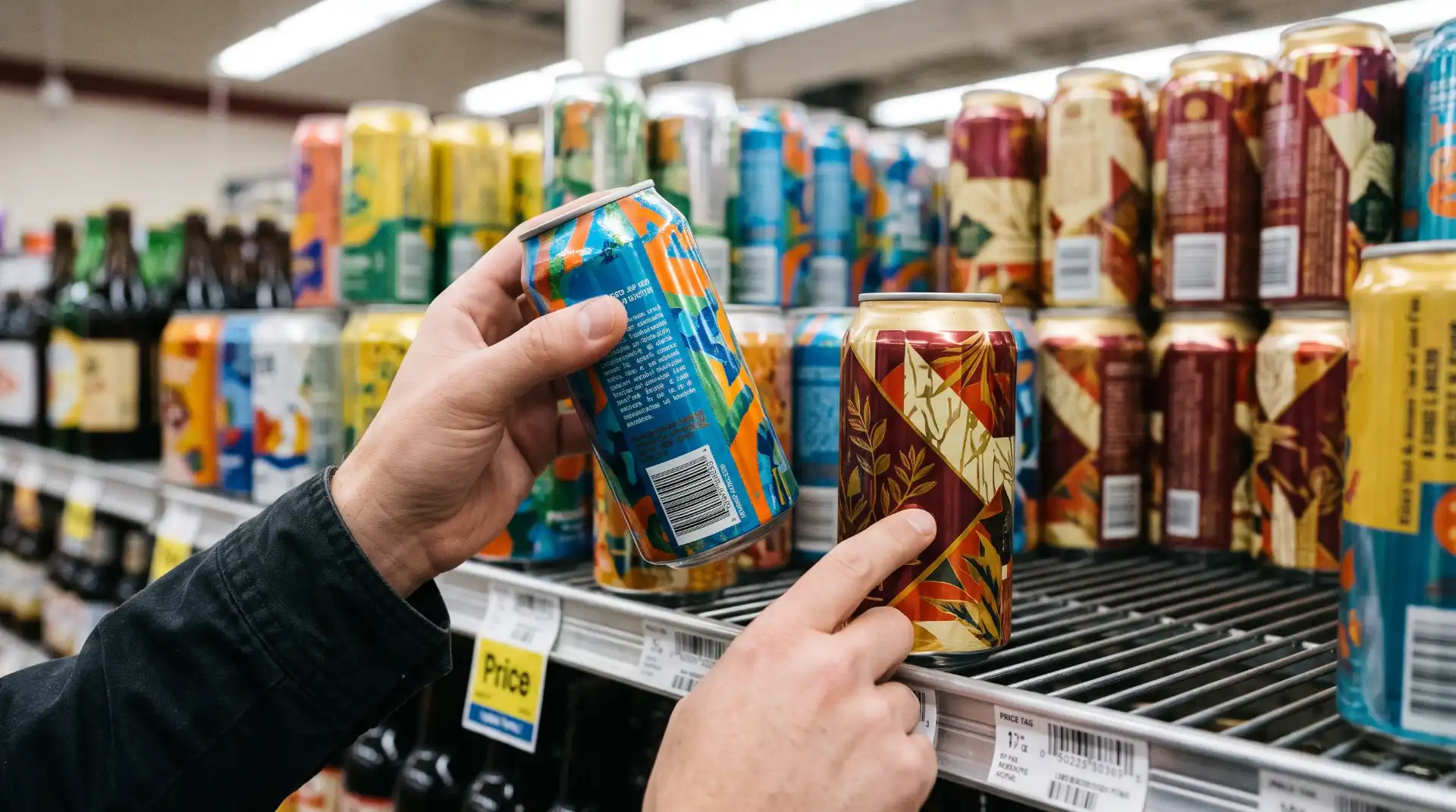
The names printed on product packaging can represent years of advertising, customer relationships, market recognition, and commercial investment. For many American businesses, a recognizable brand name is among their most valuable assets. Consumers may associate a particular word, logo, color combination, or product design with a specific company long before they understand the corporate structure behind it. When another business begins using a similar name, the potential consequences can extend beyond a disagreement over words. The dispute may involve lost sales, damaged goodwill, customer uncertainty, and questions about the legal boundaries of competition.
The upcoming U.S. Supreme Court case involving PepsiCo and Rise Brewing raises an important question about how American courts should evaluate the strength of a trademark when deciding whether consumers are likely to be confused. The dispute began after PepsiCo introduced an energy drink using the name MTN DEW RISE ENERGY, while Rise Brewing was already selling canned coffee under its RISE trademarks. Rise Brewing argued that PepsiCo’s use of the word RISE threatened its brand and could cause customers to associate its products with the much larger beverage company.
The case has developed into a significant federal trademark dispute because of a disagreement over who should determine whether a trademark is inherently strong: a judge applying the law or a factfinder evaluating the evidence. The Supreme Court granted review in June 2026, and oral argument is scheduled for January 12, 2027. The Court’s decision could influence how trademark cases are handled in federal courts, particularly when a business argues that a competing company’s use of a similar name creates a likelihood of confusion.
The case is especially relevant to startups, established consumer brands, retailers, manufacturers, and companies preparing to introduce new products. It highlights the importance of choosing distinctive names, documenting consumer recognition, monitoring competitors, and understanding the evidence that may be necessary to protect a trademark under U.S. law.
1. Understanding the PepsiCo vs. Rise Brewing Trademark Dispute
The dispute involves RiseandShine Corporation, which does business as Rise Brewing, and PepsiCo, one of the largest food and beverage companies in the United States. Rise Brewing built a business around canned nitro-brewed coffee and related beverages marketed under the RISE name. PepsiCo later introduced a caffeinated morning beverage under the MTN DEW RISE ENERGY name.
The products were not identical. Rise Brewing focused on canned coffee, while PepsiCo marketed an energy drink connected to its Mountain Dew brand. Nevertheless, both products competed within the broader market for caffeinated beverages, and both used the word RISE prominently enough to create a trademark dispute.
Rise Brewing claimed that PepsiCo’s use of the name could cause reverse confusion. This is a particular type of trademark confusion in which consumers may mistakenly believe that the smaller or earlier business is connected to, sponsored by, or owned by the larger company that entered the market later.
The distinction is important because traditional trademark disputes often involve a junior company attempting to benefit from the reputation of an established senior brand. Reverse confusion involves a different commercial concern: a powerful later entrant may overwhelm the identity of a smaller business that already used the disputed name.
Rise Brewing argued that PepsiCo’s marketing resources and national distribution could make consumers associate the RISE name with PepsiCo rather than with the independent coffee company. The dispute therefore raised questions about the relationship between trademark strength, commercial recognition, product similarities, and the relative market power of competing businesses.
The Supreme Court case is formally known as RiseandShine Corporation v. PepsiCo, Inc., No. 24-1016. It should not be confused with a separate dispute involving another technology or consumer brand. The central legal issue concerns the standard courts use to assess the strength of a trademark in an infringement analysis.
2. How the Dispute Began
Rise Brewing developed its canned coffee business before PepsiCo introduced MTN DEW RISE ENERGY. Its products used the RISE name as part of their commercial identity, and the company obtained federal trademark registrations for RISE-related branding.
PepsiCo entered the relevant market with a caffeinated drink designed to appeal to consumers seeking an energy boost, particularly during the morning. The product used the Mountain Dew identity alongside the word RISE. Rise Brewing believed that the overlap in product categories and naming created a meaningful risk of consumer confusion.
In 2021, Rise Brewing filed a trademark infringement lawsuit. It sought legal relief that would prevent PepsiCo from using branding that allegedly infringed its trademark rights. A federal district court initially granted a preliminary injunction, temporarily restricting PepsiCo’s use of the disputed branding.
A preliminary injunction is not a final determination that trademark infringement has occurred. It is a temporary court order issued when the legal requirements for preliminary relief are satisfied. Courts generally examine whether the requesting party has demonstrated a sufficient likelihood of success on the merits and whether other equitable considerations support immediate intervention.
PepsiCo challenged the injunction. The dispute then reached the U.S. Court of Appeals for the Second Circuit, which concluded that the district court had made important errors in evaluating the strength of Rise Brewing’s mark and the similarity of the products. The appeals court vacated the preliminary injunction.
The case returned to the district court, where the litigation continued. In 2023, the district court entered summary judgment in PepsiCo’s favor. Rise Brewing appealed again, but the Second Circuit affirmed the judgment in December 2024.
Rise Brewing subsequently petitioned the Supreme Court to review the legal treatment of trademark strength. The Court granted the petition on June 29, 2026, setting the stage for a nationally significant discussion about the relationship between factual evidence and legal judgment in trademark litigation.
3. What the Supreme Court Will Actually Decide
The Supreme Court’s review is narrower than the broader commercial dispute might suggest. The Court is not being asked simply to determine whether PepsiCo copied Rise Brewing’s brand or whether every consumer would mistake one company’s product for the other’s.
Instead, the question presented concerns whether trademark strength is a question of fact in a likelihood-of-confusion analysis under Section 1114 of the Lanham Act.
That distinction matters because courts often separate legal questions from factual questions. Legal questions involve interpreting statutes, applying legal standards, and determining the rules that govern a dispute. Factual questions involve evidence about what happened, what consumers understood, how products were marketed, and how the marketplace actually operates.
Trademark strength can involve both kinds of analysis. A court must understand the legal principles governing distinctiveness, but it may also need to examine evidence about how consumers perceive a particular name.
The Supreme Court’s decision could clarify how that assessment should be made and whether a judge may resolve the inherent-strength issue as a legal question without allowing a factfinder to evaluate the relevant evidence.
The distinction may affect the way courts handle motions for summary judgment, the presentation of expert testimony, and the role of juries in trademark cases.
It is important not to overstate what the Court’s eventual ruling will establish. Even if the Supreme Court concludes that trademark strength is generally a factual or mixed question, that would not automatically mean Rise Brewing wins its lawsuit. Other elements of the infringement analysis would remain relevant, and a court could still determine that the evidence does not support a reasonable finding of likely confusion.
The official Supreme Court docket identifies the case as No. 24-1016 and records the Court’s grant of review and subsequent briefing schedule. The docket is available through the U.S. Supreme Court’s official case record.
4. Why Trademark Strength Matters Under U.S. Law
Trademark strength is an important consideration because not all brand names receive the same level of protection. Some marks are highly distinctive and immediately identify a particular commercial source. Others use ordinary words that describe the product, suggest its qualities, or appear frequently in a particular industry.
A distinctive trademark can be easier to protect because consumers are more likely to associate it with one source. A common or descriptive term may require additional evidence to establish that customers recognize it as identifying a particular business.
For example, an invented name used for a new beverage may be inherently distinctive. A word that directly describes the beverage’s flavor or ingredients may be more difficult to protect without evidence that consumers have come to associate it with one company.
The word RISE presents an interesting issue because it is an ordinary English word with a meaning that can relate to morning routines, energy, and coffee consumption. The relationship between the word and the products is relevant to whether the mark is inherently distinctive and how much trademark strength it should receive.
The legal analysis is not simply a matter of deciding whether a word appears in a dictionary. Courts consider how the mark relates to the relevant goods and whether consumers understand it as a brand identifier.
A mark can also become stronger through commercial use. Advertising, sales, media attention, customer recognition, and long-term marketplace presence may help establish that consumers associate a particular word with one source.
This is often discussed as acquired distinctiveness or secondary meaning. A company may begin with a relatively ordinary term but build a recognizable brand through sustained commercial activity.
For a business owner, the practical lesson is that trademark strength is not determined solely by the name selected at launch. The way the business develops and uses the name over time can become important evidence in a future dispute.
5. Inherent Strength and Acquired Strength Are Different
The legal discussion surrounding Rise Brewing requires an understanding of two related but distinct concepts: inherent strength and acquired strength.
Inherent strength concerns the characteristics of the mark itself. Courts consider whether the word or phrase is distinctive in relation to the goods or services. A fanciful or arbitrary term may be inherently strong, while a descriptive term may receive less protection unless it develops the necessary consumer recognition.
Acquired strength focuses on what happens after a business uses the mark in commerce. A name that initially has limited distinctiveness may develop a stronger association with one company through advertising, sales, market exposure, and consumer recognition.
Consider a small company that introduces a beverage using an ordinary word. At first, customers may understand that word primarily as a reference to the product’s characteristics. After years of advertising and widespread sales, however, consumers may begin to recognize the word as identifying that company’s particular beverage.
The company may then have evidence that the mark has acquired distinctiveness.
These concepts are important because a trademark dispute can involve both the meaning of a word and the way consumers actually recognize it. A court may consider whether the mark is inherently distinctive, whether it has acquired commercial recognition, and how those characteristics affect the likelihood of confusion.
The Supreme Court’s review focuses on the legal treatment of trademark strength, particularly inherent strength. It does not eliminate the importance of acquired strength or other evidence relevant to the overall infringement analysis.
6. The Likelihood-of-Confusion Test
Trademark infringement claims commonly require an examination of whether the defendant’s use is likely to cause confusion about the source, sponsorship, affiliation, or connection of goods or services.
The analysis is not based on a single universal checklist applied identically in every federal circuit. Courts use different multifactor tests, and the relevant factors may vary according to the jurisdiction and the circumstances of the dispute.
The Second Circuit, where the Rise Brewing case developed, uses the factors associated with Polaroid Corp. v. Polarad Electronics Corp. These factors include the strength of the plaintiff’s mark, similarity between the marks, proximity of the products, the likelihood that the senior user will enter the defendant’s market, evidence of actual confusion, the defendant’s good faith, product quality, and the sophistication of buyers.
The factors are evaluated together rather than treated as independent requirements that must all favor one party.
For example, two companies may use similar words, but the risk of confusion may be reduced if their products are sold through completely different channels and target unrelated customers. Conversely, even a modest similarity may become more significant when the companies sell closely related products to the same consumers.
The U.S. Patent and Trademark Office also explains that confusing similarity can involve the sound, appearance, meaning, or overall commercial impression of marks. Its official likelihood-of-confusion guidance provides a useful introduction to how trademark conflicts can arise during the registration process.
Although a USPTO registration examination is not identical to a federal infringement lawsuit, the underlying concern is related: consumers should not be misled into believing that goods or services come from a source that is not actually responsible for them.
7. Why Reverse Confusion Makes the Case Especially Important
Reverse confusion differs from the more familiar situation in which a new business adopts a name resembling an established brand.
In a traditional case, a smaller company might attempt to benefit from the goodwill associated with a famous product. Consumers may believe that the established company has expanded into a new category or authorized the smaller company’s product.
Reverse confusion turns that situation around.
A smaller business establishes a brand first. A larger company later enters the market using a similar name and invests substantial resources in advertising, distribution, and promotion. Because the larger company has greater visibility, consumers may begin associating the name with the later entrant.
This can create a difficult commercial problem for the original brand owner. The smaller business may have used the name for years, yet customers could increasingly believe that its products are connected to the larger competitor.
In the Rise Brewing dispute, the company’s concern was that PepsiCo’s national reach could overshadow the independent coffee brand’s identity.
Reverse confusion is particularly relevant in industries where large corporations can rapidly introduce new products and distribute them through major retailers. A smaller company may have limited ability to compete with the advertising budget, shelf space, and brand recognition of a national corporation.
However, reverse confusion does not mean that a large company automatically infringes a smaller company’s trademark whenever it uses a similar word. The plaintiff must still establish the relevant legal elements and demonstrate why the defendant’s use is likely to cause confusion.
The facts surrounding the marks, products, customers, marketing, and marketplace remain important.
8. How the Supreme Court’s Decision Could Affect Federal Courts
One potential consequence of the case is greater consistency in how federal courts approach trademark strength.
Before Supreme Court review, the dispute highlighted a disagreement between the Second Circuit’s treatment of inherent strength and approaches used in other federal circuits. Rise Brewing argued that the Second Circuit’s approach differed from the way other courts treated the issue, particularly when consumer perception and marketplace evidence were involved.
If the Supreme Court clarifies that trademark strength is a factual or predominantly factual issue, courts may need to pay closer attention to evidence concerning the relevant market and consumers.
That could influence the way judges evaluate summary judgment motions. A judge may be less willing to resolve disputed factual questions without considering whether a reasonable factfinder could reach a different conclusion based on the evidence.
However, this would not eliminate summary judgment from trademark litigation. Courts can still resolve a case before trial when the evidence is legally insufficient to support the nonmoving party’s position.
The distinction would instead concern how courts classify and evaluate the strength-of-the-mark issue.
For companies involved in trademark disputes, the outcome could influence litigation strategy. Attorneys may place greater emphasis on consumer surveys, marketplace evidence, historical advertising, sales records, and testimony about how customers understand the brand.
Businesses should not assume that a Supreme Court ruling will automatically make trademark lawsuits easier to win. It could change the way a particular issue is evaluated without changing the ultimate requirement to prove likely confusion.

9. Why Small Businesses and Startups Should Follow the Case
The dispute has implications beyond the beverage industry. Startups frequently choose short, memorable names because they are easier to advertise, remember, and display on packaging.
Unfortunately, memorable names can also create trademark conflicts when multiple businesses select similar words.
A startup may spend years building recognition around a brand before discovering that another company claims rights in a similar name. The financial consequences can include legal fees, revised packaging, marketing changes, lost domain names, and the expense of rebranding.
Reverse confusion creates an additional concern for small businesses. A startup may be the first company to use a particular name in its market, but a larger competitor’s later entry could create marketplace conditions that threaten the startup’s identity.
Small businesses should therefore approach trademark protection as an ongoing business function rather than a one-time registration exercise.
A company should investigate potential conflicts before investing heavily in a name. It should also document the commercial use of the mark and monitor relevant applications and marketplace activity.
For more practical guidance, Legal Journal’s article on Trademark Squatting in the U.S.: How Businesses Can Fight Bad-Faith Trademark Registrations discusses how businesses can monitor trademark filings, preserve evidence, and respond when another party attempts to register a potentially conflicting brand.
Although trademark squatting is different from an ordinary infringement dispute, both situations demonstrate why early research and consistent evidence preservation matter.
10. What Makes a Trademark Stronger?
Businesses cannot guarantee that a mark will receive strong legal protection simply by selecting an attractive name. However, several factors can help create a more defensible brand.
Distinctiveness is an important starting point. Invented words, unusual combinations, and arbitrary terms may be easier to distinguish from ordinary product descriptions. A business should consider whether the proposed name identifies its commercial source or merely describes what it sells.
Consistent commercial use also matters. A company should use its mark consistently on packaging, websites, advertisements, invoices, product listings, and other customer-facing materials.
Advertising can help establish consumer recognition, but spending money on marketing does not automatically prove acquired distinctiveness. The evidence must connect the mark with the company in the minds of relevant consumers.
Sales records can also be useful. A company should preserve information showing how long the mark has been used, where the products have been sold, and the scale of commercial activity.
Media coverage, customer testimonials, consumer surveys, and evidence of third-party recognition may provide additional information about the brand’s marketplace position.
The value of these materials depends on the specific dispute. A trademark attorney can help determine which evidence is relevant and how it should be preserved.
11. The Role of Consumer Surveys and Market Evidence
Consumer surveys can be important in trademark litigation because they may provide evidence about how people understand competing brands.
A properly designed survey may examine whether consumers associate a mark with a particular company, whether they believe two products are connected, or whether a competing name creates confusion.
However, surveys are not automatically decisive. Their value depends on the methodology, the questions asked, the participants selected, and whether the survey accurately reflects the relevant purchasing environment.
For example, a survey involving people who do not normally purchase the relevant beverage category may provide limited insight into the perceptions of actual customers.
The way a question is phrased can also influence the result. A leading question may encourage participants to provide answers that do not reflect their ordinary marketplace experience.
Businesses should therefore avoid treating survey results as simple proof that confusion exists. A survey should be designed to address a specific legal question and should be evaluated alongside other evidence.
Other forms of market evidence may include customer complaints, misdirected inquiries, retailer communications, online search behavior, and documented instances in which buyers mistakenly believed that two products were connected.
Actual confusion can be useful evidence, but a plaintiff generally does not have to demonstrate that numerous customers have already made mistakes before pursuing a likelihood-of-confusion claim.
The legal question is whether confusion is likely under the relevant circumstances.
12. Why Product Packaging and Advertising Matter
Consumers do not encounter brand names in isolation. They see products on shelves, in advertisements, on websites, in social media posts, and through retail search results.
Packaging can influence how a trademark is perceived. A word displayed prominently on a can may create a different commercial impression from the same word appearing in small descriptive text.
Color, typography, product layout, logos, and other design elements may also affect consumer perception.
In the PepsiCo dispute, the parties’ product presentation became part of the broader discussion about whether the products were sufficiently similar to create confusion.
This illustrates why businesses should evaluate more than the wording of a proposed trademark. A company developing a new product should consider the complete commercial presentation, including its name, packaging, advertising style, and intended retail environment.
A business that uses a similar word but creates a clearly different overall presentation may have a different legal position from one that also adopts similar packaging, colors, and marketing language.
Nevertheless, changing a logo or color scheme does not automatically eliminate trademark risk. The full circumstances must be considered.
13. How the Case Could Influence Brand Naming Strategies
The Supreme Court’s decision may encourage businesses to examine the relationship between a brand name and the goods or services offered under it.
Companies often prefer descriptive names because customers can quickly understand what the product does. A beverage brand may use a word suggesting freshness, energy, flavor, or a particular time of day.
The commercial advantage is obvious: a descriptive name can communicate product characteristics without requiring extensive explanation.
The legal disadvantage is that descriptive or commonly used terms may be more difficult to protect exclusively.
A more distinctive name may require additional marketing to establish what the product represents, but it can provide a stronger foundation for trademark protection.
Businesses should also think about future expansion. A name that works for one product may become problematic when the company enters a related category.
For example, a company that begins by selling coffee may later introduce energy drinks, ready-to-drink teas, nutritional beverages, or other caffeinated products. The trademark strategy should account for likely expansion rather than focusing only on the first product launch.
Trademark clearance should also include related goods and services, not just direct competitors. A company may encounter a conflict with another business that operates in a neighboring market.
Legal Journal’s article on Trademarking Prompt Libraries and Model Names: Are You Protectable? explores a similar issue in the technology sector: a product name must function as a source identifier and satisfy the applicable distinctiveness standards. Although the industry is different, the underlying naming principles are relevant to companies building commercial brands.
14. Practical Steps for Businesses Protecting Their Brand Names
Companies should begin trademark protection before committing substantial resources to a new brand. A name that appears available through a basic internet search may already be protected by another business or may create a conflict with an existing application.
A comprehensive clearance search should examine federal trademark records, state registrations where relevant, business names, domain names, online marketplaces, and actual commercial use.
The search should consider similar spellings, pronunciations, meanings, and overall impressions. A mark does not have to be identical to another mark to create a potential conflict.
After selecting a suitable name, a business should consider filing a federal trademark application with the USPTO. The appropriate filing strategy depends on the goods and services, the company’s commercial plans, and whether the mark is already being used in commerce.
Businesses should also identify the correct owner of the trademark. If a founder, subsidiary, parent company, or operating entity owns the mark, the ownership arrangement should be documented accurately.
Once the brand is in use, the company should maintain evidence of commercial activity. Dated product photographs, packaging files, invoices, advertisements, sales records, website captures, and customer communications may become important if a dispute develops.
Companies should also monitor new trademark applications and marketplace activity. Early detection can provide more options than waiting until a competing product has become established.
If a business receives a cease-and-desist letter, it should avoid making immediate decisions without understanding the legal and commercial risks. A response may involve negotiation, a coexistence agreement, a change in branding, an opposition or cancellation proceeding, or litigation.
The appropriate response depends on the strength of each party’s rights and the actual marketplace circumstances.
15. Could the Supreme Court’s Decision Help Smaller Brands?
The case has attracted attention partly because it involves a smaller beverage company challenging a large corporation.
If the Supreme Court emphasizes the factual nature of trademark strength, smaller businesses may have a clearer opportunity to present evidence about their brands and consumer recognition.
A company may argue that its mark has developed commercial significance through years of use, even if the underlying word is ordinary or has a logical connection to the product.
This could be particularly important in reverse-confusion disputes, where a large competitor’s market presence may create a risk that the smaller company’s original brand identity will be overshadowed.
However, the decision should not be interpreted as a special rule favoring smaller companies. Trademark law does not automatically protect a business because it has fewer resources or entered the market first.
The plaintiff must still establish legally sufficient trademark rights and demonstrate the relevant likelihood of confusion.
A ruling that treats trademark strength as a factual or mixed question could improve the opportunity to present evidence, but it would not guarantee a trial in every case.
16. What Could the Decision Mean for Large Corporations?
Large corporations also have important reasons to follow the case.
Companies with extensive product portfolios frequently launch new brands, acquire businesses, enter adjacent markets, and license existing trademarks. Each activity can create potential conflicts with smaller businesses that already use similar names.
A corporation may conduct a trademark clearance search and still face a dispute over the strength of an earlier mark or the likelihood of consumer confusion.
If the Supreme Court clarifies that trademark strength requires greater consideration of factual evidence, large companies may need to prepare more carefully before seeking summary judgment in certain cases.
They may also need to evaluate whether their own branding decisions create reverse-confusion concerns.
For example, a national retailer introducing a private-label product should examine whether the proposed name is likely to be associated with an existing smaller brand. The retailer’s size and distribution network do not eliminate the need for careful trademark review.
Large companies should also consider how advertising and product packaging may affect the commercial impression of a new product. A name that appears harmless when viewed in isolation may create greater risk when combined with similar design elements and overlapping retail channels.
17. The Importance of Trademark Monitoring and Enforcement
Trademark rights require attention after registration. Businesses that fail to monitor their brands may discover conflicts only after another company has invested heavily in a similar name.
Monitoring can include reviewing new USPTO applications, tracking competitor product launches, checking online marketplaces, and monitoring social media and domain registrations.
A business should not necessarily challenge every similar name it encounters. Trademark enforcement should be proportionate to the commercial risk and the scope of the company’s rights.
A dispute involving a directly competing product may deserve immediate attention. A similar name used for an unrelated service may present a different level of risk.
Companies should also be careful when sending cease-and-desist letters. An aggressive demand unsupported by the company’s actual trademark rights can create additional legal and reputational problems.
A measured approach begins with investigation. The business should identify the relevant mark, examine the other party’s use, compare the goods and services, and assess the likelihood of confusion before deciding what action is appropriate.
18. What Happens Next in the Supreme Court Case?
The Supreme Court granted Rise Brewing’s petition for review on June 29, 2026. The parties then filed their briefs addressing the question presented.
The United States also participated in the case through an amicus brief. An amicus curiae, commonly called a friend-of-the-court brief, allows an interested nonparty to provide legal arguments or information that may assist the Court.
The government’s position is relevant because it discusses the relationship between consumer perception, factual evidence, and the legal classification of trademark strength. The government’s brief argued that inherent strength is a mixed question of law and fact in which the factual component predominates, while also cautioning that the Court’s review of that issue does not necessarily resolve whether PepsiCo is entitled to summary judgment.
The Supreme Court docket records the filing of the merits briefs and the scheduling of oral argument for January 12, 2027.
During oral argument, the justices will have an opportunity to question the parties about the legal standard, the role of consumer perception, and the practical consequences of treating trademark strength as a factual or legal issue.
A decision is expected during the Court’s 2026–2027 term, although the precise date of a ruling should not be assumed in advance.
Readers should follow the official docket for updates rather than relying on speculation about the outcome.
19. Frequently Asked Questions About PepsiCo vs. Rise Brewing
What is the PepsiCo vs. Rise Brewing Supreme Court case about?
The case concerns a trademark dispute over PepsiCo’s former use of the name MTN DEW RISE ENERGY and Rise Brewing’s earlier use of RISE for canned coffee. The Supreme Court is reviewing whether trademark strength in a likelihood-of-confusion analysis is a question of fact or a question of law.
When will the Supreme Court hear the case?
Oral argument is scheduled for January 12, 2027, according to the Supreme Court docket.
Is the Supreme Court deciding whether PepsiCo infringed Rise Brewing’s trademark?
Not directly. The question presented concerns the legal treatment of trademark strength under the likelihood-of-confusion analysis. The Court’s ruling could affect how the lower courts evaluate the dispute, but it is not simply a final decision on whether infringement occurred.
What is reverse confusion in trademark law?
Reverse confusion occurs when consumers mistakenly believe that an earlier, often smaller brand is connected to a later, larger company that uses a similar name. The larger company’s advertising and market presence may overshadow the original brand owner’s identity.
Why does trademark strength matter?
Trademark strength helps courts evaluate how distinctive a brand is and how strongly consumers associate it with a particular source. It is one of the considerations used in determining whether a competing use is likely to cause confusion.
Can a common English word be trademarked?
Potentially, yes. A common word may qualify for trademark protection when used as a source identifier for particular goods or services. The level of protection depends on the relationship between the word and the products, as well as whether consumers recognize it as identifying a particular commercial source.
Does a Supreme Court ruling automatically mean Rise Brewing wins?
No. Even if the Court rules in Rise Brewing’s favor on the question presented, the case may still require further proceedings. Other elements of the infringement analysis remain relevant, and the Court’s decision would not automatically establish that consumers were likely to be confused.
How can a small business protect its brand name?
A business should conduct a trademark clearance search, consider federal registration, use the mark consistently, preserve evidence of commercial use, and monitor new trademark applications and competing products. Consulting a qualified trademark attorney before launching a major brand can help reduce the risk of costly disputes.
20. Conclusion: A Significant Case for the Future of American Trademark Law
The PepsiCo vs. Rise Brewing dispute demonstrates that trademark law involves more than determining whether two companies use the same word. Courts must consider how a name functions in the marketplace, how consumers understand it, how distinctive it is, and whether competing products create a likelihood of confusion.
The Supreme Court’s upcoming review could clarify an important part of that analysis: whether trademark strength should be treated as a factual issue or a legal question. That clarification may influence how federal courts evaluate evidence, decide summary judgment motions, and determine when a trademark dispute should proceed to a factfinder.
For small businesses, the case highlights the importance of developing distinctive brands and preserving evidence of consumer recognition. For large corporations, it reinforces the need to investigate potential conflicts before launching products with names that may overlap with existing brands.
The ruling will not eliminate the need to prove trademark infringement, and it should not be treated as a guaranteed victory for either party. Its importance lies in clarifying how courts approach one of the central factors in trademark litigation.
As American companies continue to compete in crowded consumer markets, brand identity will remain a valuable commercial asset. The Supreme Court’s decision in RiseandShine Corporation v. PepsiCo, Inc. could help define how that asset is evaluated when two businesses claim rights in similar names.
Legal Disclaimer: This article is for general informational and educational purposes only and does not constitute legal advice. Trademark rights, infringement claims, and likelihood-of-confusion analyses depend on the facts of each case, the applicable jurisdiction, and current law. Businesses facing trademark disputes should consult a qualified U.S. intellectual property attorney.