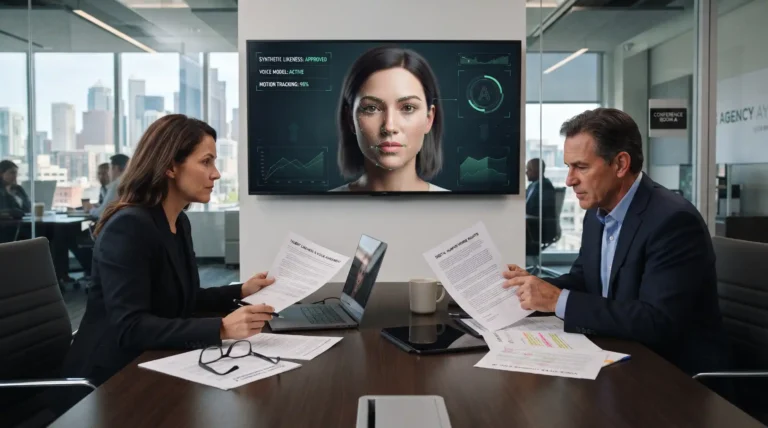
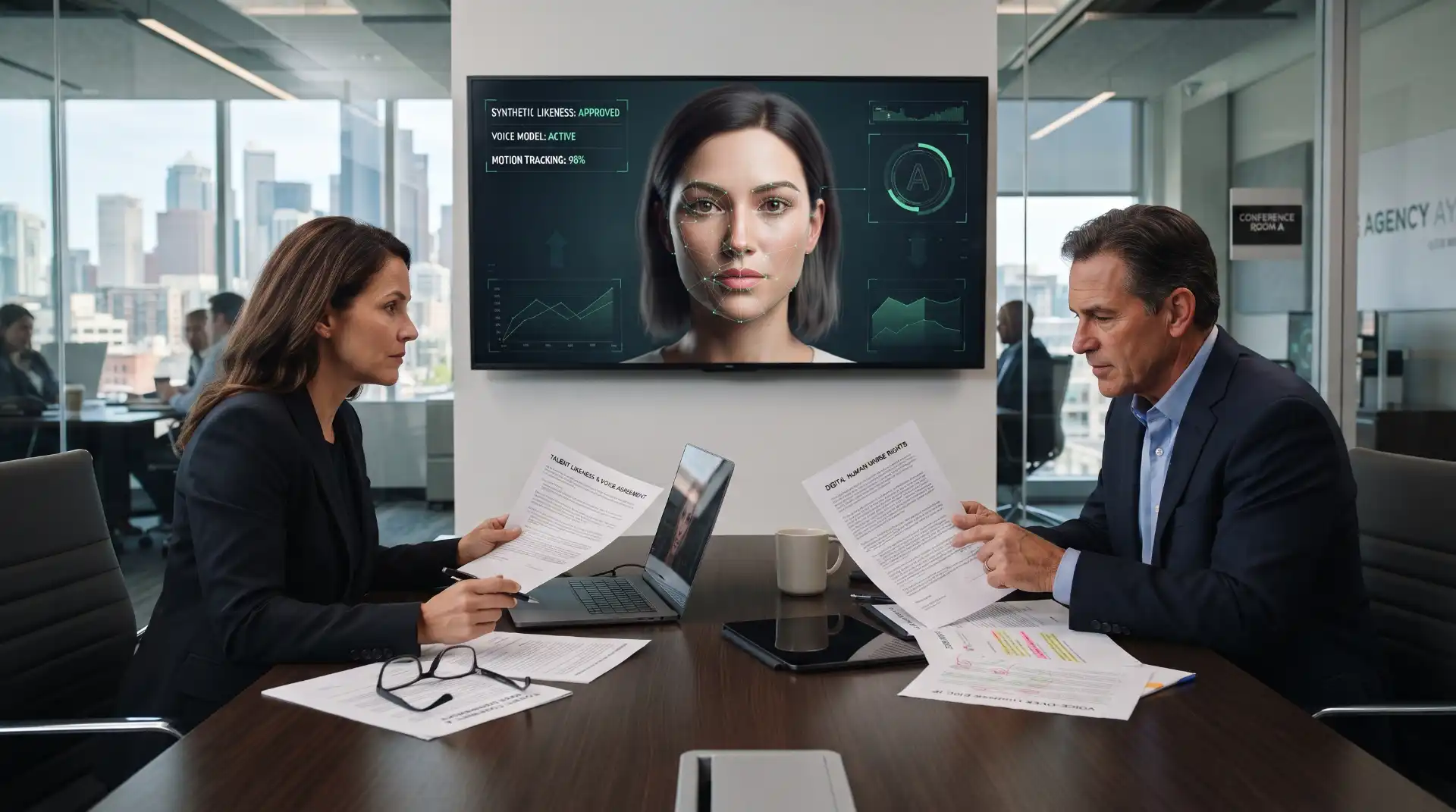
Artificial intelligence has made it possible to reproduce aspects of a person’s identity with a level of realism that was difficult to achieve only a few years ago. A company can now generate a synthetic image that resembles a real person, create an artificial voice that sounds like a particular speaker, or produce a video in which a digital replica appears to make statements the person never actually made.
These capabilities are increasingly relevant to advertising, entertainment, social media, marketing, gaming, education, and online commerce. They also create an important legal question for U.S. businesses: When can a company legally use someone’s voice, image, likeness, or other recognizable characteristics in AI-generated content?
The answer is not simply a matter of whether the material was created by artificial intelligence. U.S. law already contains several doctrines that can apply when a person’s identity is commercially exploited without permission. These include state right-of-publicity laws, privacy protections, trademark law, false endorsement principles, consumer-protection laws, contract law, and, in some circumstances, copyright law.
The growing use of AI makes these existing rules more complicated because companies can now create realistic digital replicas without traditional photography, filming, or voice-recording sessions.
The U.S. Copyright Office has examined this issue as part of its broader Copyright and Artificial Intelligence initiative. Its digital-replica report explains that digital replicas can include digitally created or manipulated video, images, or audio that realistically depict an individual. The Office concluded that existing legal protections have significant gaps and recommended federal legislation addressing unauthorized digital replicas.
For businesses, the practical issue is therefore becoming increasingly important. The fact that a computer generated the content does not automatically give a company permission to use a person’s identity.
What Is the Right of Publicity?
The right of publicity generally refers to a person’s ability to control certain commercial uses of their identity.
Depending on the applicable state law, protected aspects of identity may include a person’s name, photograph, likeness, voice, signature, or other recognizable characteristics. The exact scope varies substantially from one jurisdiction to another.
Unlike copyright, which is primarily concerned with original works of authorship, publicity rights are concerned with a person’s identity and the commercial value associated with that identity.
This distinction is particularly important in the AI era.
A company could potentially create an entirely new computer-generated photograph rather than copying an existing photograph of a celebrity. The new image might not be a straightforward copy of a copyrighted photograph, but if the generated image intentionally depicts a recognizable individual in a commercial advertisement, publicity-right questions may still arise.
The legal analysis therefore cannot stop at copyright.
A business considering AI-generated advertising should ask whether the material invokes a real person’s identity, whether that person authorized the use, how the content will be distributed, and what laws apply to the transaction.
Why AI Makes Publicity Rights More Complicated
Traditional advertising generally required some form of cooperation when a business wanted to use a celebrity’s identity.
An endorsement campaign might involve a contract, photographs, video recordings, voice recordings, interviews, and negotiated approval rights.
AI can change the production process.
A company may not need the celebrity physically present. A synthetic voice can deliver new dialogue. A generated image can place a recognizable person in a new setting. A video-generation system can create a realistic digital performance without a traditional production session.
That technological change creates a legal distinction between creating a digital representation and having permission to commercially use a person’s identity.
The first may be technologically easy.
The second may require authorization.
This is why businesses should not assume that AI eliminates the need for personality-rights agreements.
Voice Can Be a Valuable Part of a Person’s Identity
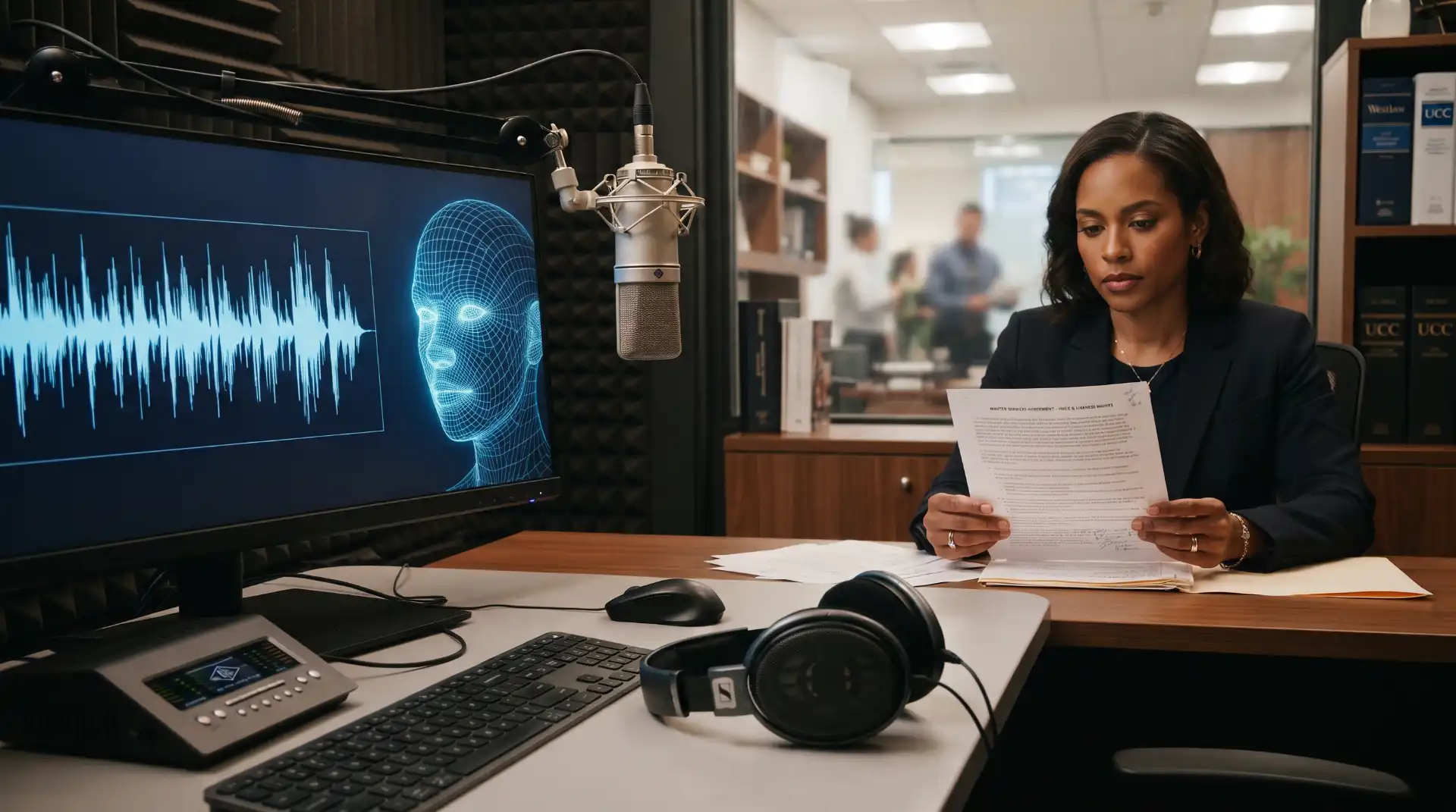
Voice cloning has become particularly important.
A person’s voice can be strongly associated with their identity. This is especially true for actors, musicians, broadcasters, athletes, public speakers, influencers, and other professionals whose careers depend on recognizable vocal characteristics.
An AI-generated advertisement could reproduce a person’s distinctive vocal qualities while using completely new words.
For example, a business could generate an audio advertisement in which a synthetic voice sounds like a well-known actor saying that a particular product is excellent.
The actor may never have recorded the advertisement.
The fact that the words are new does not necessarily resolve the legal issue. The commercial value may come from the audience’s belief that the recognizable person is associated with the product.
Voice therefore deserves specific attention in AI licensing agreements.
A contract that authorizes the use of a person’s photograph but says nothing about synthetic voice generation may leave important questions unanswered.
Businesses using AI should carefully identify what characteristics are being licensed.
Likeness Is More Than a Photograph
Likeness can involve more than directly copying a photograph.
A digital replica may combine facial characteristics, body shape, clothing, mannerisms, gestures, voice, and other recognizable features.
A generated video might show a person who is not explicitly identified by name but is sufficiently recognizable to audiences familiar with that individual.
This creates a factual and legal question: Would viewers reasonably understand the digital character as representing a particular person?
The answer may depend on the context.
A generic person with common characteristics may not raise the same issue as a highly recognizable recreation of a famous performer.
The more deliberately a company attempts to evoke a specific individual’s identity for commercial purposes, the more important authorization becomes.
Digital Replicas Are Not Automatically Illegal
It is also important not to treat every AI-generated likeness as unlawful.
Digital replicas can have legitimate and authorized uses.
A performer may sign an agreement allowing a studio to create a digital version of their appearance. An actor may authorize synthetic voice use for a particular video game. An artist may license a digital likeness for advertising. An estate may manage authorized commercial uses of a deceased performer’s identity where applicable law permits such rights to continue after death.
The key issue is often authorization and scope.
A person can choose to license aspects of their identity.
The legal problem becomes more serious when a company creates or distributes a replica without appropriate permission, especially for commercial purposes.
The U.S. Copyright Office has recognized that digital replicas can have beneficial uses, including authorized licensing of a person’s voice, image, or likeness.
Commercial Use Matters
The commercial context can be particularly important under publicity laws.
Imagine two scenarios.
In the first, a filmmaker creates a fictional character that resembles a broad cultural archetype but is not intended to represent a specific real person.
In the second, a company creates a highly realistic digital replica of a famous athlete and places the replica in a paid advertisement promoting a product.
The second scenario raises much more direct questions about commercial exploitation of identity.
Businesses should therefore examine the purpose of an AI-generated likeness.
Is it being used for internal experimentation?
Is it part of a fictional entertainment project?
Is it included in a news report?
Is it being sold as a product?
Is it being used to advertise another product or service?
Different contexts can trigger different legal protections and exceptions.
Right of Publicity Laws Vary Across the United States
One of the most important issues for businesses operating nationwide is the lack of a single uniform state publicity-right framework.
States differ in how they define protected identity, what constitutes commercial use, what exceptions apply, how long rights survive after death, and what remedies may be available.
Some jurisdictions provide statutory protections, while others rely heavily on common-law doctrines.
This creates challenges for companies running nationwide advertising campaigns.
A business headquartered in New York might create an advertisement intended for customers across the United States. The legal analysis cannot necessarily be limited to the state where the company has its headquarters.
The relevant jurisdiction may depend on several facts, including where the individual is located, where the advertisement is distributed, where consumers see it, and where the alleged injury occurs.
For national campaigns, businesses should therefore conduct a jurisdiction-specific legal review rather than assuming that one state’s rules automatically apply everywhere.
The Lanham Act Can Create False Endorsement Issues
Right-of-publicity law is not the only potential legal concern.
Federal trademark law can also become relevant when an advertisement creates a false impression that a person sponsors, approves, or is affiliated with a product.
Section 43(a) of the Lanham Act addresses certain false or misleading representations involving commercial activity.
Consider an AI-generated advertisement that shows a famous athlete apparently recommending a financial service.
Even if the company does not directly copy a copyrighted photograph, consumers could believe that the athlete approved the service.
That perceived relationship may create a false-endorsement issue.
This is one reason businesses should not analyze AI-generated advertising solely through copyright law.
Publicity rights and trademark principles can overlap without being identical.
Copyright Is Still Relevant, but It Is Different
Copyright may still matter when AI-generated likenesses are created.
An advertisement may incorporate photographs, film clips, recordings, music, artwork, or other copyrighted material.
For example, a company could take a copyrighted photograph of a celebrity and use an AI system to modify the person’s face, clothing, or environment.
That process may raise copyright questions involving the original photograph.
But the person’s identity and commercial persona may raise separate publicity concerns.
The two legal theories should therefore be evaluated independently.
Legal Journal has already explored AI-generated content and copyright in its article AI-Generated Game Assets and Copyright Protection for Developers. That discussion is useful because copyrightability depends heavily on human authorship, while publicity rights focus on a different legal interest.
The U.S. Copyright Office similarly distinguishes its analysis of digital replicas from the separate question of whether AI-generated outputs contain sufficient human authorship for copyright protection.
False AI Endorsements Can Mislead Consumers
An unauthorized AI-generated endorsement can create another problem: consumer deception.
Suppose a company creates a video showing a recognizable public figure apparently recommending a product.
Consumers may reasonably believe the person actually participated in the advertisement.
If that belief affects purchasing decisions, the advertisement could raise questions under consumer-protection principles.
The Federal Trade Commission has warned about deceptive uses of artificial intelligence, including synthetic media and impersonation.
For businesses, the broader lesson is that authenticity matters.
AI-generated advertising should not be designed in a way that deliberately creates a false impression about who is speaking, endorsing, or participating in a campaign.
Disclosure Does Not Replace Permission
Some businesses may assume that adding an AI disclosure solves the problem.
For example, an advertisement might include a small statement saying that the person shown is digitally generated.
That can improve transparency, but disclosure does not automatically create authorization.
There is an important difference between telling consumers that an image is synthetic and obtaining permission from the person whose identity is being reproduced.
Consider an advertisement stating:
“This video uses artificial intelligence.”
The disclosure may tell consumers that the video is not authentic.
It does not necessarily answer whether the real person authorized the company to reproduce their identity.
Businesses should therefore treat transparency and permission as separate compliance issues.
Contracts Are Becoming More Important
The strongest protection for businesses using legitimate digital replicas is often a clear agreement with the person whose identity is being used.
Traditional endorsement contracts may need to evolve to address AI.
An agreement should potentially identify whether the company can use the person’s name, image, likeness, voice, mannerisms, facial characteristics, recordings, and synthetic digital replicas.
The contract can also define the purposes for which those rights may be used.
For example, a performer might permit a digital replica for one video game but not for advertising.
Another performer might allow AI voice generation for commercials but prohibit political advertising.
A celebrity could authorize use in the United States while restricting international distribution.
The more precisely these rights are defined, the less uncertainty may exist later.
AI Clauses Should Address Future Technology
Technology changes faster than contracts.
An agreement written several years ago might authorize photographs, videos, and recordings without mentioning generative AI.
That can create ambiguity.
Modern contracts should consider whether terms such as “likeness,” “voice,” “image,” and “recordings” include synthetic reproductions.
They can also address whether the company may use machine-learning systems to modify or generate new content based on previously recorded materials.
This matters because an AI system may create an entirely new advertisement from existing voice recordings without requiring the individual to participate in a new recording session.
A contract should make clear whether that use is permitted.
Approval Rights Can Reduce Risk
Some performers and public figures may want approval rights over AI-generated material.
Approval provisions can require the individual to review advertisements before publication.
This can be particularly important when synthetic content creates new dialogue or situations that never occurred in real life.
A performer might authorize their digital likeness for a video game but not want the digital character shown endorsing a controversial political position.
A company may therefore benefit from establishing clear review procedures before deploying synthetic media.
Compensation Should Be Addressed Clearly
AI can change the economics of licensing identity.
Traditional advertising might pay a performer for a specific recording session.
A synthetic replica could potentially be reused thousands of times.
That raises questions about compensation.
Should the performer receive a one-time payment?
Should there be a recurring licensing fee?
Should compensation depend on the number of campaigns?
Should the agreement include additional payments when the replica is used in new territories?
These are contractual questions rather than purely technological ones.
Businesses should address them before the digital replica is created.
Businesses Should Keep Records of Authorization
Documentation can become important if a dispute arises.
Companies using licensed digital replicas should maintain copies of relevant agreements, approvals, recordings, model-development records, advertising versions, distribution records, and communications concerning permitted uses.
The purpose is not merely administrative.
These records can help establish what the company believed it was authorized to do.
They can also help identify whether an AI-generated advertisement exceeded the scope of the original license.
A contract saying “use of likeness permitted” may not be sufficient if the dispute concerns a synthetic voice, international advertising, or a completely new commercial campaign.
Detailed records can reduce uncertainty.
AI Vendors Can Create Additional Contract Issues
Businesses often do not build AI systems themselves.
They purchase services from third-party platforms.
That creates another layer of contractual risk.
A company should understand what rights it receives when it uploads recordings or images to an AI platform.
The platform’s terms may address ownership, licensing, data retention, training, commercial use, and responsibility for generated outputs.
Businesses should also consider whether uploading a person’s voice or image is itself authorized.
An employee might have permission to use a voice recording for one business purpose but not permission to submit it to a third-party AI system for model processing.
That distinction can become important when dealing with confidential or commercially valuable identity data.
Employers Should Be Careful With Employee Voices and Images
The right of publicity is not limited to celebrities.
Ordinary employees can also have privacy and identity interests.
A company might want to create an AI avatar representing a customer-service employee.
Instead of recording new videos, the business could generate thousands of synthetic responses using the employee’s face and voice.
Whether the company can do so may depend on employment agreements, state law, privacy principles, internal policies, and the scope of any consent.
Employers should avoid assuming that employment automatically provides unlimited rights to an employee’s identity.
Written authorization can help clarify the intended use.
Influencers and Creators Face Similar Questions
Influencers increasingly rely on recognizable personal brands.
Their voice, appearance, name, catchphrases, and mannerisms can have significant commercial value.
AI tools can make it possible to create synthetic influencer content without the creator physically producing every piece of media.
For agencies and advertisers, that can be useful when properly authorized.
But unauthorized replication can create serious disputes.
An influencer’s contract should therefore identify whether synthetic versions of their identity may be created, who owns those digital assets, how long the rights last, and whether the influencer can revoke or limit particular uses.
Entertainment Companies Need Detailed Digital-Replica Policies
Film studios, television companies, game developers, music businesses, and streaming platforms have particularly strong reasons to establish AI policies.
These industries routinely work with performers whose identities have commercial value.
A production agreement that covers traditional performances may not adequately address synthetic performances.
Companies may need separate provisions covering digital scanning, facial capture, voice cloning, synthetic dialogue, AI-generated performances, posthumous use, and reuse of digital replicas.
The more advanced the technology becomes, the more important precise contractual language becomes.
Digital Replicas Can Be Valuable When Properly Licensed
There is an important business opportunity here as well.
AI-generated replicas are not simply a source of legal risk.
Authorized replicas can create new commercial models.
A performer could license their voice for localized advertising.
An actor could authorize a digital character for a video game.
A historical figure’s estate could license authorized archival representations where legally permissible.
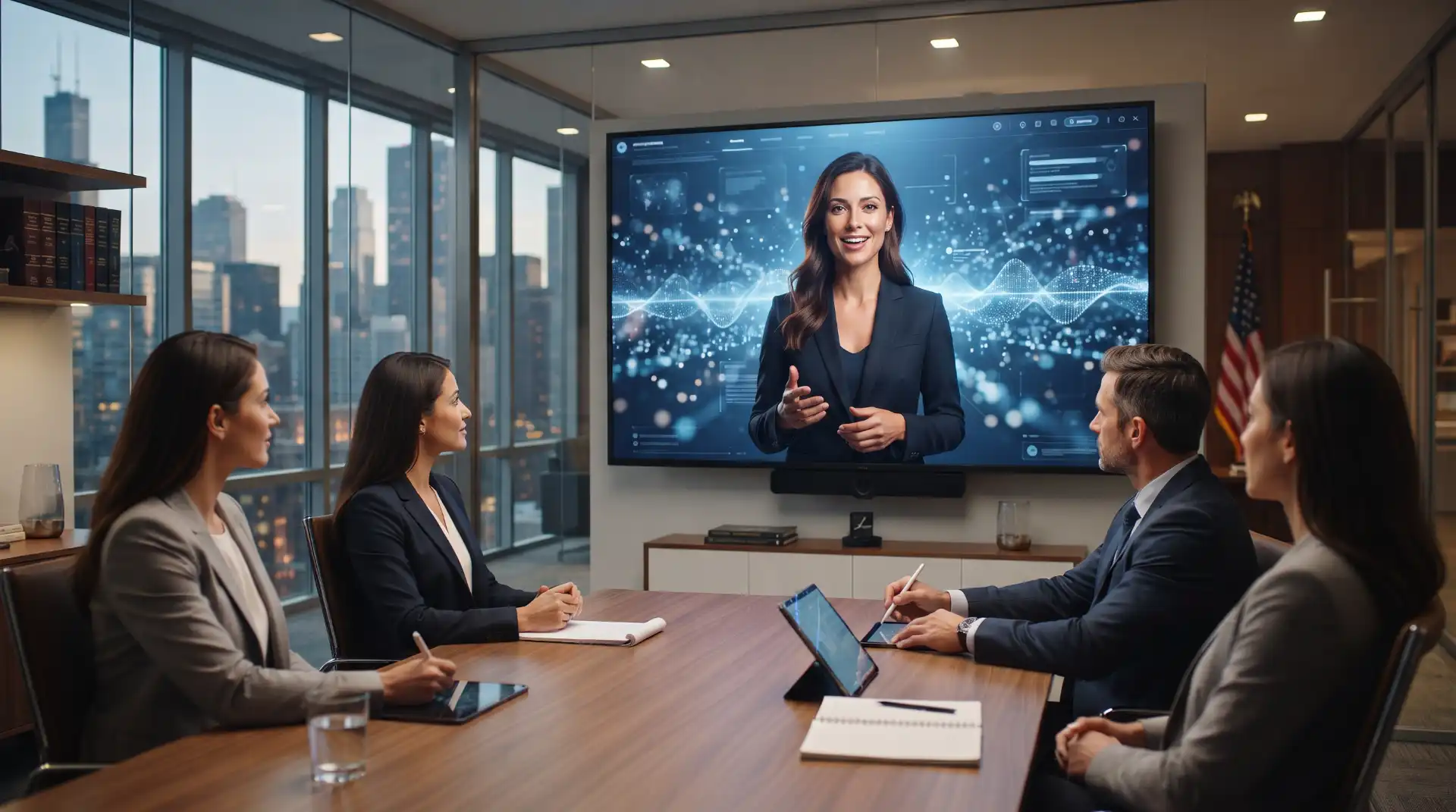
A company could create a digital spokesperson with the permission of the individual involved.
These uses demonstrate why the legal framework needs to distinguish authorized digital identity licensing from unauthorized impersonation.
The technology itself is not necessarily the problem.
The question is how it is used and whether the rights of the person involved have been respected.
What Businesses Should Review Before Using an AI Likeness
Before publishing AI-generated material representing a real person, businesses should conduct a structured legal review.
The first issue is identification.
Who does the content represent?
The second is authorization.
Has that person provided written permission for this particular type of use?
The third is scope.
Does the agreement cover AI-generated images, synthetic voices, altered videos, and digital replicas?
The fourth is geography.
Where will the material be distributed?
The fifth is commercial purpose.
Is the content being used to sell, advertise, endorse, or promote something?
The sixth is third-party material.
Does the content incorporate photographs, recordings, trademarks, or other protected works?
The seventh is consumer perception.
Could a reasonable viewer believe the person actually participated in or approved the content?
These questions can help identify problems before an advertisement reaches the public.
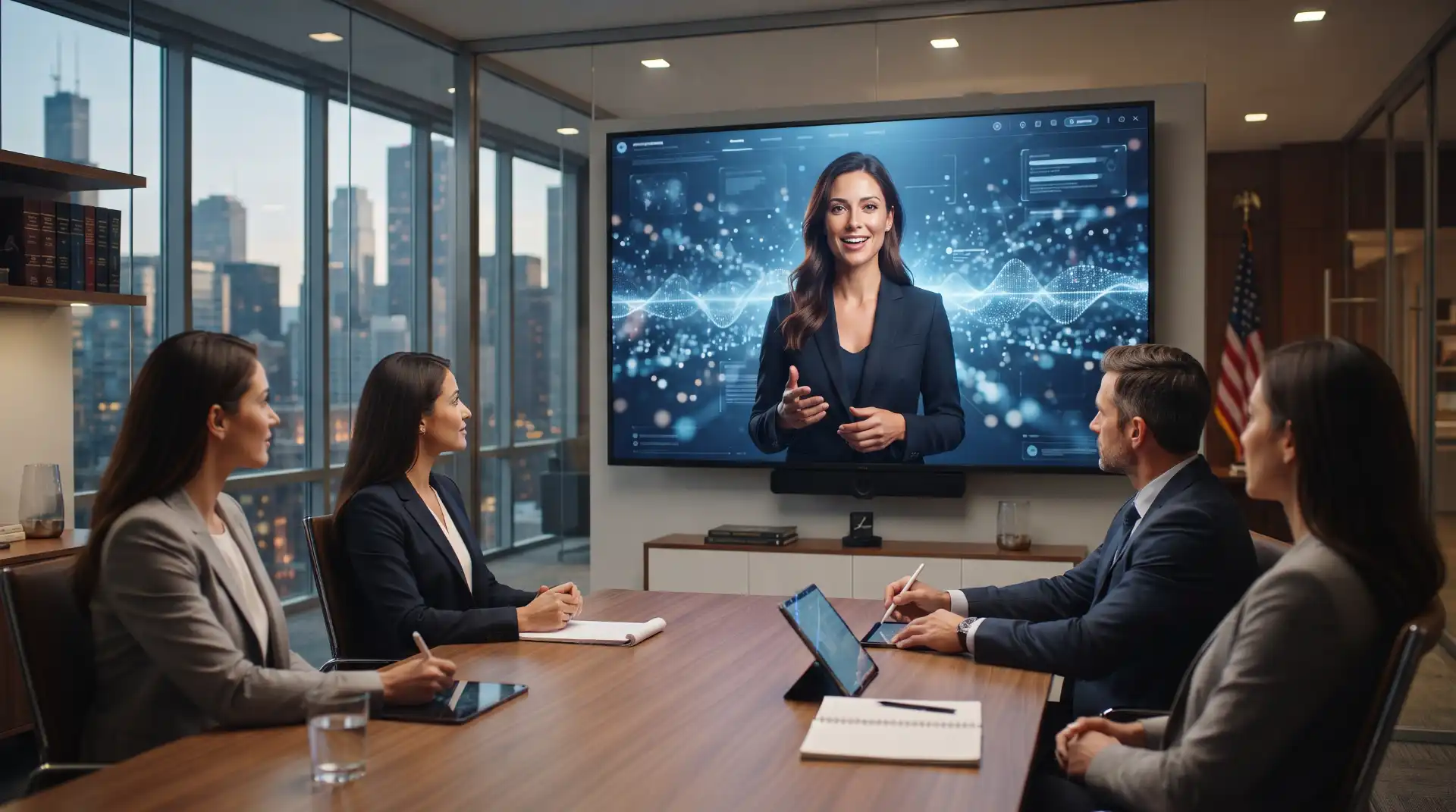
A Practical AI Publicity-Rights Workflow
A company developing synthetic advertising can build the legal review into its normal production process.
The marketing team can identify the real person whose identity is being represented.
The legal or compliance team can then review the applicable state laws and relevant federal doctrines.
The business should confirm that a written agreement exists and that the agreement expressly covers the proposed AI use.
The creative team can preserve records showing how the content was created.
The company should then review the finished advertisement for false endorsement, misleading claims, unauthorized copyrighted material, and other intellectual-property concerns.
Finally, the company can preserve the approved version and authorization documents.
This approach makes legal review part of production rather than an emergency response after publication.
The U.S. Legal Landscape Is Still Developing
The legal environment surrounding AI-generated likenesses continues to evolve.
The U.S. Copyright Office’s AI initiative has already addressed digital replicas, AI-generated outputs, and AI training. Its Part 1 report recommended a federal digital-replica law because the Office identified gaps in existing protections.
At the same time, state publicity laws continue to play an important role.
This means businesses should monitor both federal developments and state-level changes.
A national advertising campaign may eventually need to account for a patchwork of laws unless Congress establishes a broader federal framework.
For companies operating across multiple states, legal monitoring is therefore likely to remain important.
Why Businesses Should Not Treat AI Identity as Ordinary Content
AI-generated text, images, video, and audio may look like ordinary marketing content.
But when those materials reproduce a real person’s identity, another legal dimension appears.
The issue is no longer only whether the company owns the content file.
The question becomes whether the company has the legal right to invoke another person’s identity.
That difference can be easy to overlook.
A business may own the AI-generated video file while still facing a dispute over the unauthorized use of the person depicted in the video.
Ownership of a digital file does not automatically create ownership of the identity represented by that file.
What the Future Could Look Like
The development of synthetic media is likely to make digital identity increasingly valuable.
People may license their voices and likenesses in the same way that performers have traditionally licensed photographs, recordings, and performances.
Contracts may become more detailed.
Advertising platforms may develop stronger disclosure and verification systems.
AI providers may introduce additional safeguards against unauthorized identity replication.
Courts and lawmakers may also continue determining how existing publicity, privacy, trademark, copyright, and consumer-protection principles apply to new forms of synthetic media.
Businesses that understand these distinctions early can make better decisions about AI-generated advertising and entertainment.
Conclusion: Permission Matters More Than the Technology
Artificial intelligence has changed how easily a company can reproduce a person’s voice, face, image, and likeness.
It has not eliminated the legal rights associated with personal identity.
In the United States, right-of-publicity law remains largely state-based, while federal trademark, copyright, consumer-protection, privacy, and other laws may apply depending on the circumstances.
The U.S. Copyright Office has specifically recognized the growing importance of digital replicas and has recommended federal action to address gaps in existing law.
For businesses, the central lesson is straightforward: AI-generated does not mean permission-free.
Companies should determine whose identity is being represented, obtain appropriate authorization, understand the scope of the license, review applicable state and federal law, and carefully examine how consumers are likely to interpret the finished content.
As AI-generated advertising becomes more realistic, clear contracts and careful rights management will become increasingly important.
Businesses interested in the broader legal implications of synthetic media can also review Legal Journal’s existing article, The Legal Risks of AI-Generated Celebrity Endorsements, which examines how unauthorized AI-generated endorsements can intersect with publicity rights, trademark law, consumer protection, privacy, contracts, and copyright.
For additional background on AI and copyright, the U.S. Copyright Office’s Copyright and Artificial Intelligence initiative provides federal resources covering digital replicas, copyrightability of AI-generated outputs, registration guidance, and AI training issues.
This article is for general informational and educational purposes and does not constitute legal advice. Right-of-publicity, privacy, trademark, copyright, and digital-replica issues can vary significantly based on the applicable state, the people involved, the contractual language, and the intended use of the AI-generated material.